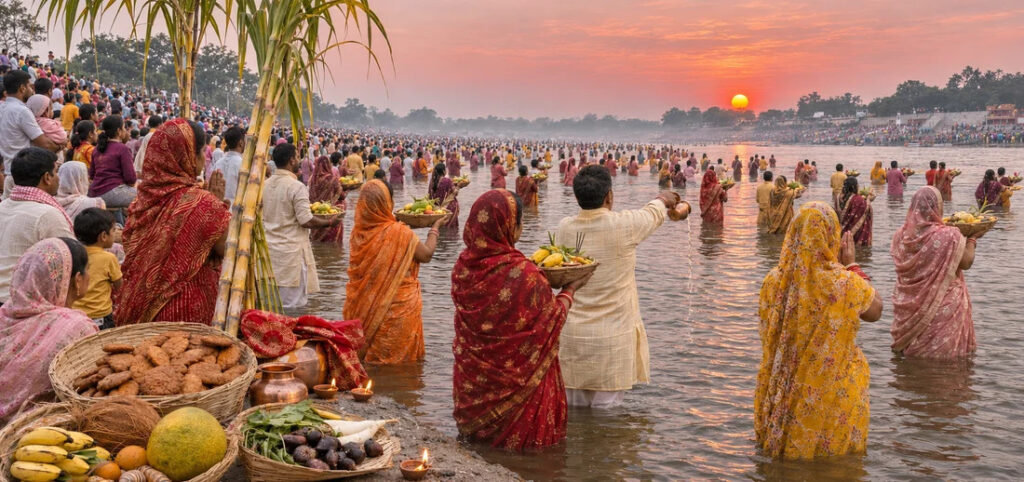
Chhath Puja is one of the most sacred Hindu festivals dedicated to Lord Surya (the Sun God) and Chhathi Maiya. Among its beautiful traditions, Kosi Bharna holds a special place because it represents devotion, gratitude, family well-being, and prayers for fulfilled wishes. For devotees living in the United States, celebrating this traditional ritual is a meaningful way to stay connected with Indian culture and spiritual heritage.
Kosi Bharna on Chhath Puja 2026 can be performed at home or in a suitable community worship space by following family traditions and local Panchang timings. The ritual generally involves decorating a sugarcane structure, arranging traditional offerings, and lighting earthen lamps during the night. Sadhana Shop helps devotees stay connected with their religious traditions by making spiritual practices and devotional essentials an important part of everyday life.
Whether you are celebrating Chhath Puja in New York, New Jersey, California, Texas, or another part of the USA, understanding the correct ritual procedure can make your celebration more meaningful.
What Is Kosi Bharna on Chhath Puja 2026?
Kosi Bharna is a traditional ritual performed during Chhath Puja 2026, particularly in Bihar, Jharkhand, and eastern Uttar Pradesh. It involves creating a small decorative structure using sugarcane stalks and placing traditional offerings, fruits, sweets, and lit diyas underneath it as an expression of devotion to Chhathi Maiya.
The ritual is especially significant for families who have made a Mannat (religious vow) and wish to express gratitude after their prayers are fulfilled. Many devotees also perform Kosi Bharna to pray for the happiness, health, prosperity, and well-being of their families.
What Is the Difference Between Chhath Puja and Kosi Bharna?
Chhath Puja is a four-day festival dedicated to the worship of the Sun God and Chhathi Maiya, whereas Kosi Bharna is a special ritual observed during the festival by devotees and families following this tradition.
Chhath Puja includes Nahay Khay, Kharna, Sandhya Arghya, and Usha Arghya. Kosi Bharna is generally performed after the evening Arghya on the third day and continued according to family customs until the following morning.
Why Is Kosi Bharna Important for Devotees?
Kosi Bharna represents faith, gratitude, and devotion. Families perform this ritual to seek divine blessings and express appreciation for fulfilled wishes.
The sugarcane structure represents a sacred canopy, while the diyas symbolize hope, positivity, and spiritual light. Traditional offerings placed underneath the structure reflect the family’s devotion and respect for Chhathi Maiya.
When Is Chhath Puja 2026 in the USA?
Chhath Puja 2026 falls during November, with the main Sandhya Arghya and Usha Arghya observances taking place around November 15 and 16, respectively, according to commonly followed Indian calendars. However, the exact observance date and local puja timings in the USA should be confirmed using the Panchang for your American city.
The festival generally follows this four-day schedule:
Four Days of Chhath Puja 2026
Day 1 – Nahay Khay: Devotees take a holy bath, clean their homes, and prepare a pure vegetarian meal. This day marks the beginning of the festival.
Day 2 – Kharna: Devotees observe a fast throughout the day and prepare traditional prasad, such as jaggery kheer and roti, after sunset.
Day 3 – Sandhya Arghya: Devotees offer Arghya to the setting Sun. Kosi Bharna is traditionally performed on this evening by families who observe the ritual.
Day 4 – Usha Arghya: Devotees offer prayers to the rising Sun and complete the festival by performing Parana according to their traditions.
How to Follow Chhath Puja Timings in Different US Time Zones?
People celebrating Chhath Puja in the USA should follow local sunrise and sunset timings instead of directly using Indian timings.
For example, devotees in New York and New Jersey follow Eastern Time, Chicago follows Central Time, and Los Angeles follows Pacific Time. Sunset and sunrise timings differ between these locations.
It is important to check the local Panchang and consult your family priest or community temple before finalising the Kosi Bharna schedule.
What Samagri Is Required for Kosi Bharna?
Preparing the correct puja samagri is an important part of Kosi Bharna. Families generally arrange traditional materials before beginning the evening ritual.
Some commonly used items include:
- Whole sugarcane stalks for making the Kosi structure.
- Earthen diyas and cotton wicks.
- Ghee or suitable traditional lamp oil.
- Fresh fruits such as bananas, apples, and coconuts.
- Thekua and other traditional Chhath prasad.
- Bamboo baskets or soop.
- Flowers and seasonal offerings.
- Clean cloth for arranging the puja area.
- Kalash and other customary puja materials.
Why Are Sugarcane and Diyas Used in Kosi Bharna?
Sugarcane stalks are used to create a decorative canopy representing the sacred Kosi structure. They provide the traditional framework under which offerings and lamps are arranged.
Earthen diyas are equally important because they represent devotion, positivity, and the light of faith. In many households, devotees keep the lamps burning throughout the night as part of their family tradition.
How to Do Kosi Bharna on Chhath Puja 2026 in USA: Step-by-Step Guide
Performing Kosi Bharna in the USA does not require a riverbank or a large outdoor space. Families can arrange a clean courtyard, backyard, or suitable indoor worship area while maintaining traditional practices and safety.
Here is a simple step-by-step guide to performing the ritual.
Step 1: Clean and Prepare the Puja Area
Start by cleaning the selected worship area. Maintain cleanliness and purity throughout the preparation. Arrange a clean cloth or suitable base where the Kosi structure will be placed.
Choose a location where the ritual can be performed comfortably without disturbing neighbours or creating safety concerns.
Step 2: Arrange the Sugarcane Structure
Take four or five whole sugarcane stalks, depending on your family tradition and available space. Arrange them to create a small canopy or mandap.
Make sure the structure is stable and properly secured. The Kosi structure is the central attraction of this traditional ritual.
Step 3: Arrange the Puja Offerings
Place the bamboo baskets, fruits, thekua, coconuts, and other traditional offerings beneath the sugarcane canopy.
Arrange the items neatly and respectfully. Families may include additional offerings according to their regional customs and religious beliefs.
Step 4: Light the Earthen Diyas
Place earthen lamps around the Kosi structure and light them using ghee or traditional lamp oil.
Many families maintain the lamps throughout the night until the morning Usha Arghya. However, never leave open flames unattended. Use stable, heat-resistant holders and follow appropriate fire-safety precautions.
Step 5: Offer Prayers to Chhathi Maiya
After arranging the Kosi, devotees offer prayers to Chhathi Maiya and seek blessings for their families.
Traditional Chhath songs and devotional prayers are also an important part of the celebration. Family members can participate together and maintain the spiritual atmosphere.
Step 6: Complete the Morning Ritual
On the following morning, devotees prepare for Usha Arghya and offer prayers to the rising Sun according to local sunrise timings.
After completing the customary rituals, the family follows its traditional Parana practices and distributes prasad among relatives and community members.
Sadhana Shop encourages devotees to preserve these meaningful traditions and prepare their devotional essentials in advance for a peaceful celebration.
How Can Families Celebrate Kosi Bharna in the USA?
Celebrating Kosi Bharna outside India can be a beautiful family experience. Although the surroundings may be different, devotees can maintain the traditional importance of the festival through proper preparation and community participation.
Families living in apartments can create a small puja arrangement using a safe and stable decorative structure. Those with backyards can arrange a more traditional setup using sugarcane stalks, diyas, and bamboo baskets.
Indian communities in cities such as New York, New Jersey, Houston, Dallas, Chicago, and San Francisco may also organise collective Chhath celebrations. Participating in community events allows younger generations to understand the significance of traditional Hindu festivals.
How Can Children Learn About Chhath Puja Traditions?
Parents can explain the importance of the Sun God, Chhathi Maiya, and the four-day festival to their children.
Involving children in preparing fruit baskets, arranging flowers, and learning traditional Chhath songs can help preserve cultural values. It also gives younger generations an opportunity to understand their family’s religious heritage.
What Is the Connection Between Chhath Puja, Dev Uthani Ekadashi, and Shiv Chalisa?
Hindu festivals throughout the Kartik month hold deep spiritual significance. Chhath Puja, Dev Uthani Ekadashi, and the recitation of Shiv Chalisa are different religious observances, but each provides devotees with an opportunity to strengthen their faith and devotion.
Dev Uthani Ekadashi and Its Religious Significance
Dev Uthani Ekadashi, also known as Prabodhini Ekadashi, marks the traditional awakening of Lord Vishnu from his four-month period of divine sleep, known as Chaturmas.
In 2026, Dev Uthani Ekadashi is observed on November 20 according to the commonly followed New Delhi Panchang, with some traditions observing the associated Gauna Ekadashi on November 21. Families in the USA should follow their local religious calendar.
While Chhath Puja focuses on worshipping the Sun God and Chhathi Maiya, Dev Uthani Ekadashi is dedicated to Lord Vishnu. Both festivals hold an important place in Hindu religious traditions.
Why Do Devotees Recite Shiv Chalisa During Religious Celebrations?
Shiv Chalisa is a devotional prayer dedicated to Lord Shiva. It contains forty verses praising his divine qualities, compassion, and spiritual significance.
Many devotees recite Shiv Chalisa as part of their regular worship and religious routine. Although it is not a compulsory ritual of Kosi Bharna, families may include it in their personal prayers according to their beliefs and traditions.
Tips for a Peaceful Kosi Bharna Celebration in America
Celebrating traditional Indian festivals in another country requires a little additional planning. Keeping the following points in mind can make your Kosi Bharna celebration easier and more organised.
Prepare puja materials early: Sugarcane, bamboo baskets, earthen diyas, and traditional ingredients may not be readily available everywhere in the USA.
Confirm local timings: Check the Panchang for your city to determine the appropriate sunset and sunrise timings.
Maintain cleanliness: Keep the puja area, kitchen, and preparation materials clean throughout the festival.
Follow family traditions: Different regions and families may follow slightly different Kosi Bharna procedures.
Prioritise safety: Use lamps responsibly, keep them away from curtains and other flammable materials, and never leave burning diyas unattended.
Involve family members: Encourage everyone to participate in preparing offerings, singing devotional songs, and understanding the meaning of the festival.
Conclusion
Kosi Bharna is a beautiful expression of devotion, gratitude, and family faith during Chhath Puja and Shiv Chalisa. Even when celebrating thousands of miles away from India, devotees in the USA can preserve this tradition by arranging the traditional Kosi structure, preparing puja samagri, lighting diyas safely, and offering prayers to Chhathi Maiya.
As you prepare for Chhath Puja 2026, make the celebration meaningful by following your family traditions and local Panchang timings. Sadhana Shop encourages you to keep your spiritual traditions alive and make every religious celebration special with devotion and preparation.
Frequently Asked Questions
1. When Is Chhath Puja 2026 Celebrated in the USA?
Chhath Puja 2026 is observed in November. The main evening and morning offerings are associated with November 15 and 16 in commonly followed Indian calendars. However, dates can differ according to local tithi and sunrise calculations. Always confirm the timings for your American city.
2. What Is Kosi Bharna in Chhath Puja?
Kosi Bharna is a traditional Chhath ritual in which devotees create a small canopy using sugarcane stalks and arrange diyas, fruits, sweets, and other offerings underneath it. It represents faith, gratitude, and prayers for family happiness and prosperity.
3. When Should Kosi Bharna Be Performed?
Kosi Bharna is generally performed on the evening of Sandhya Arghya, after offering prayers to the setting Sun. In many families, the decorated Kosi and lamps remain part of the worship until Usha Arghya the following morning.
4. What Items Are Required for Kosi Bharna?
Commonly used items include sugarcane stalks, earthen diyas, ghee, cotton wicks, fruits, coconuts, thekua, bamboo baskets, flowers, and other traditional offerings. Specific requirements may differ according to regional customs and family traditions.
5. Can Kosi Bharna Be Performed at Home in the USA?
Yes, families can perform Kosi Bharna at home in a clean and suitable worship area. A backyard, courtyard, or safe indoor space can be used. Devotees should arrange the traditional materials and follow local puja timings and appropriate fire-safety precautions.
6. Is Shiv Chalisa Required During Kosi Bharna?
No, Shiv Chalisa is not a compulsory part of Kosi Bharna. It is a separate devotional prayer dedicated to Lord Shiva. Devotees who regularly recite it may include it in their personal worship according to their religious beliefs.
7. How Does Sadhana Shop Help Devotees Celebrate Chhath Puja?
Sadhana Shop supports devotees in staying connected with Hindu religious traditions and spiritual practices. Families can explore suitable devotional and puja essentials for their religious preparations and make their Chhath Puja celebrations more meaningful.