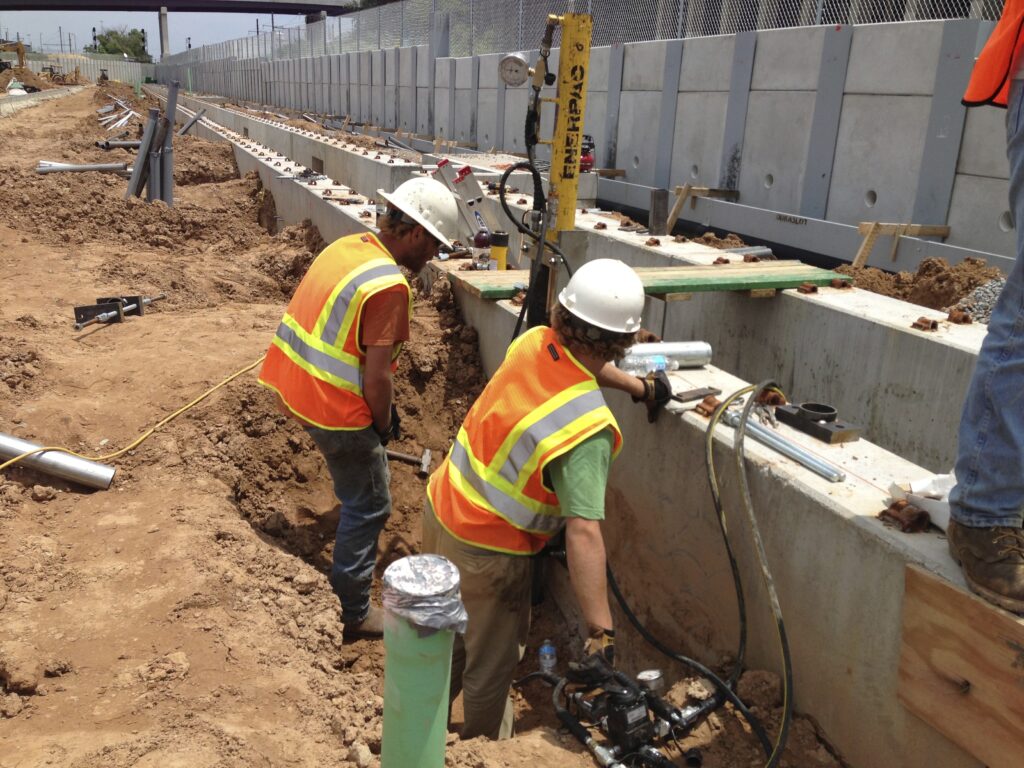
What is Underpinning
Underpinning is the process of strengthening or supporting the foundation of an existing structure, building, or house. It is usually required when the property is suffering from subsidence, often due to the soil conditions. The structure’s foundation fails due to erosion, poor soil, drainage issues, and problems with the materials and foundation design.
Underpinning is important if the original foundations are not strong, a leaking drain is softening the ground, or washing the soil away, which can become the reason foundations need to shift. When the subsoil is removed from beneath the foundations, it can create a cavity into which the building will slowly sink, causing subsidence.
Methods of underpinning
These are some common methods of underpinning a building. If these methods are not carried out properly, it will lead to damage or cause the collapse of the existing building.
Mass concrete underpinning
Mass concrete is the most traditional method of underpinning. This is done by excavating the ground beneath the existing foundation in controlled segments to a depth where the soil is stable or has suitable bearing capacity. It is done by replacing the soil under the existing foundations with concrete. It involves first removing the existing soil and then pouring concrete over it.
Beam and base underpinning
Beam and base underpinning is an advanced method of concrete underpinning. It is done by using a reinforced concrete beam either below or above the current footing, or to replace the current footing. In this method, beams transfer the building’s load to reinforced concrete bases. Its size depends on the ground conditions according to the structure of the building.
Mini-piled underpinning
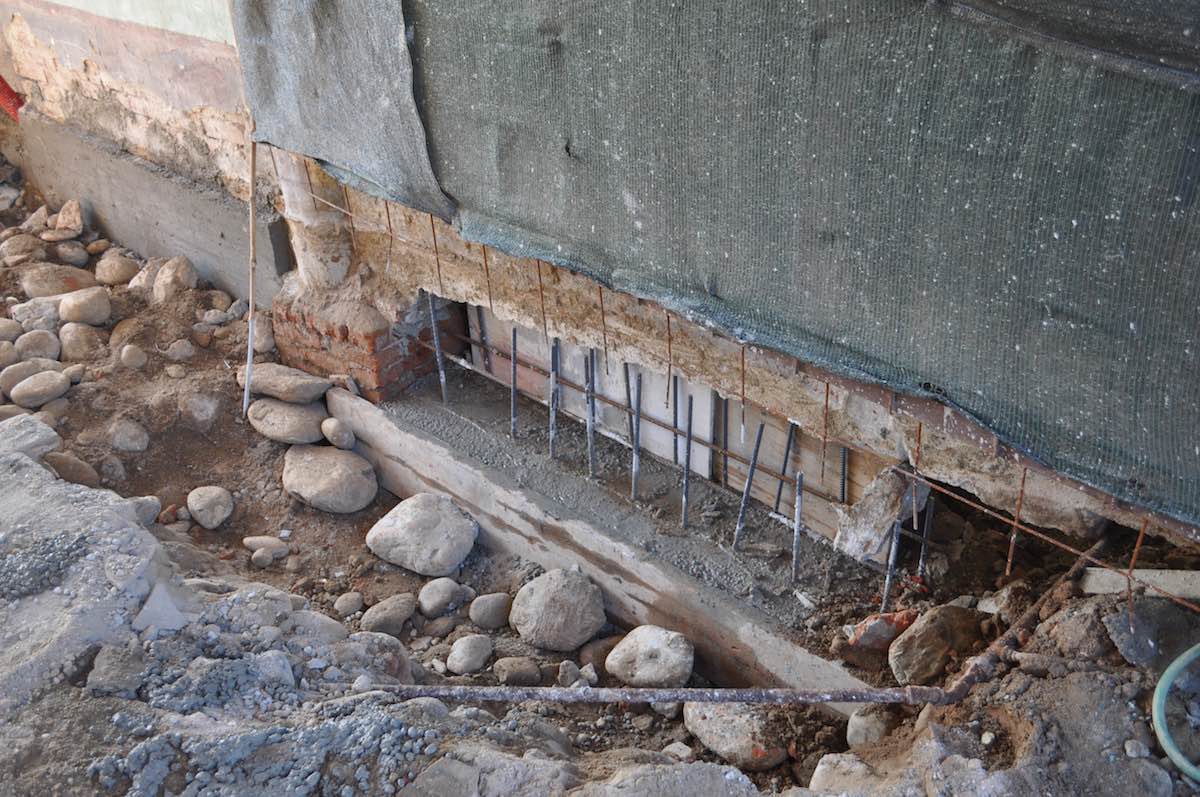
This method involves installing hollow steel piles below ground and beneath existing foundations. Concrete or grout is filled in the space within the steel frame. The space within the steel frame is then filled with either concrete or grout. It supports the external steel casing and is useful when the soil is of poor quality. It is a more precise method, but it is more expensive than the others.
Soil Strengthening
If the soil beneath any building becomes weak, a specialized grouting method is used, and a structural resin foam is injected into the ground. This is not technically the underpinning variety. It is suitable in the situation where there is no need for a full underpinning project and only requires intervention.
Screw Piles and Brack
In the mass concrete method, if the excavation is too deep, the screw piles and brackets are installed to support the foundations. To avoid major problems, hire the best company with a strong portfolio and expert work. You have to make sure your work is done by good hands.
Signs that You Need Underpinning
There are some significant signs to look for when evaluating a building or any property. Subsidence can occur in any property for several reasons. It can be caused by water leakage, weather conditions, soil type, mining, and nearby trees. Underpinning Chelmsford is required only where there is significant subsidence. Sometimes after the initial subsidence, the structure of the building reaches its state of equilibrium, and there will be no danger.
Large cracks in the wall
Not all cracks are scary. Sometimes there are minor cracks in plaster, skirting boards, and cornices. Bigger cracks are the problem, such as an uneven weight distribution in the building due to weak foundations. In interior areas, cracks will be in the wall, floor tiles, and plaster; in exterior areas, they will be in the brickwork, concrete slab, and render.
To observe the cracks, try it over a period of weeks or months to see if they get bigger, wider, or longer. When cracks remain unchanged over a long period, the subsidence has run its course, and the building has settled.
Uneven Floor
An uneven floor is not the only obvious sign, like the cracks in the wall. But if there’s a lean to one or more sides of your home, that is a major sign that something is wrong with the foundation. An uneven floor can sometimes cause misaligned doors. It usually requires a professional. Another sign of subsidence is irregular trenching forming around the edges of the building.
Out of alignment of doors and windows
The major foundation problem is the out-of-alignment of doors and windows. When you notice there are gaps appearing and getting wider around your windows. The other sign is when you feel difficulty while closing and opening the door, and even when locking them.
Conclusion
Underpinning is the process of repairing the existing foundations when subsidence occurs. The cracks in the wall aren’t the only sign of subsidence. However, if the cracks are large, they need to be repaired after a professional investigation. Hire an expert Underpinning Hertfordshire or professionals with experience in subsidence, and look for companies that specialise in it; that way, they can tell you which type of underpinning is most appropriate.