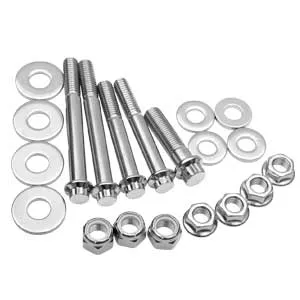
Marine and chemical industries operate in some of the most aggressive environments, where exposure to saltwater, chemicals, and extreme temperatures is constant. In such conditions, the performance of fastening components plays a critical role in ensuring safety, durability, and long-term reliability. This is where Monel 400 fasteners stand out as an ideal solution.
Monel 400 is a nickel-copper alloy known for its exceptional resistance to corrosion and chemical attack. Fasteners made from this alloy are specifically designed to withstand harsh service conditions where conventional carbon steel or even stainless steel fasteners may fail.
Exceptional Corrosion Resistance in Marine Environments
One of the primary reasons Monel 400 fasteners are widely used in marine applications is their outstanding resistance to seawater corrosion. Unlike many metals that corrode rapidly in saltwater, Monel 400 remains stable even when continuously exposed to marine atmospheres.
These fasteners resist:
-
Saltwater and brackish water corrosion
-
Pitting and crevice corrosion
-
Biofouling-related degradation
As a result, Monel 400 fasteners are commonly used in shipbuilding, offshore platforms, seawater piping systems, and coastal infrastructure where reliability is critical.
Superior Performance in Chemical Processing Applications
Chemical plants often handle aggressive substances such as acids, alkalis, and solvents that can quickly degrade standard fasteners. Monel 400 fasteners offer excellent resistance to a wide range of chemical media, including hydrofluoric acid, sulfuric acid, and alkaline solutions.
Their chemical stability helps:
-
Prevent fastener failure due to chemical attack
-
Maintain joint integrity under continuous exposure
-
Reduce contamination risks in processing equipment
This makes them highly suitable for reactors, heat exchangers, storage tanks, and chemical handling systems.
High Strength and Temperature Stability
In addition to corrosion resistance, Monel 400 fasteners provide good mechanical strength across a wide temperature range. They retain their properties at both sub-zero and elevated temperatures, which is essential in marine and chemical operations that experience thermal fluctuations.
Key performance benefits include:
-
Consistent strength under load
-
Resistance to stress corrosion cracking
-
Reliable performance in high-temperature environments
These characteristics ensure secure fastening even under demanding operational conditions.
Long Service Life and Low Maintenance
Downtime and maintenance costs are major concerns in marine and chemical industries. Monel 400 fasteners offer a long service life, significantly reducing the need for frequent replacement or repair. Their resistance to corrosion and wear minimizes the risk of joint failure, which can lead to costly shutdowns or safety hazards.
Because of this durability, many industries prefer sourcing from a trusted Monel 400 fasteners supplier to ensure consistent quality and compliance with international standards.
Common Marine and Chemical Applications
Monel 400 fasteners are widely used in:
-
Offshore oil and gas platforms
-
Ship hulls and marine fittings
-
Seawater desalination plants
-
Chemical reactors and pressure vessels
-
Heat exchangers and condensers
-
Storage tanks and piping systems
Their ability to perform reliably in both marine and chemical environments makes them a versatile fastening solution.
Conclusion
Monel 400 fasteners are an ideal choice for marine and chemical industries due to their exceptional corrosion resistance, chemical stability, and mechanical strength. Their long service life and low maintenance requirements make them a cost-effective solution for harsh environments where reliability cannot be compromised. For applications exposed to seawater, aggressive chemicals, or extreme temperatures, Monel 400 fasteners deliver unmatched performance and peace of mind.