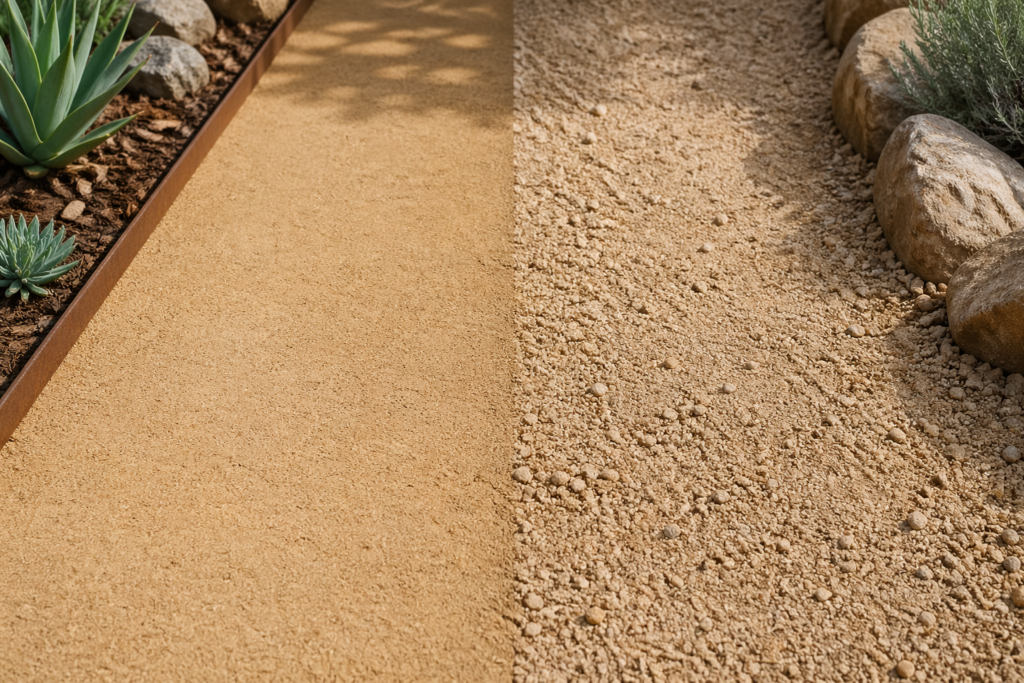
Ever found yourself standing in the middle of a yard project… staring at two piles of what look almost the same… and thinking, “Wait… what are we even choosing here?” Yeah… we have been there too. And honestly, when it comes to Stabilized decomposed granite, things can feel a bit confusing at first.
They look similar. They feel similar. But once we start using them… totally different story.
So let us walk through it like we would if we were figuring it out together on-site.
First Things First… What Are We Even Dealing With?
Alright, quick and simple.
Decomposed granite… or DG… is just granite rock that has broken down over time. Not big chunks… more like small, sandy, gritty pieces. Somewhere between gravel and sand.
It is one of those materials we keep seeing everywhere… garden paths, patios, driveways… even around fire pits. It just blends in nicely. Nothing flashy… but it works.
Now here is where things split.
Natural DG… The Easy, No-Fuss Option
Let us start with the simple one.
Natural DG is just… well… natural. No mixing, no extras. Straight from the source and spread where we need it.
And we will be honest… it looks great at the beginning. Soft, earthy, kind of rustic. We spread it out, smooth it a bit, step back… and think, “Nice, that actually looks pretty good.”
But then… time does its thing.
Foot traffic starts pushing it around. Rain shows up and washes bits away. Dry days? Dust kicks up. And suddenly… that smooth surface is not so smooth anymore.
We have all had that moment where we walk across it and feel it shifting under our feet. Not dangerous… just… annoying.
It is not bad. Not at all. It just needs a little attention now and then. Maybe a rake here, a refill there.
Stabilized DG… Where Things Get Better
Now let us talk about the one that sounds fancy… stabilized decomposed granite.
Here is the main idea… it has a binder mixed into it. That binder helps all those tiny granite pieces stick together once we compact it.
So instead of loose material moving around… we get a surface that holds its ground. Literally.
We walk on it… and it feels firm. Not rock-hard like concrete… but solid enough that we notice the difference right away.
Kind of like packed dirt… but cleaner and more polished.
And yeah… that is usually the moment we go, “Okay… now this makes sense.”
So… What Actually Sets Them Apart?
Let us keep it simple and real.
Stability
Natural DG moves around. That is just how it is.
Stabilized DG? It stays where we put it. Big difference, especially for paths and driveways.
Maintenance
With natural DG, we are going to be checking on it from time to time. Raking, leveling, topping it up.
Stabilized DG lets us relax a bit more. Not zero work… but way less.
Weather Behavior
Rain can be a bit rough on natural DG. It washes out in spots.
Stabilized DG handles it better. It holds together and resists that messy erosion.
Feel Underfoot
Natural DG feels loose… crunchy… kind of like walking on soft gravel.
Stabilized DG feels firm and steady. Easier to walk on… and honestly, easier to trust.
Cost
Natural DG is cheaper at the start. No surprise there.
Stabilized DG costs more upfront… but we are not constantly fixing it. That part matters more than we think.
When Do We Pick One Over the Other?
This is where it gets practical.
If we are working on something low-key… like a garden path we barely use… or just filling space to make things look nicer… natural DG can totally do the job.
No need to overthink it.
But if we are dealing with areas that get used a lot… like:
- Walkways we use every day
- Driveways with regular traffic
- Outdoor seating areas
- Spaces where we want a clean, finished feel
Then stabilized DG starts to make more sense.
It just handles real-life use better.
A Quick Reality Check… Because This Part Matters
We all like saving money upfront. Of course we do.
But here is the thing… if we keep coming back to fix, level, and add more material every few months… that “cheaper” option does not feel so cheap anymore.
It turns into a bit of a cycle.
Stabilized DG, on the other hand, feels more like… we set it up properly… and then just enjoy the space.
Not completely hands-off… but close enough that we notice the difference over time.
Wrapping It Up… No Overthinking Needed
At the end of the day, both options work. It is not about one being “good” and the other “bad.”
It is about what we need… and how much effort we want to put in later.
If we want something quick, simple, and budget-friendly… natural DG gets the job done.
If we want something that feels more solid, lasts longer, and needs less attention… stabilized decomposed granite is usually the better call.
And once we see how each one behaves in real life… the choice becomes pretty obvious.
FAQs
1. Does stabilized decomposed granite become completely hard?
Not like concrete… but it does get firm enough for walking and even driving. It feels solid without losing that natural look.
2. Can we install stabilized DG ourselves?
Yeah, we can. It just takes proper leveling, a bit of moisture, and good compaction. Nothing too complicated… just needs care.
3. Is natural DG bad for driveways?
Not exactly bad… but it can shift and form ruts over time, especially with frequent use. That can get frustrating.
4. How long does stabilized DG last?
If we install it properly, it can last for years with very little maintenance. That is kind of the appeal.
5. Does stabilized DG still look natural?
Yes, and that is the best part. It keeps that same earthy, natural vibe… just performs a lot better.