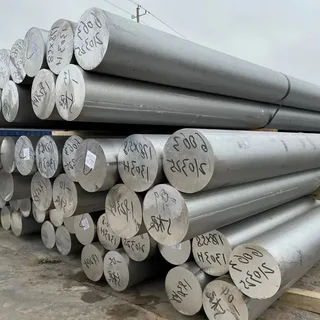
The 6063 T6 aluminum rod is one of the most widely used materials in engineering, construction, and manufacturing industries due to its excellent balance of strength, corrosion resistance, and workability. However, it is often compared with other popular aluminum alloys like 6061, 7075, and 6082 to determine which material best suits specific applications.
Understanding how the 6063 T6 aluminum rod performs against other alloys helps engineers, designers, and manufacturers make informed decisions based on mechanical requirements, cost efficiency, and environmental conditions.
6063 T6 Aluminum Rod vs 6061 Aluminum Alloy
The 6063 T6 aluminum rod is often compared with 6061 because both belong to the 6000 series and contain magnesium and silicon as their primary alloying elements. However, 6063 is generally softer and offers better surface finish quality, making it ideal for architectural and decorative applications.
On the other hand, 6061 is stronger and more suitable for structural components that require higher load-bearing capacity. While the 6063 T6 aluminum rod is easier to extrude into complex shapes, 6061 is preferred in aerospace and heavy-duty engineering.
Key differences:
- 6063 offers superior surface finish and aesthetics
- 6061 provides higher strength and durability
- 6063 is easier to anodize for decorative use
- 6061 is better for structural and mechanical applications
- 6063 is more cost-effective for general fabrication
6063 T6 Aluminum Rod vs 7075 Aluminum Alloy
When comparing the 6063 T6 aluminum rod with 7075 aluminum, the biggest difference lies in strength. 7075 is one of the strongest aluminum alloys available and is commonly used in aerospace, military, and high-stress applications. In contrast, 6063 focuses more on formability and corrosion resistance rather than extreme strength.
The 6063 T6 aluminum rod is much easier to weld and machine compared to 7075, which is more difficult to process and less corrosion-resistant. This makes 6063 a more practical choice for general engineering and architectural projects.
Key differences:
- 7075 has significantly higher tensile strength
- 6063 offers better corrosion resistance
- 7075 is less weldable than 6063
- 6063 is more suitable for decorative and structural light-duty use
- 7075 is ideal for aerospace and defense industries
6063 T6 Aluminum Rod vs 6082 Aluminum Alloy
The 6063 T6 aluminum rod and 6082 alloy are both widely used in structural applications, but 6082 is considered stronger and more suitable for load-bearing structures. 6082 is often called a “structural alloy” in Europe due to its excellent mechanical performance.
However, 6063 stands out when smooth surface finish and complex extrusion shapes are required. The 6063 T6 aluminum rod is also more commonly used in architectural frames, window systems, and decorative profiles.
Key differences:
- 6082 offers higher structural strength
- 6063 provides better surface finish quality
- 6082 is more commonly used in heavy engineering
- 6063 is better for complex extrusion designs
- 6063 is more aesthetically suitable for visible applications
Mechanical and Physical Property Comparison
The 6063 T6 aluminum rod is known for its moderate strength, excellent corrosion resistance, and good thermal conductivity. It is not the strongest aluminum alloy, but it provides a perfect balance for applications where appearance and durability both matter.
Compared to stronger alloys like 6061, 6082, and 7075, the 6063 T6 aluminum rod performs better in environments where corrosion resistance and surface finish are more important than maximum strength.
Key properties comparison:
- Moderate tensile strength (lower than 6061 and 7075)
- Excellent corrosion resistance in outdoor environments
- High suitability for anodizing and finishing
- Good weldability and machinability
- Lightweight and thermally efficient
Applications and Industry Usage Comparison
The 6063 T6 aluminum rod is widely used in industries that prioritize aesthetics, corrosion resistance, and ease of fabrication. It is commonly found in architectural frameworks, furniture, piping systems, and electrical components.
In contrast, stronger alloys like 6061, 6082, and 7075 are used in transportation, aerospace, marine engineering, and heavy machinery. While the 6063 T6 aluminum rod is not typically chosen for extreme load-bearing applications, it remains a top choice for general-purpose manufacturing.
Common applications include:
- Window and door frames in construction
- Automotive trim and decorative parts
- Electrical conduits and piping systems
- Furniture and interior design structures
- Light structural and architectural components
Conclusion
The comparison of the 6063 T6 aluminum rod with other aluminum alloys shows that each material serves a specific purpose based on its mechanical properties and performance characteristics. While alloys like 6061, 6082, and 7075 offer higher strength and are suitable for demanding structural applications, the 6063 T6 aluminum rod stands out for its excellent surface finish, corrosion resistance, and ease of fabrication.
Choosing the right alloy depends on project requirements. If strength is the top priority, 6061 or 7075 may be better options. However, if appearance, versatility, and corrosion resistance matter more, the 6063 T6 aluminum rod remains one of the best and most cost-effective choices in modern manufacturing and construction industries.