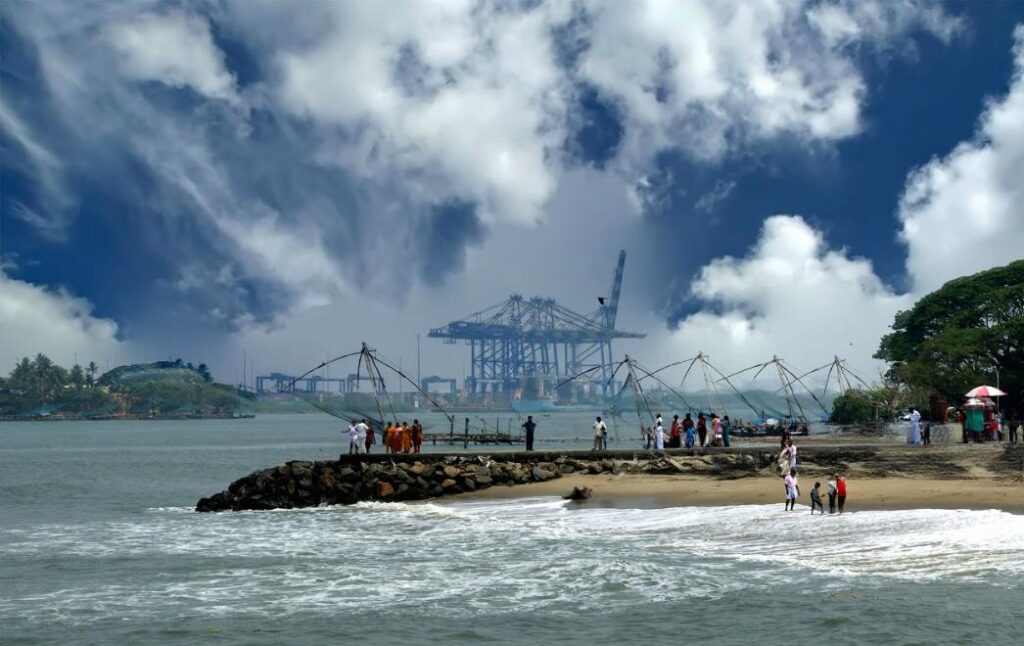
Fort Kochi is quite small; you can walk from one end to the other, but it’s also so thick with places of interest that you could easily lose a week there if you let yourself get caught up. Most people who come to Fort Kochi for the first time don’t have a proper plan, and therefore, usually, two things happen: either one will try to visit every church, market and museum within a single, sweaty round, or one will take the day without a goal and in the afternoon watch the fishing nets instead of at the hour they actually look their best for photography.
A two-day plan is based on the geographical layout of Fort Kochi, not merely on a list of top attractions. Day one is devoted to Mattancherry and Jew Town. On day two, the focus is on the colonial core and the waterfront. Time your visit to the Chinese fishing nets and Fort Kochi beach so you catch golden hour instead of the harsh midday glare. All the places mentioned on this tour are close enough to each other to be covered by walking or a short auto-rickshaw ride, and thus, you won’t spend half your trip commuting between Fort Kochi and Ernakulam.
Why most 2-day Kochi plans fall apart
The problem isn’t a shortage of things to see. It’s sequencing. Mattancherry Palace closes at 5 PM and shuts down completely on Fridays. The Chinese fishing nets look flat and unexciting under the midday sun, but an hour before sunset they turn into the best photo spot in the city.
There is a so-called distance pitfall. Several ‘Kochi in 2 days’ guides throw Cherai Beach into the mix, which sits far enough out to eat an hour or more each way. Ernakulam is only a short ferry hop. Neither leaves room to do the rest justice in two days, and in practice both result in a rushed experience. However, most individual stops are a 10-to-20-minute walk, with a short rickshaw ride covering the longer hops between clusters.
Day 1: Mattancherry and Jew Town
- Morning: Start at Mattancherry Palace (also known as Dutch Palace), open 10 AM to 5 PM, closed on Fridays. Constructed by the Portuguese in 1555 and renovated by the Dutch in 1663, the palace hosts a series of murals depicting Hindu religious art.
- Jew Town: It’s a five-minute walk to the Paradesi Synagogue and the narrow lanes are still lined with antique shops and spice traders. Be leisurely here. Shopkeepers rarely run on a fixed schedule; they open when it suits them.
- Lunch: On day one, choose a local Kerala kitchen, not the hotel restaurant. You’ll get better food for less, especially fish curry.
- Afternoon: If your trip matches the time period with the Kochi-Muziris Biennale (as the Biennale is a recurring event, check the latest dates before you make up your mind), the venues in Mattancherry are close enough to add without breaking the day’s flow. Alternatively, the Durbar Hall art gallery in Ernakulam will suit your interests well as a second-best choice if you have energy left after lunch.
- Evening: If it isn’t already raining, you can go back to the water and watch the sunset with a water view.
Day 2: Fort Kochi’s colonial core and the waterfront
- Walk the colonial quarter early, including Princess Street and the Dutch Cemetery area. Fort Kochi’s Portuguese, Dutch, and British layers of history come together here better than anywhere else.
- Santa Cruz Basilica was originally built in 1505, demolished by the British and then rebuilt in the early 1900s and consecrated in 1905. It is still worth a 20-minute look even if you’re not chasing historical details.
- St. Francis Church, the oldest European-built church in India, has survived the test of time. Vasco da Gama was originally buried here before his remains were later moved to Portugal. It is a quiet place worth a stop; it’s rarely crowded.
- Afternoon: Eat a light, unhurried meal as the weather in Fort Kochi during the day can be quite hot, and you’re better off not fighting the heat.
- Late afternoon into the first hour of sunset: This is the window that matters most on this itinerary. Go to Vasco da Gama Square for a view of the Chinese fishing nets, the so-called ‘cheena vala’ cantilevers that are believed to have arrived on this coast sometime between 1350 and 1450 AD. There you have the chance to see them for free, and fishermen are most active as the sun sets. Light at that time is the most flattering as well.
- Evening: As daylight slowly recedes, you could walk the Fort Kochi beach promenade before dinner at one of the waterfront restaurants nearby.
The palace, the synagogue, and Fort Kochi beach are only a quick walk or a rickshaw ride away. If you’re weighing this against other options among the best hotels in Kerala, location inside the peninsula, rather than the newer commercial side of the city, is what actually decides whether an itinerary like this works.
Before you go: a few things nobody mentions
- Carry cash. Auto-rickshaw drivers and most Jew Town shopkeepers don’t run card machines.
- The Chinese fishing nets are free to view, but fishermen usually expect a tip, somewhere around ₹100 to 200, if you want close-up photos or a turn at the nets yourself.
- Fridays break the Day 1 plan. Mattancherry Palace is shut that day, so if a Friday falls inside your two days, swap the order and lean harder into Jew Town and the colonial quarter instead.
- October to February is the easiest stretch weather-wise. Outside that window, push the walking sections to morning and late afternoon and build in more shade breaks.
- Ferries between Fort Kochi and Ernakulam run every 20 to 30 minutes until around 9 PM, useful if a day runs long and you’d rather not haggle over a cab fare back.
Ready to plan your Fort Kochi stay around this route? Among 5-star hotels in Kochi, staying inside the peninsula is what makes an itinerary like this work.