Your phone is perfectly timed. So why are more and more guys slapping ticking contraptions onto their wrists in 2026? It isn’t about looking to the past but a trade-off between convenience and connection. If you’re researching men’s automatic watches in 2026, you’re really trying to figure out whether workmanship trumps a battery. This is the exact same dilemma you’re in if you are considering a mechanical dive watch as your go-to daily, travel, or real-diving device.
This guide aims to filter through it all with up-to-date stats, factually current specifications, and what the best ranking reviews get wrong.
The Real Trade-Off: Quartz Accuracy vs. Mechanical Soul
An automatic watch is a mechanically powered watch that uses a rotor. The rotor rocks when you move the watch, which winds the mainspring, so you don’t require a battery or a daily hand wind.
The quantity winner, Quartz, is rated within a second every 15 months. While a decent automatic is within +/- 10 to +/- 30 seconds per day. Quartz requires a battery every 2-5 years, and an automatic requires service every 3-7 years.
So, mechanical why? There are three answers, and they all appear in the 2026 sales numbers for mechanical: longevity, serviceability, and value retention. Mechanical and automatic movements are prized for their mechanical art and lineage; for an investment-quality piece, you have mechanical and automatic in a watch because of the craft. It’s a machine you’re going to service for decades to come, not replace.
Why Men’s Automatic Watches Still Matter in 2026
This isn’t about romance alone. Modern automatics solved the old pain points:
- Power Reserve. Standard ETA and Sellita movements are usually only good for 38-41 hours, but upgraded models like the H-10 or Powermatic 80 (Hamilton and Tissot, respectively) exceed 80 hours, ideal for putting on Friday and wearing on Monday.
- Maintenance. Daily winding causes wear, and automatics are usually subjected to less maintenance (thanks to their rotor, which helps a lot with the winding).
- Magnetic resistance. 15,000 gauss is the test for Omega’s Master Chronometer movements in the real world.
An auto is something you should get if you wear a watch every day, want a sweeping seconds hand, and want a piece that will last rather than be fashionable.
What Makes a Mechanical Dive Watch Different Today?
Being water-resistant doesn’t make it a diver. ISO 6425 is still the baseline in 2026: a minimum of 200m, a unidirectional rotating bezel, luminescence, and testing individually on each watch rather than a sample set.
The key players illustrate.
- The Rolex Submariner is the benchmark for toughness and brand cachet.
- The Omega Seamaster Diver 300m integrates Co-Axial technology and METAS-certified performance.
- The Tudor Black Bay 58 offers vintage dimensions and contemporary, in-house mechanics.
The technical specs have, however, become a lot more accessible; the Tissot Seastar 1000 offers 300m water resistance and a Powermatic 80 engine for a fraction of the price of Swiss haute horlogerie. The 4R36-equipped, hacking and hand-winding Seiko 5 Sports continues to be the benchmark entry-level automatic for functionality.
How to Choose the Best Mechanical Dive Watches Without Overpaying
Here’s your mechanical dive watch buying checklist assembled from guides like:
- Movement: Selitta SW200-1 and ETA 2824 clones are good options. You pay a premium, but they hold value for in-house options like the Tudor MT5402 and Rolex 3235.
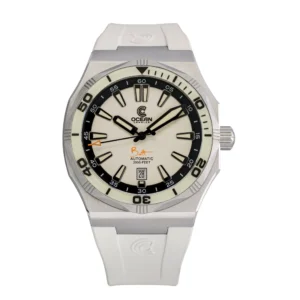
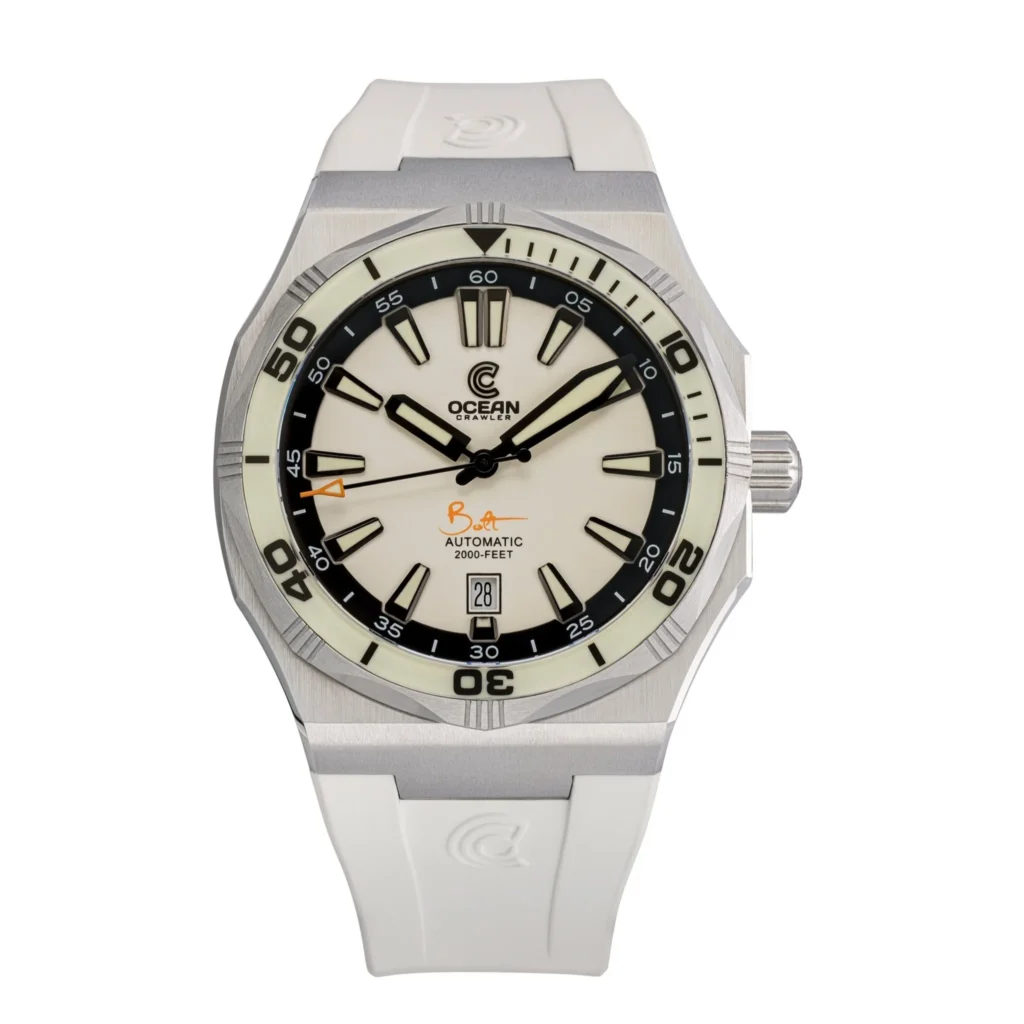
- Crystal and bezel: Sapphire crystal is a no-brainer and a requirement; full sapphire bezels, like in the Ocean Crawler, prevent fading and denting over time.
- Actual water resistance rating. Be careful what you wish for. Make sure your watch has 200m+ water resistance with a guarantee that the watch itself was pressure tested as a completed unit, as opposed to “tested to design.”
- Watch thickness. You no longer need a monstrous 15.6mm diver to achieve a 600m depth rating, with thinner 12.3mm options now available.
- Service capability- If you keep the watch for five years, will the neighborhood watchmaker be able to procure parts?
Who Should Skip Mechanical?
- Want to set and forget across time zones.
- Swim in chlorine pools daily; never rinse off the watch.
- Sub-$250 budget, need 200m WR now, quartz Citizen Promaster still wins over cheap autos on sale:
Is Mechanical Still Smart?
Yes, if you wear it. They sacrifice absolute accuracy to gain independence, repairability, and a visceral connection to the mechanism. For everyday wear, men’s automatic wristwatches provide you with a self-contained machine that never needs a battery and wears in as you wear them. For when you need a tool, mechanical divers will have sapphire, a screw-down crown, and ISO testing and will likely stand up to impact, salt, and years of wear. Even when looking at the best mechanical dive watches, value resides in the mid-tier, not simply Rolex.
This is where the success of a brand like Ocean Crawler comes in. Ocean Crawler specializes in building rugged, mechanical, shockproof timepieces intended for extreme conditions. Every single timepiece built by Ocean Crawler undergoes 10 harsh tests, which also includes the 6,000 G impact hammer test.