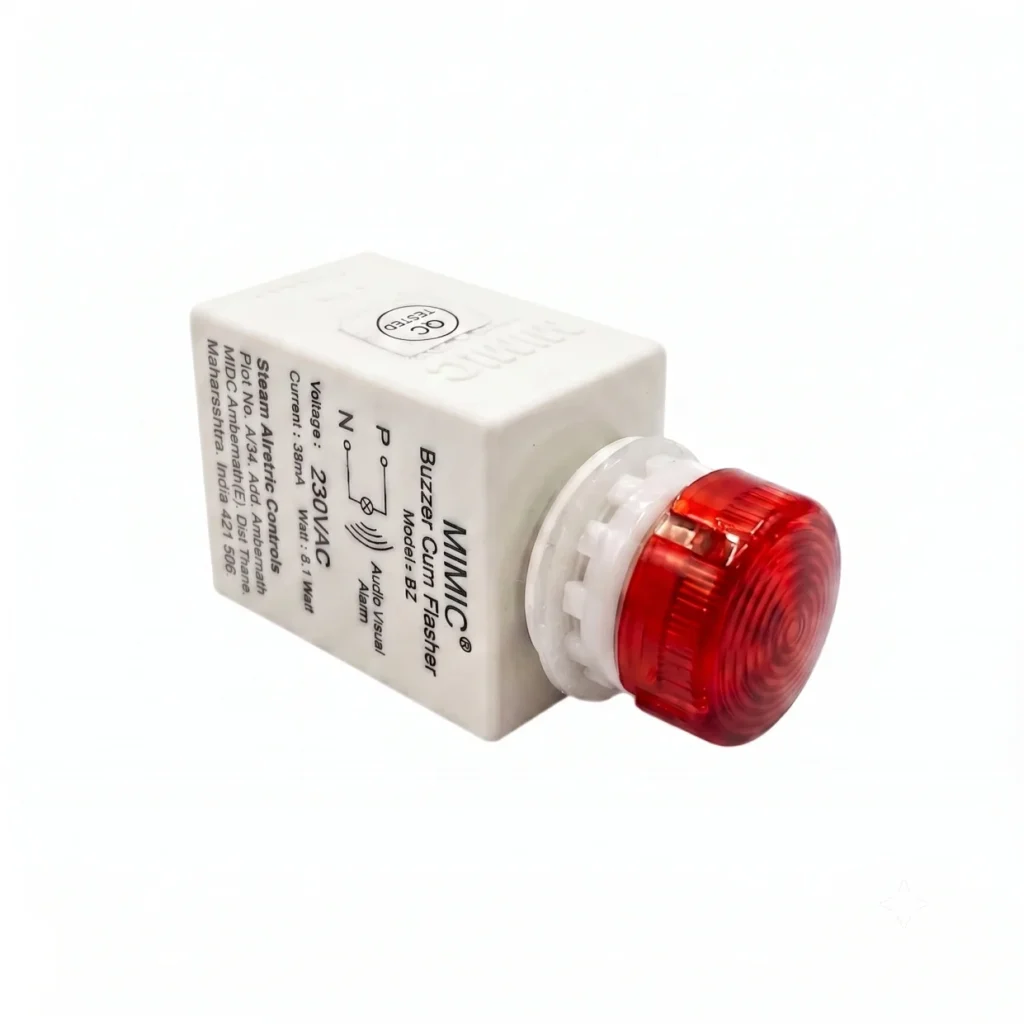
In an industrial workplace, a warning has little value if nobody notices it. Operators often work around running machines, electrical panels, motors, and automation equipment, where there can be plenty of background noise and activity. A small indicator light may not always catch someone’s attention, while a buzzer on its own may be difficult to identify in a noisy area. This is where an Audio visual alarm can make a practical difference.
By combining an audible signal with a flashing visual indication, this type of warning device gives operators two ways to recognize an alert. It is a simple idea, but it can be useful in many industrial and electrical applications.
What Makes an Audio Visual Alarm Different?
An Audio visual alarm combines two common warning methods into one device. The audible portion produces a sound when the alarm circuit is activated, while the visual portion provides a flashing indication.
I find this combination useful because people do not always interact with equipment in the same way. An operator might be looking at another machine when an alert occurs. In that situation, the sound can attract attention. Once the operator looks toward the equipment, the flashing light can make the warning easier to identify.
This makes the device particularly suitable for applications where quick awareness of a warning condition is important.
Why Visual Indication Still Matters
It is easy to assume that a loud warning sound is enough, but industrial environments are not always quiet. Machinery, production lines, ventilation systems, and other equipment can create considerable background noise.
An Audio visual alarm provides a visual indication alongside the sound. This can be helpful when the operator needs to confirm that a particular warning has been activated.
The flashing signal can also be easier to recognize from a distance than a small conventional indicator lamp. The exact visibility, however, depends on the product design, installation position, and surrounding conditions.
Where Is an Audio Visual Alarm Commonly Considered?
An Audio visual alarm can be used in different types of electrical and industrial systems. Control panels are one obvious application because operators often need clear warning indications from panel-mounted equipment.
It may also be considered for:
- Industrial machinery
- Electrical control systems
- Automation panels
- Manufacturing equipment
- Machine monitoring applications
- Process control equipment
- Industrial warning circuits
The right application depends on the specifications of the individual alarm. Voltage, mounting arrangement, environmental conditions, and circuit requirements should be checked before installation.
Choosing the Right Voltage
When I select an Audio visual alarm, one of the first specifications I check is its operating voltage. The alarm needs to be compatible with the electrical circuit where it will be installed.
For example, a control system may operate at a particular AC or DC voltage, so the selected alarm should have the appropriate rating. Checking this information before purchase can prevent unnecessary installation issues.
It is also worth looking at the device’s physical dimensions. If the alarm is going into a control panel, there needs to be enough space for mounting and wiring.
Think About the Installation Location
The location of an Audio visual alarm can have a direct effect on how effectively it communicates a warning.
I would place the device where operators can easily see the flashing indication. At the same time, the audible signal should be noticeable within the intended working area.
For a busy production floor, positioning becomes especially important. A warning device hidden behind other equipment may not provide the same practical benefit as one installed in a clearly visible location.
What Should Be Checked Before Installation?
Before installing an Audio visual alarm, I would review a few basic points. First, I would confirm the operating voltage and electrical specifications. Next, I would check the mounting method and available panel space.
The surrounding environment should also be considered. If the alarm will operate near dust, moisture, vibration, or temperature variations, the product’s environmental specifications should be suitable for those conditions.
Finally, I would check the wiring instructions and make sure the alarm is connected correctly to the intended warning circuit.
How It Can Help Operators
The main purpose of an Audio visual alarm is communication. It tells an operator that a particular condition requires attention.
For example, an alarm could be connected to a machine control circuit so that it activates when a specified warning condition occurs. The sound attracts attention, while the flashing light gives a clear visual indication.
This does not replace proper machine controls, monitoring, or safety procedures. Instead, it can serve as an additional warning method within a suitably designed electrical system.
Regular Testing Is Worthwhile
Even a properly installed Audio visual alarm should be checked periodically. A warning device is useful only when it operates when required.
During routine maintenance, I would check whether the audible signal is functioning and whether the visual indicator is flashing correctly. Connections and mounting can also be inspected as part of the site’s normal maintenance process.
If the alarm is connected to an automated system, the complete warning circuit can be tested according to the equipment manufacturer’s recommendations and the site’s maintenance procedure.
A Practical Approach to Warning Indication
An Audio visual alarm is not complicated, and that is part of its appeal. It brings together sound and visual indication in a straightforward warning solution.
For industrial control panels, machinery, electrical systems, and automation applications, it can provide an additional way of making important conditions noticeable. The key is choosing a device that matches the electrical and environmental requirements of the application.
When I look at warning equipment, I prefer to consider the actual working conditions rather than selecting a product based only on appearance. Checking voltage, mounting requirements, visibility, sound requirements, and environmental suitability can make the selection process much more reliable.
In the end, an Audio visual alarm can be a useful addition wherever operators need a clear and noticeable warning. Its combination of sound and flashing light gives industrial systems a simple way to communicate that attention may be required.