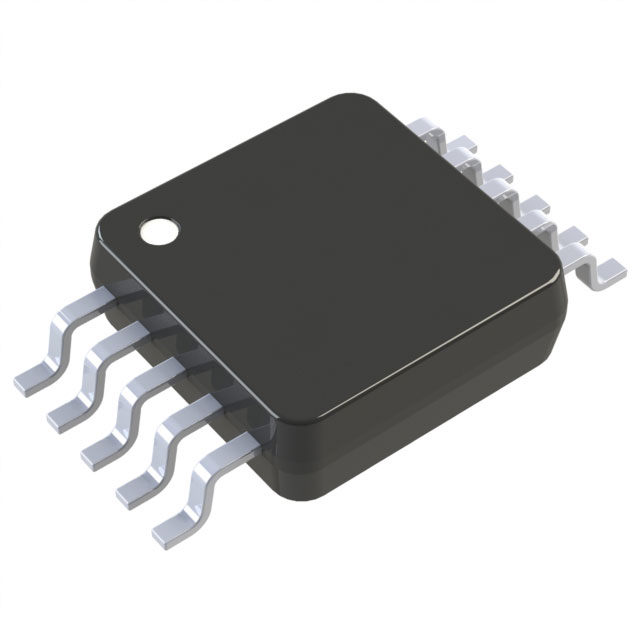
Battery Management
Battery Management has become one of the most important technologies behind modern rechargeable energy systems. Batteries are now used in applications ranging from electric vehicles and renewable energy storage to medical equipment, robotics, telecommunications, industrial machinery and consumer electronics. As these systems become more powerful, managing how batteries charge, discharge, age and respond to changing operating conditions is essential.
A battery is not simply a passive source of stored electrical energy. Its performance changes continuously according to temperature, load, charging history, cell condition and age. Without intelligent supervision, these variations can reduce capacity, shorten useful life and increase the possibility of unexpected failure. Effective battery control provides the monitoring, protection and decision-making required to keep batteries operating within safe and efficient limits.
Why Is Battery Management Essential for Modern Energy Systems?
Battery Management is essential because modern battery packs must perform reliably under conditions that can change rapidly. A battery may experience high current during acceleration in an electric vehicle, fluctuating charge levels in a solar storage system or continuous cycling in industrial automation. Each condition places different demands on the cells.
A management system monitors these changing conditions and determines how the battery should respond. It may reduce charging current, limit available power, activate cooling or disconnect the battery if unsafe conditions are detected.
This real-time decision-making allows the battery to remain within recommended limits while still delivering the energy required by the application.
Battery management also provides information to other systems. A vehicle controller, for example, may need to know available energy and allowable power. An industrial monitoring platform may require information about battery health and predicted maintenance requirements.
The result is a more controlled and predictable energy storage system.
What Problems Can Develop Without Proper Battery Supervision?
Rechargeable battery packs can develop several problems if they are not monitored carefully. These problems may begin gradually and become more serious over time.
One of the most common challenges is cell imbalance. Individual cells are never completely identical, and small differences can increase as the battery experiences repeated charging and discharging.
Other problems can include:
- Excessive cell voltage
- Deep discharge
- High current
- Rising internal temperature
- Uneven cell ageing
- Reduced usable capacity
- Increased internal resistance
- Unexpected power limitation
- Shortened operating life
- Greater risk of electrical faults
Without supervision, a battery may continue operating even when one or more cells are outside their preferred conditions.
Battery management helps detect these issues early so that corrective action can be taken.
How Does Battery Management Monitor Individual Cells?
Modern battery packs often contain many cells connected together. Monitoring only the total battery voltage is not enough because individual cells may behave differently.
A management system therefore measures the voltage of separate cells or groups of cells.
If one cell reaches a high-voltage threshold during charging, the system can respond even if the total pack voltage still appears acceptable. Similarly, a weak cell that reaches a low-voltage limit during discharge can be identified before it becomes severely depleted.
Individual monitoring allows the system to understand what is happening inside the battery rather than relying only on overall pack behaviour.
This is especially important in large energy storage systems where hundreds or even thousands of cells may operate together.
Why Is Voltage Control Critical for Battery Health?
Every rechargeable battery chemistry has a preferred operating voltage range.
When voltage becomes too high, the battery can experience increased chemical stress. When voltage becomes too low, capacity and long-term performance may be affected.
Battery management systems continuously compare measured voltage against acceptable thresholds.
If the battery approaches an upper charging limit, the system can reduce or stop charging. If a cell becomes too deeply discharged, the system may disconnect the load.
This control helps protect the battery from conditions that could accelerate degradation.
Accurate voltage supervision also improves the reliability of state-of-charge calculations and cell balancing.
How Does Temperature Influence Battery Performance?
Temperature has a major effect on how batteries behave.
High temperature can increase chemical reaction rates inside the cell. While this may temporarily improve power output, prolonged exposure can accelerate ageing and shorten battery life.
Low temperature can reduce available power and make charging more difficult.
Battery management systems therefore use temperature sensors to monitor critical areas of the pack.
These measurements can be used to:
- Reduce charging current
- Limit power output
- Activate cooling
- Start battery heating
- Trigger warnings
- Disconnect the battery if necessary
Keeping cells within a suitable thermal range supports safer operation and more consistent performance.
Why Is Thermal Uniformity Important Across a Battery Pack?
It is not enough for the average battery temperature to remain acceptable. Different areas of the pack can experience different thermal conditions.
Cells located near cooling channels may operate at lower temperatures than cells deeper inside the battery structure.
These differences can cause cells to age at different rates.
A good thermal management strategy aims to keep temperature variation across the pack as small as possible. This helps cells remain more closely matched and reduces uneven degradation.
How Does Battery Management Control Charging?
Charging is one of the most important stages in battery operation.
The charging process must deliver energy efficiently without exceeding electrical or thermal limits.
Battery management systems monitor charging conditions and communicate with chargers or power electronics.
The controller may consider:
- Battery temperature
- Individual cell voltage
- Current charge level
- Maximum permitted current
- Cell balance
- Battery age
- Charging history
Charging current may be high when the battery is at a moderate state of charge and operating at a suitable temperature. As the battery approaches full charge, current can be reduced.
This controlled approach supports safe charging while limiting unnecessary battery stress.
How Can Smarter Charging Extend Battery Life?
Battery ageing is influenced strongly by charging behaviour.
Repeated exposure to high voltage, high temperature or excessive current can increase long-term degradation.
Smarter charging strategies adjust the charging process according to battery condition rather than applying the same profile every time.
For example, charging may be slower when the battery is very cold or when internal temperature begins to rise.
Some systems may also avoid keeping the battery at maximum charge for unnecessary periods.
These strategies can reduce stress and preserve useful capacity.
What Is Cell Balancing and Why Does It Matter?
Cell balancing is used to reduce differences between cells in the same battery pack.
Even when cells begin with similar characteristics, small differences develop over time.
One cell may charge slightly faster than another. Another may lose capacity more quickly.
If these differences become large, one cell can limit the usable capacity of the entire battery.
Balancing helps bring cells closer to the same charge level.
The two main approaches are passive and active balancing.
Passive balancing removes a small amount of energy from cells with higher charge levels.
Active balancing transfers energy between cells or groups of cells.
Benefits can include:
- Better utilisation of available capacity
- Reduced risk of individual cell overcharge
- More consistent pack performance
- Improved charging efficiency
- Lower cell-to-cell variation
Cell balancing is particularly important in high-capacity battery systems.
How Is State of Charge Estimated?
State of charge describes how much usable energy remains in a battery.
It is usually shown as a percentage.
Accurately estimating this value is more difficult than it may appear.
Battery voltage changes according to load, temperature and chemistry. As a result, voltage alone may not provide a reliable indication.
Management systems may use several techniques together.
These can include:
- Open-circuit voltage
- Coulomb counting
- Current measurement
- Temperature compensation
- Battery models
- Historical usage patterns
- Adaptive algorithms
Combining these methods improves accuracy.
Reliable state-of-charge information is essential in applications where users need to know how much operating time remains.
How Is State of Health Different From State of Charge?
State of charge indicates current energy availability.
State of health describes how the battery has changed compared with its original condition.
A battery can be fully charged but still have reduced capacity.
For example, an ageing battery may show 100 per cent charge while storing significantly less energy than when it was new.
State-of-health calculations may consider:
- Capacity loss
- Internal resistance
- Power capability
- Charging behaviour
- Temperature history
- Cycle count
- Energy throughput
Understanding battery health helps operators plan maintenance and replacement more effectively.
How Can Battery Management Improve Safety?
Safety is a central responsibility of battery management.
The system continuously checks for conditions that could damage the battery or surrounding equipment.
Potentially dangerous conditions include excessive voltage, high temperature, overcurrent and short circuit events.
Protective actions may include:
- Disconnecting the charger
- Disconnecting the load
- Reducing current
- Activating cooling
- Triggering alarms
- Limiting available power
- Communicating a fault
These responses are often designed to happen automatically.
This is especially important in high-energy battery packs where faults can develop quickly.
How Does Battery Management Improve Energy Efficiency?
Battery efficiency is not only determined by cell chemistry.
How the battery is operated can also influence how much useful energy is available.
A management system can reduce unnecessary energy losses by keeping cells balanced, limiting excessive current and controlling temperature.
Efficient operation can also reduce the need for protective power restrictions.
When the battery remains within its ideal operating range, more of its stored energy can be used effectively.
This becomes particularly important in applications where energy availability directly affects operating time or range.
How Does Battery Management Support Electric Vehicles?
Electric vehicles place demanding requirements on batteries.
The battery must support acceleration, regenerative braking, climate control and charging while remaining safe across a wide range of temperatures.
Battery management helps coordinate these requirements.
It provides information about available power and energy while controlling charge and discharge limits.
During rapid acceleration, the system may determine how much current the battery can safely provide.
During fast charging, it monitors temperature and voltage to prevent excessive stress.
During regenerative braking, it determines how much energy the battery can accept.
This real-time control contributes directly to vehicle performance, range and reliability.
Why Is Battery Management Important for Renewable Energy Storage?
Renewable energy sources such as solar and wind do not produce electricity continuously.
Battery storage helps capture excess energy and release it when generation is lower.
Battery management plays a major role in this process.
The system tracks available capacity and ensures that charging and discharging remain within safe limits.
In larger installations, battery information can be shared with energy management platforms.
This allows the wider system to decide when electricity should be stored, used locally or supplied elsewhere.
Effective battery control therefore supports more efficient use of renewable energy.
How Does Battery Management Support Industrial Automation?
Industrial equipment increasingly relies on rechargeable power systems.
Applications include automated guided vehicles, robotics, mobile machinery and backup power.
Unexpected battery failure can interrupt production and increase operating costs.
Battery management provides detailed information about battery condition.
Maintenance teams can monitor:
- Remaining energy
- Battery health
- Temperature
- Charging patterns
- Fault events
- Cycle history
- Cell imbalance
This information supports more predictable maintenance.
Instead of replacing batteries according to fixed schedules, organisations can make decisions based on actual condition.
How Can Battery Management Reduce Unexpected Downtime?
Battery failures are often preceded by measurable changes.
Capacity may decline, internal resistance may rise or temperature behaviour may become unusual.
Continuous monitoring makes it possible to identify these trends.
This helps organisations move from reactive maintenance to predictive maintenance.
Potential benefits include:
- Fewer unexpected failures
- Better maintenance planning
- Reduced unnecessary replacement
- Improved equipment availability
- More accurate battery lifecycle planning
This approach is particularly valuable where equipment downtime is expensive.
What Role Does Communication Play in Battery Management?
Modern battery systems rarely operate independently.
They communicate with chargers, vehicle controllers, industrial equipment and energy management platforms.
Communication allows battery information to influence wider system behaviour.
A controller may share:
- Current state of charge
- Battery temperature
- Maximum allowed current
- Available power
- State of health
- Fault status
- Estimated remaining runtime
Other systems can then adjust their behaviour.
For example, a machine may reduce non-essential power consumption when battery capacity becomes low.
How Is Battery Management Becoming More Intelligent?
Battery management is moving beyond fixed thresholds and simple protection.
Advanced systems are increasingly using data analysis and adaptive algorithms.
Instead of treating every battery the same, these systems can learn from operating history.
They may adjust charging strategies according to ageing, temperature and usage patterns.
More advanced platforms can also compare data across large fleets of batteries.
This helps identify trends that would be difficult to detect from a single battery.
How Can Predictive Analytics Improve Battery Performance?
Predictive analytics uses historical and real-time data to estimate what may happen next.
In battery systems, this can help identify developing problems before they result in failure.
An algorithm might detect that internal resistance is increasing faster than expected.
It could also recognise a pattern of rising temperature during charging.
These signals may indicate that maintenance should be scheduled.
Predictive analytics can support:
- Earlier fault detection
- Improved maintenance planning
- Better lifetime estimates
- More accurate capacity forecasting
- Reduced unexpected downtime
This represents an important shift from reactive to proactive battery management.
How Can Battery Management Support Sustainability?
Longer battery life can reduce the frequency of battery replacement.
This can lower material consumption and reduce waste.
Better monitoring can also prevent batteries from being replaced too early.
If a battery still has useful capacity, accurate health information allows operators to continue using it safely.
Battery data may also help determine whether a battery can be repurposed for a less demanding application.
For example, a battery no longer suitable for high-performance transport may still have value in stationary energy storage.
Effective battery control therefore contributes to more efficient use of resources.
What Factors Should Be Considered When Designing Battery Management?
Battery management requirements vary according to application.
A small consumer device does not need the same level of control as a large electric vehicle pack.
Designers must consider battery chemistry, number of cells, power requirements and operating environment.
Important considerations include:
- Voltage range
- Current capability
- Temperature limits
- Cell configuration
- Communication requirements
- Safety standards
- Accuracy requirements
- Balancing strategy
- Diagnostic capability
- Future scalability
A well-designed system should provide enough protection and monitoring without unnecessary complexity.
Why Is Accurate Sensing So Important?
Every management decision depends on sensor information.
If voltage, current or temperature measurements are inaccurate, the controller may make incorrect decisions.
Precision is especially important when cells operate close to their voltage limits.
Even small measurement errors can affect balancing and charge estimation.
Reliable sensors and careful calibration are therefore essential.
Accurate measurement improves both safety and performance.
How Will Battery Management Change in Future Energy Systems?
Future battery systems are expected to become more connected, more intelligent and more adaptive.
Improvements in sensing, computing and communication will allow controllers to analyse larger amounts of data.
Battery management may increasingly use machine learning to improve state-of-charge estimates and identify unusual behaviour.
Cloud-connected monitoring may also become more common in industrial and energy storage applications.
This will allow battery performance to be analysed across multiple sites and systems.
Future systems may automatically adjust charging, power limits and maintenance recommendations based on real-world operating history.
Why Will Battery Management Remain Critical as Electrification Expands?
Electrification is increasing across transport, energy, manufacturing and everyday technology.
As more systems depend on batteries, reliability becomes increasingly important.
Battery Management provides the intelligence required to operate these systems safely and efficiently.
It combines measurement, protection, balancing, charging control, condition monitoring and communication into one coordinated process.
These functions help batteries deliver useful energy while remaining within appropriate operating limits.
The importance of battery control will continue to grow as battery packs become larger and more integrated into critical infrastructure.
How Does Battery Management Create Long-Term Value?
The value of a battery system is not determined only by how much energy it stores when new.
Long-term performance, reliability and maintenance costs are equally important.
Effective management helps protect battery capacity and identify problems before they result in unexpected failure.
It also provides data that allows users to make more informed decisions about charging, maintenance and replacement.
This can reduce operational costs while increasing confidence in battery-powered systems.
Why Is Battery Management Central to the Future of Stored Energy?
The future of energy storage depends on more than improved battery chemistry. It also depends on how intelligently batteries are controlled.
Battery Management connects battery hardware with the information needed to make better operating decisions. By monitoring voltage, current, temperature, cell balance and long-term health, it allows each battery to operate according to its actual condition rather than fixed assumptions.
As electric vehicles, renewable energy, automation and connected devices continue to expand, sophisticated battery control will become even more important. Systems that understand battery condition in real time will be better positioned to improve safety, extend operating life, optimise charging and use stored energy more efficiently.
For this reason, Battery Management will remain one of the key technologies supporting the transition towards smarter, safer and more sustainable electrical systems.