A prostate cancer diagnosis often brings many questions. Patients want to know about treatment options, recovery time, long-term outcomes, and most importantly, who should perform the surgery.
Many men begin searching online for the best prostate cancer surgeon or the best prostate cancer surgeon in the US. While experience and reputation matter, understanding modern treatment options can help patients make informed decisions.
One of the most significant advances in prostate cancer treatment is nerve sparing robotic prostatectomy. This surgical technique has helped many patients recover more comfortably while maintaining quality of life after treatment.
This guide explains how prostate cancer surgery works, what nerve-sparing techniques involve, and what patients should consider when selecting a surgeon.
Understanding Prostate Cancer
Prostate cancer develops in the prostate gland, which is located below the bladder and surrounds part of the urethra.
It is one of the most commonly diagnosed cancers among men. Many cases are detected early through routine screening, allowing doctors to treat the disease before it spreads.
Common symptoms may include:
- Frequent urination
- Difficulty urinating
- Weak urine stream
- Blood in urine
- Pelvic discomfort
- Erectile dysfunction
However, many men experience no symptoms during the early stages of the disease.
Why Choosing the Right Surgeon Matters
Prostate surgery is a specialized procedure that requires skill and experience.
The prostate sits near delicate nerves and muscles that control urinary function and sexual performance. Preserving these structures whenever medically appropriate is an important part of treatment planning.
Patients often search for the best prostate cancer surgeon because surgical experience can influence:
- Cancer removal success
- Recovery time
- Urinary control outcomes
- Sexual function preservation
- Risk of complications
The goal is not simply removing cancer. It is also helping patients return to normal life as smoothly as possible.
What Is a Radical Prostatectomy?
A radical prostatectomy is the surgical removal of the prostate gland and nearby tissue affected by cancer.
The procedure may be performed using:
- Traditional open surgery
- Laparoscopic surgery
- Robotic-assisted surgery
Today, robotic-assisted techniques are widely used in many leading cancer centers throughout the United States.
Understanding Nerve Sparing Robotic Prostatectomy
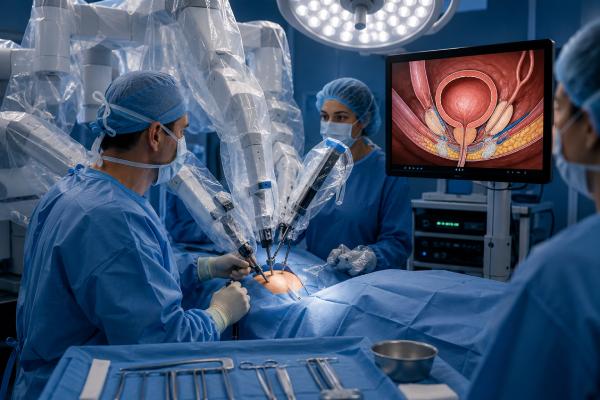
Nerve sparing robotic prostatectomy is a specialized form of robotic prostate surgery designed to preserve the nerves located alongside the prostate whenever it is safe to do so.
These nerve bundles play an important role in:
- Erectile function
- Bladder control
- Overall quality of life
During surgery, the surgeon carefully separates these nerves from the prostate while removing the cancerous tissue.
Not every patient is a candidate for nerve-sparing surgery. The decision depends on factors such as:
- Tumor location
- Cancer stage
- Imaging results
- Overall health
- Surgical findings
The primary goal remains complete cancer removal, but when possible, preserving healthy nerves can provide additional benefits after surgery.
Benefits of Robotic-Assisted Surgery
Robotic technology has transformed many prostate cancer procedures.
The robotic system does not operate independently. Instead, the surgeon controls the instruments throughout the procedure.
Potential advantages include:
Smaller Incisions
Robotic surgery typically uses several small incisions instead of one large incision.
Reduced Blood Loss
Many patients experience less blood loss compared to traditional open surgery.
Faster Recovery
Smaller incisions often contribute to quicker healing and shorter hospital stays.
Improved Visualization
The robotic system provides a high-definition view of the surgical area, helping surgeons work with greater precision.
Enhanced Dexterity
Specialized instruments allow movements that may be difficult to achieve with standard surgical tools.
Qualities of the Best Prostate Cancer Surgeon
Finding the best prostate cancer surgeon involves more than reviewing online rankings.
Patients should consider several factors when evaluating surgeons.
Extensive Experience
Surgeons who perform prostate cancer procedures regularly often develop greater familiarity with different cancer presentations and surgical challenges.
Specialized Training
Many leading surgeons complete fellowship training in urologic oncology or robotic surgery.
High Surgical Volume
A surgeon who performs many prostate cancer surgeries each year may have broader experience managing both routine and complex cases.
Patient Communication
Patients should feel comfortable asking questions and discussing concerns.
Access to Modern Technology
Leading surgical centers often provide advanced imaging, robotic systems, and multidisciplinary cancer care.
What Makes Someone the Best Prostate Cancer Surgeon in the US?
There is no official national ranking that identifies a single best prostate cancer surgeon in the US.
However, highly respected surgeons often share common characteristics:
- Years of prostate cancer experience
- Thousands of completed procedures
- Strong academic credentials
- Research involvement
- Advanced robotic surgery expertise
- Positive patient outcomes
Patients should remember that the best surgeon for one person may not be the best choice for another. Personal comfort, communication style, location, and treatment philosophy also matter.
Questions to Ask During a Consultation
Meeting with a surgeon provides valuable information about treatment options and expected outcomes.
Helpful questions include:
- How many prostate cancer surgeries have you performed?
- How often do you perform nerve sparing robotic prostatectomy?
- Am I a candidate for nerve-sparing surgery?
- What are the risks and benefits?
- What can I expect during recovery?
- How long will I stay in the hospital?
- What follow-up care is required?
These discussions help patients better understand their treatment plan.
Recovery After Nerve Sparing Robotic Prostatectomy
Recovery varies from person to person.
Most patients can expect:
Short Hospital Stay
Many individuals return home within one day after surgery.
Temporary Catheter Use
A urinary catheter is typically used for several days following the procedure.
Gradual Return to Activity
Walking is encouraged soon after surgery, while heavy lifting should be avoided during the initial recovery period.
Follow-Up Testing
Regular PSA testing helps monitor treatment success.
Functional Recovery
Recovery of urinary control and sexual function can take time and varies between individuals.
Following postoperative instructions carefully can support the healing process.
The Importance of Personalized Treatment
Every prostate cancer diagnosis is different.
Factors that influence treatment decisions include:
- Cancer stage
- PSA level
- Gleason score
- Age
- General health
- Personal goals
For some patients, surgery may be the preferred option. Others may benefit from radiation therapy, active surveillance, or combined treatment approaches.
A personalized treatment plan helps ensure that care aligns with the patient’s medical needs and priorities.
Final Thoughts
Choosing a prostate cancer surgeon is one of the most important decisions a patient can make after diagnosis. While many men search for the best prostate cancer surgeon or the best prostate cancer surgeon in the US, the focus should be on finding a specialist with experience, strong communication skills, and expertise in modern treatment techniques.
Nerve sparing robotic prostatectomy has become an important option for eligible patients because it combines effective cancer treatment with efforts to preserve urinary and sexual function whenever possible.
By understanding available treatment options and working closely with an experienced surgeon, patients can move forward with greater confidence and make informed decisions about their care.