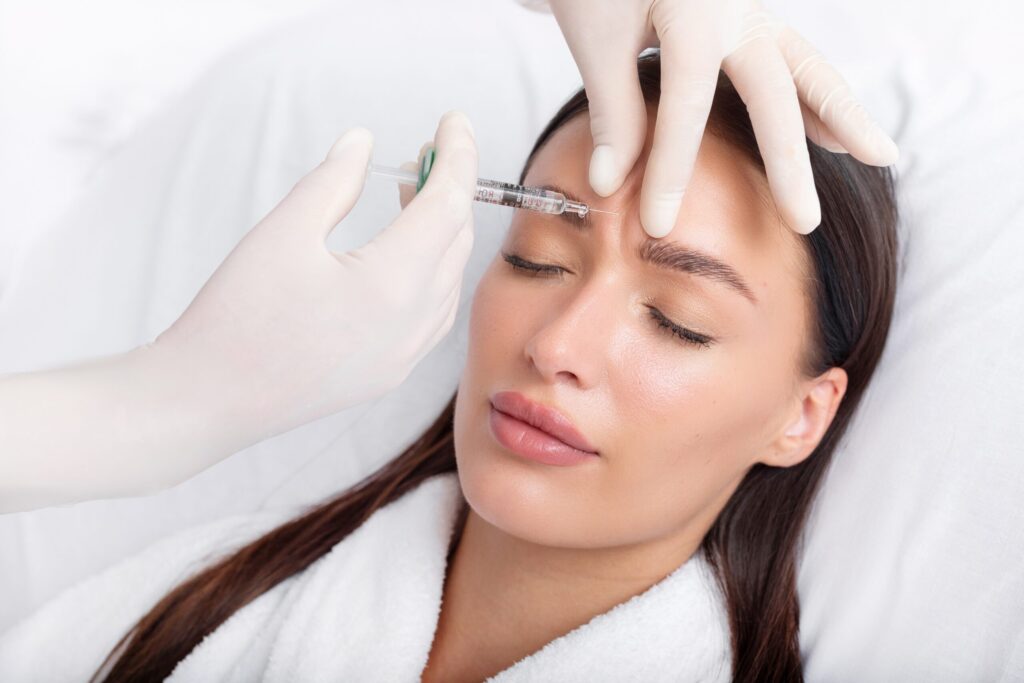
Young woman recieving injection of anti-aging botox filler to forehead from professional cosmetologist in beauty salon
Forehead lines are a common facial concern that can become more noticeable when raising the eyebrows, expressing surprise, or concentrating. Although these lines are a natural part of facial movement, some people may prefer a smoother forehead appearance while maintaining their ability to express themselves naturally. Understanding how forehead lines are assessed during consultation is an important part of planning an individualised aesthetic treatment.
A professional consultation involves more than identifying visible lines. It considers facial anatomy, muscle movement, skin characteristics, eyebrow position, personal preferences, and the overall balance of the upper face. These factors help guide decisions about whether treatment may be appropriate and what type of result could be realistic.
At a specialist aesthetic clinic, Botox in London consultations can provide an opportunity to discuss forehead concerns, understand how facial expressions influence line formation, and explore suitable treatment options. Careful assessment also helps establish whether the primary concern is dynamic lines caused by movement or lines that remain visible when the face is at rest.
Why Are Forehead Lines Assessed Before Botox Treatment?
Forehead lines develop through a combination of repeated facial expressions, natural changes in skin elasticity, and individual anatomical characteristics. The frontalis muscle, which extends across the forehead, plays an important role in raising the eyebrows. When this muscle contracts, horizontal lines may appear across the skin.
The visibility and depth of these lines vary from person to person. Some individuals notice fine lines only when lifting their eyebrows, while others have more established creases that remain visible without deliberate movement.
An assessment helps the practitioner understand these differences before discussing treatment. Rather than applying the same approach to everyone, the consultation considers the location of the lines, the strength of the underlying muscle activity, and the patient’s desired outcome.
This process also provides an opportunity to discuss expectations. Some people want a softer appearance, while others prefer to reduce the prominence of deeper forehead lines without significantly changing their natural expressions.
How Are Dynamic and Static Forehead Lines Distinguished?
One of the first considerations during a consultation is whether forehead lines appear primarily during movement or remain visible when the facial muscles are relaxed.
Dynamic Forehead Lines
Dynamic lines develop when the frontalis muscle contracts to raise the eyebrows. They may appear when a person looks surprised, opens their eyes widely, or intentionally lifts their forehead.
During the consultation, the practitioner may ask the patient to raise and relax their eyebrows several times. Observing these movements helps identify where the skin folds and how strongly the forehead muscles contract.
This assessment can also show whether the lines are concentrated in the centre of the forehead or extend towards the sides. Understanding the pattern of movement helps inform an individualised treatment discussion.
Static Forehead Lines
Static lines remain visible when the forehead is relaxed. They may become more noticeable over time as repeated movements interact with changes in skin elasticity and texture.
The practitioner examines the forehead at rest to understand the depth, length, and distribution of these creases. The assessment helps establish whether the concern relates mainly to muscle movement, established skin lines, or a combination of both.
Botox Injections In London may be discussed as an option for appropriate dynamic forehead lines. However, established static creases may not disappear completely through muscle-relaxing treatment alone. The consultation should explain what improvement may be achievable and whether other approaches could be more suitable for the patient’s concerns.
How Is Forehead Muscle Movement Evaluated?
The frontalis muscle is central to the assessment because it is responsible for raising the eyebrows. However, its activity varies between individuals, and its relationship with other facial muscles must also be considered.
During the consultation, the practitioner may observe the forehead while the patient performs several expressions. These can include raising the eyebrows, relaxing the face, and returning to a neutral expression.
This allows the practitioner to evaluate the strength and distribution of muscle activity. For example, one person may develop prominent horizontal lines across the entire forehead, while another may show stronger movement in the central area or on one side.
The assessment may also reveal differences between the left and right sides of the forehead. Minor asymmetries are common and may reflect natural variations in muscle strength, habitual expressions, or eyebrow position.
Understanding these patterns is important when discussing a personalised treatment plan. The aim is to consider how the forehead moves as part of the whole face rather than treating individual lines in isolation.
How Does Eyebrow Position Influence the Assessment?
Eyebrow position is an important consideration because the frontalis muscle helps support the brows by lifting them. Treatment planning must therefore account for the relationship between forehead movement and the position of the eyebrows.
During a consultation, the practitioner may assess whether the eyebrows sit relatively high or low, whether one brow is naturally higher than the other, and how their position changes during facial expressions.
Some individuals habitually raise their eyebrows to make their eyes appear more open. Others may rely on forehead muscle activity to compensate for naturally lower brows or changes around the upper eyelids.
These patterns can influence the discussion about treatment suitability. Reducing forehead muscle activity without properly considering eyebrow support may affect the balance of the upper face.
A careful assessment helps the practitioner explain how a treatment approach could influence forehead movement and brow position. The objective is to establish a plan that reflects the individual’s anatomy and aesthetic preferences rather than focusing exclusively on making the forehead look smoother.
How Are Skin Texture and Line Depth Considered?
Forehead lines differ in their depth, length, and appearance. Fine lines may be visible only under particular lighting conditions, whereas deeper creases can remain noticeable even when the face is relaxed.
The practitioner may examine the skin under suitable lighting to assess the appearance of these lines and the surrounding skin texture. Factors such as natural skin characteristics, hydration, and visible changes in elasticity may contribute to the overall appearance of the forehead.
The consultation also considers how the lines change during movement. A shallow line that appears only when raising the eyebrows presents a different treatment consideration from a pronounced crease that remains visible at rest.
This distinction helps establish realistic expectations. Treatment aimed at reducing muscle activity may soften the appearance of movement-related lines, but it does not directly replace lost skin elasticity or address every cause of a persistent crease.
A broader discussion of skincare and other appropriate aesthetic options may therefore be useful for patients whose main concern involves skin texture rather than muscle movement alone.
How Are Individual Aesthetic Goals Discussed?
A consultation should provide enough time for patients to explain what they would like to change about their forehead appearance. These preferences can vary considerably, even among people with similar facial features.
Some patients want their forehead lines to appear less pronounced when they raise their eyebrows. Others are concerned about visible creases at rest or want their upper face to look more refreshed.
The practitioner can use this information alongside the physical assessment to discuss possible outcomes. It is also important to clarify whether the patient wishes to preserve noticeable forehead movement or prefers a more substantial reduction in muscle activity.
Natural-looking results are often associated with an approach that takes the person’s facial expressions and proportions into account. However, the exact outcome depends on individual anatomy, muscle activity, treatment decisions, and the response to treatment.
Choosing a suitable approach is therefore a collaborative process. The practitioner provides professional guidance, while the patient communicates their preferences and priorities.
Why Is the Balance of the Upper Face Important?
The forehead does not function independently of the rest of the face. Its appearance is connected to the eyebrows, upper eyelids, eye area, and surrounding facial muscles.
For this reason, the assessment may extend beyond the lines themselves. The practitioner can consider whether forehead movement influences the appearance of the eyes, whether the eyebrows are symmetrical, and how the upper face looks during different expressions.
For example, a person may initially focus on forehead lines but also notice that one eyebrow appears higher when smiling or raising the brows. Examining the full pattern of movement can help clarify which features are contributing most to the concern.
This broader perspective supports a more considered discussion about treatment suitability. It also helps prevent unrealistic expectations, particularly when a patient’s concerns involve several features rather than forehead lines alone.
At a reputable Best Botox Clinic London, the consultation should focus on an appropriate, individualised plan rather than a standardised approach based only on the number or depth of visible lines.
What Information Should Be Shared During the Consultation?
Providing relevant information helps the practitioner understand the patient’s concerns and assess whether treatment may be appropriate.
Patients can prepare for the consultation by considering the following points:
- Main concerns: Explain whether lines are most noticeable during facial expressions, at rest, or in particular lighting.
- Desired appearance: Describe whether the preference is for subtle softening or a more noticeable reduction in forehead movement.
- Previous aesthetic treatments: Share details of previous Botox treatments or other procedures, including the approximate timing and the effects experienced.
- Medical and treatment history: Provide relevant medical information and details of medicines or supplements, as requested by the practitioner.
- Facial movement: Explain whether forehead tension, eyebrow raising, or facial asymmetry is a particular concern.
Patients should also feel comfortable asking questions about the assessment, the proposed approach, expected results, and follow-up arrangements.
Open communication allows the practitioner to make recommendations based on relevant information and helps the patient understand the reasoning behind the treatment plan.
How Is a Personalised Botox Treatment Plan Developed?
After evaluating forehead lines, muscle movement, eyebrow position, skin characteristics, and aesthetic goals, the practitioner can discuss an appropriate plan.
This may involve determining whether muscle-relaxing treatment is suitable, identifying the areas of movement that contribute to the patient’s concerns, and explaining how the proposed approach relates to the anatomy of the upper face.
Treatment planning should not rely on a fixed formula for every patient. Differences in muscle strength, facial proportions, line depth, and eyebrow position mean that individual assessments are important.
The practitioner should also explain that the intended result is not necessarily the complete elimination of every forehead line. For many patients, the objective is to soften prominent lines while maintaining an appearance that remains consistent with their natural facial expressions.
Where the assessment suggests that Botox alone may not address the main concern, alternative or complementary approaches may be discussed. These recommendations should be based on the individual’s needs rather than an assumption that additional treatment is always necessary.
Before proceeding, the patient should understand the proposed treatment, anticipated outcome, aftercare guidance, and arrangements for reviewing the result.
Choosing a Clinic for Botox Injections in London
Selecting an appropriate clinic involves considering practitioner qualifications, experience in facial anatomy, consultation standards, and the quality of information provided before treatment.
A thorough consultation should include an opportunity to discuss personal goals and ask questions without feeling pressured to proceed. The practitioner should explain the reasoning behind any recommendation and ensure that expectations are realistic.
Patients may also wish to ask how facial movement is assessed, how eyebrow position is considered, and how the treatment plan is tailored to individual anatomy.
When researching Botox Injections In London, it is helpful to look for a clinic that prioritises careful assessment and clear communication rather than focusing solely on promotional claims or treatment prices.
Bodyvie Clinic provides an option for individuals researching aesthetic treatments in London. Prospective patients can explore the clinic’s anti-wrinkle injection service and arrange a consultation to discuss their forehead concerns, suitability, and treatment goals.
The most appropriate choice is one that supports informed decision-making and places individual assessment at the centre of the treatment process.
Conclusion
Assessing forehead lines during a Botox consultation involves much more than examining visible creases. A comprehensive assessment considers whether the lines are dynamic or static, how the frontalis muscle moves, the position of the eyebrows, skin characteristics, and the relationship between the forehead and the rest of the upper face.
Discussing personal goals and relevant treatment history also helps establish realistic expectations and determine whether muscle-relaxing treatment is appropriate. Because facial anatomy and movement patterns vary, a personalised approach is more suitable than applying the same treatment strategy to everyone.
For those considering Botox in London, a professional consultation provides an opportunity to understand the available options and make an informed decision. Careful assessment, clear communication, and realistic treatment goals all contribute to a plan that reflects the individual’s facial features and desired appearance.
Frequently Asked Questions
1. How Are Forehead Lines Assessed During a Botox Consultation?
The practitioner examines the forehead at rest and during facial expressions, such as raising the eyebrows. This helps identify the location, depth, and movement patterns associated with the lines.
2. What Is the Difference Between Dynamic and Static Forehead Lines?
Dynamic lines appear when the forehead muscles contract, while static lines remain visible when the face is relaxed. This distinction helps guide the discussion about suitable treatment options.
3. Why Is Eyebrow Position Important Before Botox Treatment?
The forehead muscle helps raise and support the eyebrows. Assessing eyebrow position and movement helps the practitioner consider how treatment may affect the balance and appearance of the upper face.
4. Can Botox Completely Remove Forehead Lines?
Botox may soften movement-related forehead lines, but the degree of improvement varies. Deeper lines that remain visible at rest may not disappear completely through muscle-relaxing treatment alone.
5. How Long Does a Botox Consultation Take?
The duration depends on the individual’s concerns, treatment history, and the complexity of the assessment. The consultation should allow sufficient time to discuss facial movement, suitability, expectations, and questions.
6. Is Botox Suitable for Everyone With Forehead Lines?
No. Suitability depends on individual anatomy, medical history, treatment goals, and the practitioner’s assessment. A qualified practitioner can determine whether Botox is appropriate or whether another approach should be considered.
7. What Should I Discuss Before Getting Botox Injections in London?
Discuss your main concerns, desired results, previous aesthetic treatments, relevant medical history, and any medicines or supplements you use. You can also ask about expected results, aftercare, and follow-up appointments.
8. How Do I Choose the Best Botox Clinic in London?
Look for a reputable clinic with appropriately qualified practitioners, experience in facial anatomy, thorough consultations, clear treatment information, and recommendations tailored to your individual needs.