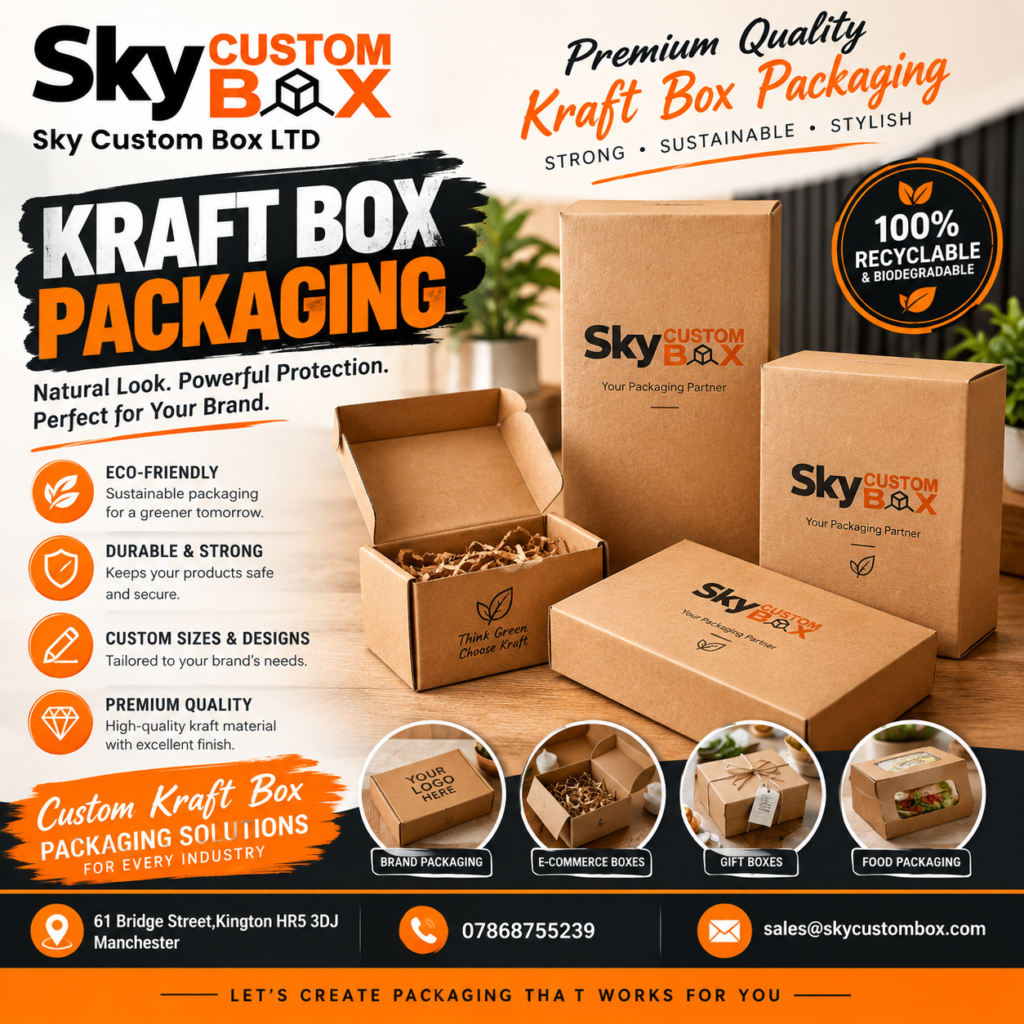
Packaging is an important part of how businesses protect products, manage shipping costs, and present their brands to customers. For retailers, e-commerce sellers, food businesses, and independent product manufacturers, brown kraft boxes offer a practical packaging option that combines a natural appearance with everyday functionality.
As businesses across the UK review their packaging choices, kraft paperboard and corrugated cardboard are attracting attention for their versatility, straightforward appearance, and potential recyclability. However, choosing the right packaging involves more than selecting a brown cardboard box. Material strength, box dimensions, product weight, printing requirements, and transportation conditions all influence the final decision.
Understanding the different types of kraft packaging can help businesses select suitable solutions for retail display, product delivery, storage, and wholesale distribution.
1. What Are Brown Kraft Boxes and Why Are They Popular?
Brown kraft boxes are packaging products made from kraft paper or paperboard, often recognised by their natural brown colour and simple appearance. Kraft paper is produced using a pulping process that separates fibres from wood or other suitable plant-based materials. The resulting paper can be used for bags, cartons, wrapping materials, and corrugated packaging.
The term kraft box covers several different constructions, so businesses should distinguish between lightweight paperboard cartons and stronger corrugated cardboard shipping boxes.
Key Benefits of Kraft Packaging
Brown kraft packaging offers several practical advantages:
- Versatility: Available in different shapes, dimensions, and constructions for various industries.
- Natural appearance: Suitable for minimalist branding, handmade products, and environmentally themed retail designs.
- Printing flexibility: Can accommodate logos, product information, labels, and selected decorative finishes.
- Storage efficiency: Many folding kraft boxes can be supplied flat and assembled when needed.
- Potential recyclability: Uncoated paper-based packaging can often enter established paper and cardboard recycling streams, depending on local facilities and material composition.
The actual performance of a box depends on its design and specifications. For example, a lightweight kraft carton may be appropriate for soap or stationery but unsuitable for shipping heavy glass products without additional protection.
Businesses should therefore choose packaging based on its intended application rather than relying on appearance alone.
Read More:
2. Different Types of Kraft Box Packaging for UK Businesses
Selecting the correct box construction is essential for protecting products and controlling packaging costs. Different industries require different combinations of durability, presentation, and convenience.
Corrugated Kraft Boxes
Corrugated kraft boxes contain a fluted paper layer between linerboards. This structure provides additional rigidity and cushioning compared with ordinary paperboard.
They are commonly used for:
- E-commerce orders and courier deliveries
- Electronics and accessories
- Homeware and small appliances
- Wholesale product shipments
- Subscription boxes
- Fragile goods requiring suitable internal protection
The strength of a corrugated box depends on factors such as board construction, flute type, material quality, dimensions, and the way the package is packed. Businesses shipping heavier products should confirm the supplier’s specifications and test representative parcels before committing to large quantities.
Folding Kraft Cartons
Folding cartons are generally made from paperboard and are designed to be folded into shape. They are suitable for lightweight retail products where presentation is important but heavy-duty shipping protection may not be necessary.
Common applications include cosmetics, candles, handmade soaps, confectionery, stationery, and small gifts.
Their flat-packed construction can reduce storage requirements, which is particularly helpful for small businesses operating from limited warehouse space or home-based facilities.
Custom Printed Kraft Boxes
Custom printed boxes combine functional packaging with brand identification. A business can add its logo, product name, instructions, brand colours, or other relevant information.
Simple black printing on brown kraft board can create a clean, understated design. More detailed designs may require different printing processes, so businesses should check how colours, fine text, and artwork will appear on the selected material.
Customisation should serve a clear purpose. Readable product information and consistent branding are often more useful than excessive decoration.
3. How to Choose the Right Kraft Packaging
The most suitable packaging depends on the product, the sales channel, and the conditions the package will encounter before reaching the customer.
Match the Box to the Product
Before selecting a box, measure the product’s length, width, and height. Include lids, handles, closures, or other components that affect its overall dimensions.
Then consider the following factors:
- Product weight and fragility
- Whether the item requires protective inserts
- Whether several products will share one box
- The available storage space
- Whether the package will be shipped individually or in bulk
- Whether customers will see the box on a retail shelf
A well-fitted box can reduce unnecessary material use and help prevent products from moving during transport. However, the packaging must still leave enough room for suitable protective materials where required.
Read More:
https://www.skycustombox.com/blog/
Consider Branding and Customer Experience
Packaging can influence how customers perceive a business, particularly when products are purchased as gifts or delivered directly to consumers.
For artisan businesses, kraft boxes can complement natural materials, handmade products, and minimalist branding. For established retailers, a consistent packaging design can help create a recognisable identity across multiple product categories.
Practical branding options include:
- Printed logos and business names
- Product labels and ingredient information
- Simple one-colour graphics
- Branded paper inserts
- Recyclable paper-based protective materials, where appropriate
Businesses should also check whether labels, inks, coatings, and adhesives affect the recycling options available for the finished package.
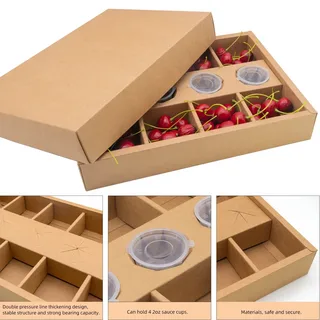
4. Kraft Boxes Wholesale UK: Understanding Costs and Ordering Quantities
Businesses searching for kraft boxes wholesale UK suppliers should compare more than the quoted price per box. The overall cost depends on material specifications, dimensions, order quantities, custom printing, delivery charges, and any additional components.
What Influences Wholesale Pricing?
Several factors commonly affect the final quotation:
Box dimensions: Larger boxes generally require more material, although construction and manufacturing efficiency also influence cost.
Board strength: Heavy-duty corrugated boxes can cost more than lightweight folding cartons because they use different materials and structures.
Order volume: Larger production runs may reduce the unit price, but only when the quantity matches actual business requirements.
Custom printing: Artwork preparation, printing methods, colour coverage, and finishing options can affect setup costs and production time.
Design complexity: Special shapes, inserts, unusual closures, or custom tooling may increase initial costs.
Delivery and storage: Freight charges and the space required to store packaging should be included when comparing suppliers.
For small businesses, placing the largest possible order is not always the most economical approach. Excess inventory can tie up working capital and become unsuitable if a product, brand design, or packaging specification changes.
A more reliable method is to estimate average monthly usage, account for seasonal demand, and request quotations for several realistic order quantities.
Practical Steps Before Placing an Order
Before approving wholesale kraft packaging, businesses should:
- Confirm the internal dimensions and board specifications.
- Request a sample or prototype where possible.
- Check printing quality and colour consistency.
- Test how the box assembles and closes.
- Assess protection under normal handling conditions.
- Confirm minimum order quantities and lead times.
- Calculate the total delivered cost per usable box.
These checks help reduce the risk of receiving packaging that looks suitable in a catalogue but does not perform as expected in daily operations.
Read More:
5. Sustainability, Common Challenges and Industry Trends
Sustainability is an increasingly important consideration for UK packaging decisions. Businesses are reviewing material usage, recycling compatibility, transportation efficiency, and the amount of unnecessary packaging included with each order.
Kraft packaging can support waste-reduction efforts, but brown colour alone does not prove that a product is environmentally preferable. Recycled content, coatings, adhesives, manufacturing processes, durability, and local recycling infrastructure all matter.
Improving Packaging Efficiency
Businesses can make practical improvements by selecting box dimensions that closely match their products, avoiding unnecessary layers, and choosing protective materials according to actual product risks.
For example, a business shipping lightweight clothing may need a different packaging system from a retailer sending glass jars. Using the same construction for both products could lead to unnecessary material use in one case and insufficient protection in the other.
Other useful measures include:
- Reviewing frequently used box sizes.
- Standardising packaging across similar products.
- Reducing excess void space in shipping cartons.
- Choosing recyclable components where appropriate.
- Checking whether protective inserts are genuinely necessary.
- Monitoring product damage and customer feedback.
Another industry trend is the use of understated packaging with minimal printing. This approach can simplify branding and may reduce decorative materials, although the overall environmental benefit depends on the complete packaging design.
Common Problems and Their Solutions
Boxes collapsing during transport: Review board strength, stacking requirements, box dimensions, and packing methods.
Excessive shipping costs: Compare parcel dimensions and weight, then assess whether a better-fitting box could reduce unnecessary volume.
Inconsistent printed colours: Request production samples and establish clear artwork and colour specifications.
Too much packaging inventory: Track usage by product category and reorder according to realistic demand.
Unclear recycling information: Confirm material composition with the supplier and provide disposal guidance that reflects local recycling arrangements.
Businesses researching suppliers for kraft packaging UK requirements may consider established packaging providers such as Sky Custom Box when comparing customised box formats, specifications, and production options. Supplier selection should ultimately be based on product suitability, quality control, transparent quotations, and reliable delivery arrangements.
Conclusion
Brown kraft boxes provide a flexible packaging option for UK businesses across retail, e-commerce, manufacturing, gifting, and wholesale distribution. Their natural appearance, range of available constructions, and potential compatibility with paper recycling systems make them suitable for many applications.
CONTACT US:
ABOUT US:
Social Media: