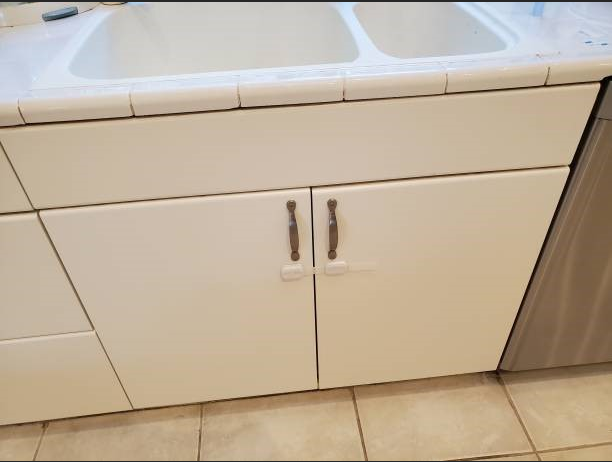
A cabinet lock may seem like a small detail until it fails at the wrong moment. A door that will not open, a latch that no longer catches, or a lock that shifts after a few weeks can quickly become frustrating. Because different cabinet locks rely on different technologies and mounting methods, their performance is not always easy to judge at first glance.
Cabinet lock reliability is especially important when the cabinet stores medicines, documents, electronics, or other items that require controlled access. Looking closely at how these locks behave in everyday conditions can reveal more than product labels alone.
Key Takeaways
- RFID cabinet locks provide controlled access but depend on battery condition, reader range, and correct latch positioning.
- Magnetic locks offer simple, low-maintenance operation, although panel thickness and magnetic strength can affect performance.
- Adhesive models avoid permanent holes, but their holding strength depends on surface compatibility and proper curing.
- The most reliable lock is one that matches the cabinet material, access needs, and frequency of use.
Side-by-Side Cabinet Lock Reliability Comparison
This comparison evaluates each lock type through repeated operation, access response, installation stability, maintenance needs, and suitability for everyday household conditions. Results can vary by product quality, cabinet construction, and installation accuracy.
| Comparison Factor | RFID Lock | Magnetic Lock | Adhesive Lock |
| Repeated operation | Strong with maintained batteries | Strong with correct alignment | Varies with mounting bond |
| Power requirement | Batteries required | None | Usually none |
| Access method | Card, fob, or tag | Magnetic key | Manual tab, strap, or latch release |
| Installation difficulty | Moderate | Moderate | Easy |
| Alignment sensitivity | High | Moderate | Moderate |
| Surface dependency | Moderate | Low when screw-mounted | High |
| Maintenance needs | Battery and latch checks | Key and alignment checks | Adhesive inspections |
| Best use | Controlled private access | Simple household access control | Temporary or no-drill installation |
RFID Cabinet Lock Performance
Access Consistency and Response
RFID cabinet locks use programmed cards, tags, or key fobs to release an internal latch. A reliable model should recognize an authorized tag quickly and open without repeated scanning. Performance may vary when the reader sits behind dense wood or when nearby hardware interferes with the signal.
These locks are useful for home offices, medicine cabinets, private drawers, and compartments holding connected devices. In these settings, cabinet lock reliability is judged mainly by recognition speed, access consistency, and smooth latch release.
Battery and Alignment Reliability
Battery condition can affect how quickly the reader responds. Low power may cause delayed access or prevent the lock from releasing. The strike plate must also be positioned correctly so the latch can move without resistance.
Low-battery alerts and emergency power options can strengthen cabinet lock reliability by reducing the chance of an unexpected lockout.
Magnetic Cabinet Lock Performance
Holding Strength
Magnetic models include basic catches that hold a door closed and child-safety locks that use an external magnetic key to release an internal latch. A simple catch provides light resistance, while a locking mechanism offers better protection against casual opening.
The magnet’s strength and the latch’s quality determine how firmly the door stays closed. These models may suit cabinets used for travel chargers, cables, or small household accessories.
Everyday Consistency
Magnetic locks have no batteries or electronic readers, so they require little routine maintenance. Their performance depends on whether the magnetic key can activate the latch through the cabinet door. Very thick or dense panels may weaken the response. For magnetic models, cabinet lock reliability is strongest when the lock is rated for the panel depth and the release action is tested before regular use.
Best Applications
Magnetic locks work well in kitchens, bathrooms, entertainment units, and storage cabinets containing portable audio accessories. They are practical where hidden hardware and straightforward adult access are more important than advanced access control.
Adhesive Cabinet Lock Performance
Mounting Strength
Adhesive cabinet locks attach without screws, making them suitable for delicate finishes and lightweight panels. Their performance depends less on the internal mechanism and more on how securely the mounting pad bonds to the cabinet. Smooth, sealed surfaces such as laminate, finished wood, glass, and clean metal generally support a stronger bond than rough paint or unfinished wood. With these models, cabinet lock reliability begins with choosing an adhesive suitable for the surface and expected pulling force.
Common Failure Points
Heat, steam, grease, and repeated pressure can weaken the adhesive over time. The pad may also lift when placed on a damp, dusty, or textured area. Using the lock before the recommended bonding period has passed can reduce its holding strength. These limitations should be considered when the cabinet contains frequently used travel gadgets or other items accessed several times a day.
Best Applications
Adhesive models are practical for temporary installations, rental furniture, and cabinets where drilling could damage the finish. Allowing the adhesive to cure fully and using the lock within its intended limits can help maintain cabinet lock reliability over time.
Conclusion
Choosing a cabinet lock becomes easier when the decision is based on the cabinet, the contents, and the expected level of use. RFID models suit controlled access, magnetic locks support simple daily operation, and adhesive options help protect furniture from permanent changes. However, proper installation remains essential for every design.
Checking battery access, magnetic range, surface condition, and latch movement before regular use can prevent many common problems. Strong cabinet lock reliability comes from matching the lock to its environment and maintaining it responsibly. A carefully selected model can provide practical security without making everyday access unnecessarily difficult or frustrating.
FAQs
Can RFID cabinet locks be programmed for multiple users?
Many RFID models allow multiple cards or tags to be registered, though the supported count varies by product.
What happens if an RFID lock loses power?
Some models provide emergency power contacts, backup keys, or access to an external battery. These features should be checked before installation.
Can adhesive cabinet locks be removed safely?
They may be removable, but a strong adhesive can damage weak paint, veneer, or delicate finishes. Manufacturer-approved removal methods reduce this risk.
Are magnetic cabinet locks suitable for metal cabinets?
Performance varies because metal may affect how the magnetic key reaches the internal latch. Choose a model specifically approved for metal surfaces.
How often should cabinet locks be tested?
Frequently used locks should be checked every few months for battery warnings, loose parts, weakening adhesive, or changes in latch movement.