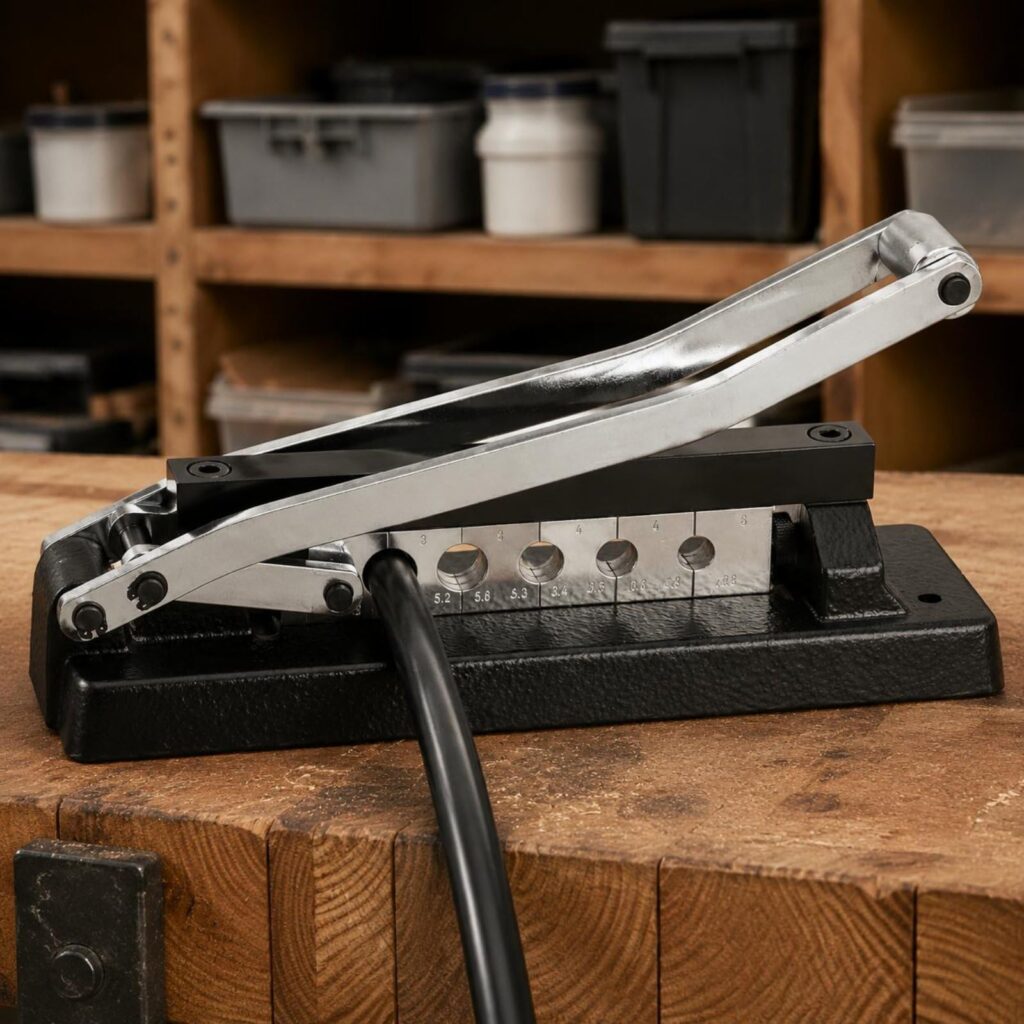
Local hose shops often wonder if a hose ferrule crimping tool is practical for everyday fixes. This piece looks at real shop use, cost, skill needs, and when the tool pays off versus sending work out. It covers hydraulic lines, industrial hoses, and related repairs without the usual sales talk.
How Local Hose Repair Shops Use Ferrule Crimping Tools
Most guys running a small hose repair place already know the drill. The customer walks in with a busted hydraulic line or a frayed industrial hose, and you gotta decide right then if you can fix it on the spot or send them somewhere else. A hose ferrule crimping tool sits right in the middle of that decision. It is not some fancy machine only the big distributors own. Plenty of local shops keep one on the bench and use it every week. The question is whether it actually makes sense for your setup, your volume, and the kind of work that comes through the door.
When Clamping Is Not Enough for Hose Repairs
I have seen shops try to get by with just clamps and hose clamps for years. That works for low-pressure stuff, garden hoses maybe, or air lines that do not see much stress. Once you get into hydraulic hoses or fuel lines that need a proper ferrule, those temporary fixes start failing. Customers come back mad. A decent crimping tool lets you put a permanent, professional-looking end on the hose in a few minutes. The ferrule gets crushed evenly around the fitting and the hose, locking everything tight. Done right, it holds pressure better than a lot of factory assemblies I have pulled apart.
How Much Does a Hose Ferrule Crimping Tool Cost?
Cost is the first thing that stops people. A solid hose ferrule crimping tool is not cheap. You are looking at a few hundred bucks for a basic hand-operated unit up to a couple thousand for a powered one that handles bigger sizes. Then you need the dies for different hose diameters and fitting styles. That adds up fast if you only do three or four jobs a month. But if your shop sees steady hydraulic work, or farm equipment, or construction gear coming in, the tool pays for itself in a season. You stop losing the higher-margin jobs to the places that can actually crimp.

What Skills Are Needed to Operate a Hose Crimping Tool?
Skill matters more than the brochure claims. Anyone can watch a five-minute video and think they know how to run a crimping tool. Reality is different. You have to match the ferrule to the hose type, pick the right die set, and set the pressure or stroke correctly. Too light and the connection leaks or pulls off under pressure. Too heavy and you cut into the hose reinforcement or crack the fitting. Local shops that use these tools day in and day out develop a feel for it. New guys need practice on scrap hose before they touch a customer’s line. That learning curve is real and some places never get past it.
Does a Crimping Tool Require Much Shop Space?
Space is another quiet issue. A good crimping tool takes bench room, and the dies need storage so they do not get mixed up or damaged. In a crowded one-bay shop that already has a welder, a press, and a parts counter, finding room can be a pain. Some shops mount the tool on a portable stand so they can roll it out of the way. Others just accept that the crimper lives in the corner and they work around it. Either way, if the tool sits unused because it is awkward to get to, you wasted the money.
What Parts and Inventory Do Hose Repair Shops Need?
Then there is the parts side. Having the tool is just one part of the equation. It requires stocks of ferrules, stems, and the correct size of hoses. Most suppliers will have your required stocks the next day anywhere, but that is still planned. Even when there is a requirement for a metric fitting or even a strange size industrial hose, you may be forced to place an order for it. The ones that do great always stock the commonly used combinations and consider the others as special orders.
What Types of Hoses Can a Ferrule Crimping Tool Handle?
I have watched shops use a hose ferrule crimping tool on everything from skid-steer lines to pressure washer hoses. The results look clean and hold up. One place I know even started doing light work on septic system repair hoses when the local plumber needed a custom length for a pump-out line. Not the main business, but it filled a gap and brought a few extra jobs. The same tool that handles hydraulic work can handle those thicker-walled suction hoses if you have the right dies. It is not magic, just another application once you own the equipment.
How Should a Hose Ferrule Crimping Tool Be Maintained?
Maintenance on the tool itself is straightforward but easy to ignore. Keep the dies clean, oil the moving parts, and check the calibration every so often. A worn die will give you inconsistent crimps and you will not notice until a hose fails in the field. Most manufacturers sell replacement dies and basic rebuild kits. Treat the machine like any other shop tool and it lasts years. Neglect it and you start getting callbacks.
When Should a Shop Outsource Hose Crimping?
Some shops decide the tool is not worth it and stick to selling pre-made assemblies or sending the hose out. That is fine if the volume is low. You lose the labor charge and the convenience for the customer, but you also avoid the capital outlay and the training time. Other places buy a used unit, learn it, and never look back. The difference usually comes down to how many hydraulic or high-pressure jobs walk in each week. If the answer is more than a handful, the tool starts looking smart.
Is a Hose Ferrule Crimping Tool Worth It for a Local Shop?
At the end of the day a hose ferrule crimping tool is just another piece of equipment that either fits your shop or does not. Local repair places use them successfully all the time when the work volume and the skill match. It lets you offer same-day fixes, charge a fair price, and keep the customer from driving across town. If your shop already handles hose work and you are tired of turning jobs away, it is worth a hard look. Just go in with clear eyes about the cost, the learning, and the space it needs.

Conclusion
A solid crimping tool can change how a local shop handles hose repairs when the volume justifies it. The decision is practical, not theoretical. Match the machine to the work you already see and the rest falls into place.