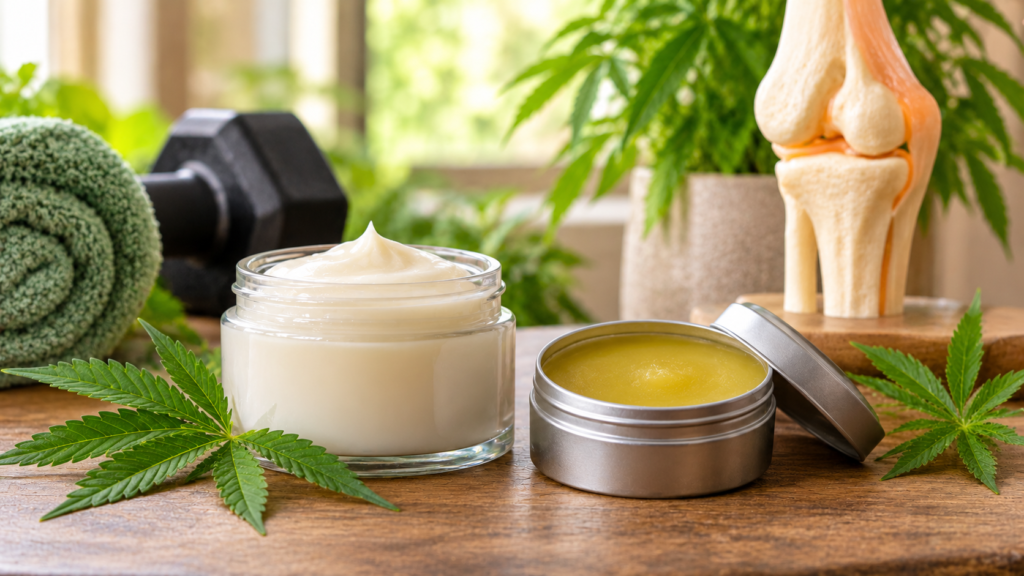
If you have ever stood in front of a shelf of topical products, you have probably wondered about CBD pain cream vs CBD salve and which one deserves a spot in your gym bag or medicine cabinet. Both are applied directly to the skin, both are popular for areas that feel tired or tight after a long day, and both can carry the same amount of CBD. The real difference lies in texture, how they feel on the skin, and the situations where each one fits best. This guide breaks down how creams and salves compare, which may suit sore muscles or stiff joints better, and how to use either one safely.
What Is a CBD Pain Cream?
A CBD pain cream is a lotion-like topical that blends CBD with a light, creamy base. It spreads easily, soaks into the skin quickly, and usually leaves little greasy residue behind. Some creams also include ingredients that create a cooling or warming feeling, which many people enjoy after a workout or a long day on their feet.
Because of its smooth texture, a cream is simple to apply over larger areas such as the lower back, thighs, or shoulders. If you want an option without THC, the CBD Pain Cream (Non-THC) from EarthE CBD contains 1500mg of CBD and zero THC, so it suits people who prefer to avoid THC altogether.
What Is a CBD Salve?
A CBD salve is a thicker, balm-style topical. Salves are typically made with oils and waxes, which give them a firm, spreadable consistency similar to a lip balm, only larger. Instead of disappearing into the skin right away, a salve tends to stay where you put it, forming a light layer that warms and softens as you massage it in.
That staying power is the main reason salves are popular for small, specific areas such as knees, elbows, knuckles, and wrists. The CBD Arthritis & Muscle Support Salve from EarthE CBD is a 1500mg CBD-infused salve made with natural ingredients and formulated with sore muscles and stiff joints in mind.
CBD Pain Cream vs CBD Salve: Key Differences
Both products are designed for local use, but they behave differently once they are on your skin. Here is how they compare:
- Texture: Creams are light and smooth. Salves are thick, waxy, and balm-like.
- Absorption feel: Creams are absorbed quickly. Salves sit on the surface longer and need a little more massage.
- Residue: Creams usually leave a clean finish. Salves can feel slightly oily or tacky.
- Staying power: Salves tend to stay in place longer, while creams may need reapplying sooner.
- Coverage: Creams spread easily over large areas. Salves are better for small, targeted spots.
- Convenience: Creams are easier to use under clothing or before work. Salves are often saved for evenings or rest time.
Neither format is automatically stronger. The potency listed on the label, such as 1500mg per container, tells you how much CBD is in the product, but your experience also depends on how much you apply and how your body responds.
Which Is Better for Sore Muscles?
For sore muscles, many people prefer a cream, mainly because of how easily it covers large muscle groups. After a workout, a quick layer over the quads, calves, or back can be applied in seconds with no sticky finish. The cooling or warming sensation some creams provide can also feel good on tired muscles.
A salve can still be a great choice if you are dealing with one stubborn spot, like a tight area between the shoulder blades or a sore calf. The thicker texture makes it easy to massage into that single area for a minute or two. If you are not sure, you can keep both on hand: a cream for everyday use and a salve for targeted care.
Which Is Better for Stiff Joints?
For stiff joints, a salve often gets the edge. Knees, hands, and elbows are small, active areas where a cream might rub off quickly. A salve stays put, and the massage that goes with applying it can help the area feel warm and relaxed. Many people apply a salve in the evening, when they have time to sit down and rub it in gently.
That said, a cream can be more practical during the day. If you need something that absorbs quickly so you can get dressed, type, or head out the door, a cream fits more easily into a busy schedule. The best choice is the one you will actually use consistently.
How to Apply a CBD Topical
Whichever product you choose, a simple routine helps you get the most from it:
- Clean and dry the area. Apply to clean skin, and never to open wounds, broken skin, or irritated areas.
- Do a patch test. Place a small amount on your inner forearm and wait 24 hours to check for any skin reaction.
- Start with a small amount. A pea-sized to quarter-sized amount is enough for most areas. You can always add more.
- Massage it in. Use gentle circular motions for one to two minutes until the product is spread evenly.
- Wash your hands afterward. This keeps the product away from your eyes and face.
- Reapply as directed. Follow the instructions on the label, and avoid using more than recommended.
What Should You Realistically Expect?
Research on topical CBD is still developing, and the FDA has not evaluated these products. That means it is best to approach them with realistic expectations. Many people enjoy how a cream or salve feels, especially when combined with a short massage, stretching, or a warm shower. Topicals are designed for use on the skin where you apply them, and results differ from person to person.
Keep in mind that these products are not meant to diagnose, treat, cure, or prevent any condition. If you have ongoing pain, swelling, or stiffness that does not improve, speak with a healthcare professional rather than relying on a topical alone.
How to Choose a Quality CBD Cream or Salve
Not all topicals are made the same. Before you buy, look for:
- Third-party lab testing: A certificate of analysis confirms the CBD content and product quality.
- Clear CBD amount: The label should list the total milligrams of CBD in the container.
- THC information: Choose a non-THC product if you want to avoid THC, especially if you are drug tested.
- A simple ingredient list: Fewer unfamiliar additives usually makes it easier to know what you are putting on your skin.
- U.S.-made products: Domestic manufacturing makes it easier to trust where the product comes from.
Possible Side Effects and Safety Tips
Topical CBD is generally considered well tolerated, but skin reactions can happen. Redness, itching, or a rash are the most common concerns, and they are more likely if you are sensitive to certain ingredients. If you notice irritation, stop using the product and wash the area with mild soap and water.
Talk with a healthcare professional before using any CBD product if you are pregnant or nursing, take prescription medication, or have a medical condition. These products are intended for adults 21 and older and should be kept away from children and pets. This article is for general information only and is not medical advice.
Final Thoughts
When it comes to CBD pain cream vs CBD salve, there is no single winner. A cream is light, fast, and easy to spread across large muscle groups, while a salve is thick, long-lasting, and well suited to small, stiff joints. Your lifestyle, the area you want to focus on, and how much time you have to apply the product will point you toward the right choice. Start with a small amount, patch test first, choose a lab-tested product, and give yourself time to see how it fits into your routine.
FAQs
Is a CBD cream or a salve stronger?
Neither format is stronger by default. Strength depends on the total milligrams of CBD in the product and how much you apply, so compare the label rather than the format.
How often can I apply CBD pain cream or salve?
Many people apply a topical once to a few times a day, but you should follow the directions on the label. If you are unsure, start with less and speak with a healthcare professional.
Can I use a CBD cream and a salve together?
Some people use a cream during the day and a salve in the evening. Start with one product first so you can tell how your skin responds before adding another.
Will a CBD topical show up on a drug test?
Topicals are designed for use on the skin, but products that contain THC may carry risk. If you are drug tested, choose a non-THC product and speak with your employer or a medical professional first.
Can I put CBD salve or cream on broken or irritated skin?
No. Apply topicals only to clean, intact skin. If your skin is broken, inflamed, or irritated, wait until it heals and ask a healthcare professional if you are unsure.