A ranch manager needs 40 tons of gravel before the ground freezes. A contractor is waiting on steel beams that are stuck at a yard 300 miles away. A small business owner has to move heavy equipment across town by Friday. Each of these situations depends on the same thing: reliable freight moved by people who know the area.
Hiring a local trucking company in Miles City, MT is often the most practical way to keep projects on schedule in eastern Montana. Distances are long, weather changes fast, and many job sites sit far from paved highways. This article covers how local hauling works, what to look for in a carrier, and how trucking connects to larger construction and agricultural projects.
Why Local Trucking Matters in Eastern Montana
Miles City sits along Interstate 94, where the Tongue River meets the Yellowstone. It serves a wide region of ranches, farms, and small towns, and the nearest large metro area is a long drive away. Billings is roughly 145 miles west, and many suppliers are even farther.
That distance shapes how freight moves. National carriers can handle long-haul loads well. They often struggle, though, with the final stretch, the gravel road to a ranch or the muddy lot of a new building site.
Local haulers fill that gap. They know which county roads can handle a loaded truck, which bridges have weight limits, and when the spring thaw makes certain routes risky.
Common Trucking Needs in the Region
Freight in this part of Montana is varied. On a single day, a regional carrier might move livestock feed in the morning and construction materials in the afternoon.
Agriculture drives a large share of the work. Hay, grain, fencing supplies, and equipment all need regular transport, especially during planting and harvest. These loads tend to be time-sensitive, because a delay of a few days can affect an entire season.
Construction is another major source of demand. New homes, shops, barns, and commercial buildings all need materials delivered in the right order. Aggregate, lumber, concrete forms, and steel arrive at different stages, and each one requires the right kind of trailer.
Energy and industrial work add another layer. Oil and gas activity in the wider region brings oversized equipment, pipe, and machinery that call for flatbeds, lowboys, and sometimes special permits.
The Logistics Realities Most People Overlook
Trucking looks simple from the outside. A load gets picked up and dropped off. In practice, several factors decide whether a delivery goes smoothly.
Weather is the biggest one. Eastern Montana winters bring ice, blowing snow, and sudden road closures. Experienced local drivers plan around storm windows and know when it’s safer to wait a day.
Seasonal road restrictions also matter. Montana limits weight on some secondary roads during the spring thaw, when soft ground can damage the pavement. A hauler who tracks these limits can help avoid fines or turned-around loads.
Site access is often the hidden challenge. A semi with a 53-foot trailer needs room to turn, solid ground, and clear overhead space. Many rural sites need a smaller truck or a quick look ahead of time to confirm the route.
Permits for oversize loads add time too. Wide or heavy freight, such as long steel members or large machinery, often needs state approval and sometimes pilot vehicles. Carriers who handle these regularly know how to plan for them.
Key Considerations When Choosing a Carrier
The right fit depends on the type of freight and the timeline. A few considerations tend to separate dependable haulers from the rest.
Equipment That Matches the Load
Not every truck works for every job. Dump trucks suit gravel and dirt. Flatbeds carry lumber, steel, and pallets. Lowboys move tracked equipment and tall machinery. Asking about trailer types early prevents last-minute surprises.
Licensing and Insurance
Any carrier hauling commercial freight across state lines should hold an active USDOT number. Customers can check a company’s registration and safety record through the Federal Motor Carrier Safety Administration’s public database. Confirming cargo and liability insurance is also a smart move, especially for high-value loads.
Local Knowledge and Communication
A carrier familiar with the region can often predict problems before they happen. Clear communication matters just as much. Updates on pickup times, delays, and arrival windows help crews plan labor and avoid paying workers to stand around.
Flexibility and Availability
Smaller regional companies may have limited fleets, so availability during busy seasons can be tight. Booking ahead for harvest or peak construction months is usually wise. Many customers find that building a steady relationship with one hauler leads to better scheduling over time.
How Trucking Supports Construction Projects
Trucking and construction are closely linked. Every building starts with materials that have to arrive on time and in good condition.
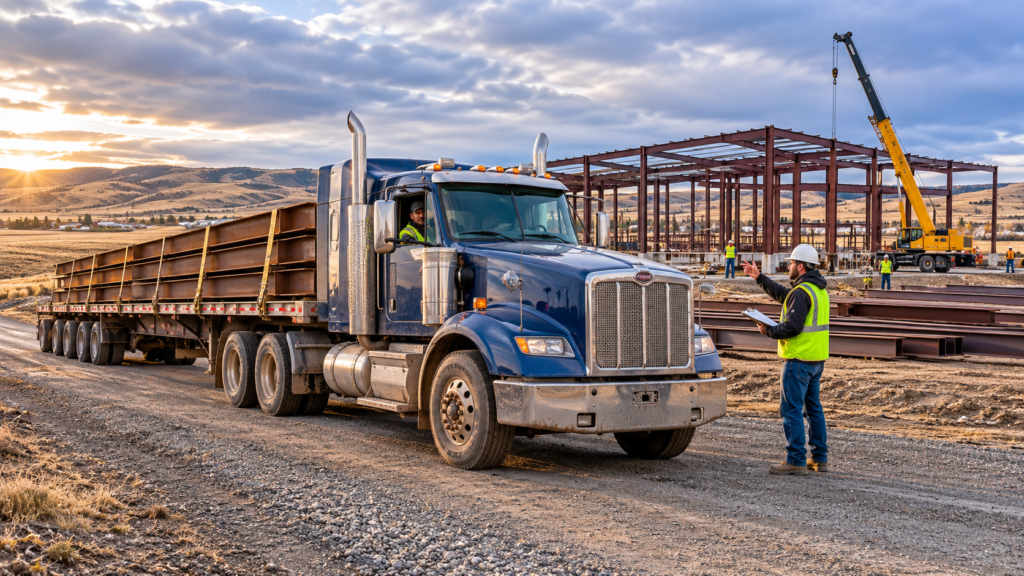
Steel is a good example. Structural steel installation in Miles City, MT depends on precise delivery timing. Beams, columns, and joists often arrive in a specific order so crews can lift and set them without crowding the site. If the wrong pieces show up first, a crane may sit idle while the team waits.
Some regional firms handle both hauling and building work, which can simplify coordination. Grizzly Construction is one example of a company in the area whose work spans both trucking and construction, a setup that shows how closely the two trades connect on rural projects.
Whether the hauling and installation come from one company or two, the goal stays the same: materials arrive when the crew is ready for them, not before and not after.
Real-World Examples
Consider a family building a new steel-frame shop on their ranch outside Miles City. The building kit ships from an out-of-state supplier to a regional terminal. From there, a local hauler with a flatbed picks it up and drives the last 30 miles on county gravel. The driver knows a low bridge on the most direct route, so he takes a slightly longer road and arrives without trouble.
In another case, a contractor is preparing a site for a small commercial building. Before any steel arrives, the site needs fill dirt and base gravel. A local carrier runs dump trucks back and forth for three days, timing deliveries so the grading crew can spread and compact each layer. Later in the project, the same contractor arranges a separate flatbed delivery for structural steel installation, which happens over two weeks.
A third scenario involves a farmer whose combine breaks down mid-harvest. A replacement part is available in Billings, but waiting for a parcel service could take days. A regional hauler picks it up the same afternoon, and the farmer is back in the field the next morning.
These examples share a common thread. Local knowledge, the right equipment, and good timing make the difference between a smooth project and a costly delay.
Final Thoughts
Freight in eastern Montana rarely follows a simple path. Long distances, harsh weather, rural roads, and tight project schedules all affect how materials move. That’s why so many ranchers, contractors, and business owners rely on a local trucking company in Miles City, MT to handle the final and often hardest part of the trip.
Anyone planning a project should think about trucking early, not as an afterthought. Matching the right equipment to the load, confirming licensing, and building a working relationship with a dependable hauler can save time, money, and frustration once the work begins.
Frequently Asked Questions
How much does local trucking typically cost?
Rates depend on distance, load type, trailer needed, and timing. Many carriers charge by the hour, the mile, or the load. Oversize freight and rush deliveries usually cost more.
How can someone check if a trucking company is licensed?
Carriers hauling interstate freight should have a USDOT number. The FMCSA website lets anyone search that number and review the company’s registration and safety record.
What type of truck is used to haul structural steel?
Steel beams and columns are usually moved on flatbed or step-deck trailers. Very long or heavy pieces may need extendable trailers and oversize load permits.
How far in advance should trucking be scheduled?
For routine loads, a few days to a week is often enough. During harvest season or peak construction months, booking two weeks or more ahead helps secure availability.
Does winter weather affect trucking schedules in Montana?
Yes. Snow, ice, and road closures can delay deliveries, especially on rural routes. Experienced drivers often adjust timing or routes to keep loads moving safely.