In modern manufacturing, businesses are constantly searching for faster, more cost-effective, and scalable production methods. One of the most effective strategies is the transition from CNC machining to injection molding, especially for custom product manufacturing. This hybrid approach allows engineers and manufacturers to move from highly precise prototypes to mass production with reduced cost per unit and improved efficiency.
This article explores how CNC machining to injection molding supports custom manufacturing, why companies use both processes together, and how this transition improves product quality, speed, and scalability.
Understanding CNC Machining in Custom Manufacturing
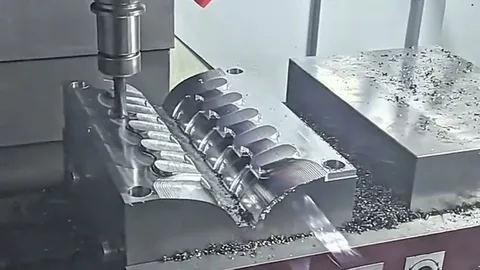
CNC machining is a subtractive manufacturing process where material is removed from a solid block using computer-controlled tools. It is widely used for creating precise prototypes and custom parts due to its accuracy and flexibility. Manufacturers rely on it during the early stages of product development.
In custom manufacturing, CNC machining allows engineers to test designs quickly before committing to mass production. However, while it is ideal for prototyping, it becomes expensive for large-scale production compared to injection molding.
Key points:
- Highly accurate and ideal for prototypes
- Works with metals, plastics, and composites
- No need for molds, reducing initial setup time
- Best suited for low to medium production volumes
Despite its advantages, CNC machining is not always cost-effective for scaling, which is why businesses often consider transitioning from CNC machining to injection molding.
Introduction to Injection Molding for Mass Production
Injection molding is a manufacturing process where molten material is injected into a mold cavity to produce identical parts in large volumes. It is widely used in industries like automotive, medical devices, electronics, and consumer goods.
Unlike CNC machining, injection molding requires an initial investment in mold creation, but once the mold is ready, production becomes extremely fast and economical per unit.
Key points:
- Ideal for high-volume production
- Produces consistent and repeatable parts
- Lower per-unit cost at scale
- Requires upfront mold design and tooling investment
The shift from CNC machining to injection molding allows manufacturers to move from prototype validation to efficient mass production while maintaining product quality and design integrity.
Why Transition from CNC Machining to Injection Molding
The transition from CNC machining to injection molding is a strategic decision that helps businesses scale efficiently. CNC machining is excellent for testing and refinement, but injection molding is better suited for final production.
This transition ensures that design flaws are corrected during prototyping before investing in expensive molds. It also reduces long-term manufacturing costs and increases production speed.
Key points:
- Reduces long-term production costs
- Enables large-scale manufacturing efficiency
- Improves consistency across products
- Supports faster market delivery
By using CNC machining to injection molding as a combined workflow, companies can balance flexibility in design with scalability in production.
The Workflow: From Prototype to Production
The manufacturing workflow typically starts with CNC machining for prototyping. Engineers create and test multiple iterations of a product to ensure functionality, durability, and design accuracy.
Once the design is finalized, manufacturers move to injection molding. A steel or aluminum mold is created based on the CNC prototype, and then mass production begins.
Key points:
- CNC machining is used for rapid prototyping
- Design validation occurs before mold creation
- Injection molding takes over for mass production
- Reduces risk of design failure in production
This structured approach ensures that CNC machining to injection molding delivers both precision and scalability in custom product manufacturing.
Benefits of Combining CNC Machining and Injection Molding
Using both CNC machining and injection molding together creates a powerful manufacturing strategy. Businesses benefit from rapid development cycles and efficient large-scale production.
This combination is especially useful for startups and established manufacturers who need to balance innovation with cost control.
Key points:
- Faster product development lifecycle
- Reduced risk in mass production
- High precision during prototyping
- Cost efficiency at scale
- Flexibility in design changes early on
By leveraging CNC machining to injection molding, companies can optimize every stage of the manufacturing process, from concept to final product delivery.
Conclusion
The transition from CNC machining to injection molding for custom product manufacturing is a proven strategy that combines precision, efficiency, and scalability. CNC machining plays a critical role in prototyping and design validation, while injection molding enables cost-effective mass production.
Together, these processes create a seamless manufacturing workflow that reduces risks, improves product quality, and accelerates time to market. For businesses aiming to scale custom product production, adopting CNC machining to injection molding is not just an option—it is a competitive advantage.