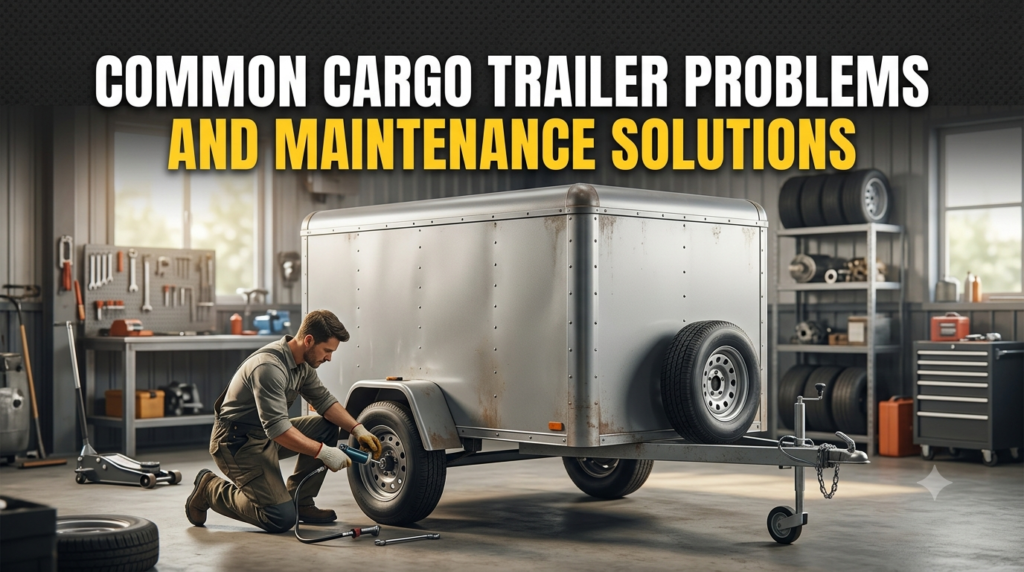
A cargo trailer can take a lot of abuse. Rain, road salt, dust, heavy loads, rough roads, and long periods of sitting outside all leave their mark. Good cargo trailer maintenance is less about doing complicated work and more about catching small problems before they turn into expensive repairs. A loose light or worn tire may seem minor today. A few weeks later, it could leave you stuck on the roadside.
Worn or Damaged Tires
Tires are probably the first thing worth checking before every longer trip.
Cargo trailers often sit unused for days or weeks, which can cause problems of its own. Tires can develop flat spots, lose pressure, or show signs of dry rot. Uneven wear can also point toward alignment, suspension, or loading problems.
Look closely at the tread and sidewalls. Cracks, bulges, cuts, or exposed cords are warning signs.
Check tire pressure when the tires are cold and follow the pressure listed by the trailer or tire manufacturer. Don’t rely on how the tire looks. A tire can appear perfectly fine while running underinflated.
If you’re hauling a heavy load, also check the tire’s load rating. The tires need to be capable of carrying the trailer and everything inside it.
Wheel Bearing Problems
Wheel bearings don’t get much attention until they start making noise. Then they get everyone’s attention.
A bad bearing can produce humming, grinding, or a rough feeling while the wheel turns. Excessive heat around one hub after towing is another clue something may be wrong.
Regular trailer wheel bearing maintenance can help prevent premature wear. Depending on the hub design, bearings may need to be cleaned, inspected, and repacked with the correct grease at recommended service intervals.
Don’t just keep adding grease if a bearing is damaged. Grease can’t repair pitted rollers or worn bearing surfaces.
If the wheel has noticeable play or the hub becomes unusually hot, have it inspected before taking the trailer on another long trip.
Faulty Trailer Lights
Trailer lights are easy to overlook, especially during the daytime.
Then you tow after dark and realize one brake light isn’t working. Not fun.
Common trailer lighting problems include blown bulbs, damaged wiring, loose grounds, corroded connectors, and broken plugs. LED lights can last a long time, but they aren’t immune to wiring problems.
Before a trip, test:
- Brake lights
- Turn signals
- Running lights
- Marker lights
- License plate light
- Four-way flashers
If one light works but another doesn’t, inspect the wiring and ground connection before replacing every bulb you can find.
Moisture inside connectors can also cause strange electrical issues. A little dielectric grease on suitable electrical connections can help protect them from moisture and corrosion.
Rust and Corrosion
Metal cargo trailers spend plenty of time exposed to water and road grime. Over time, rust can appear around the frame, doors, hinges, fenders, floor supports, and hardware.
Surface rust isn’t always an emergency, but ignoring it isn’t a great idea either.
Wash dirt and road salt from the trailer, especially after driving through areas where roads are treated during winter. Let the trailer dry properly before storing it.
Pay closer attention to structural rust. Deep corrosion around frame members, suspension mounts, or other load-bearing areas needs a professional inspection.
A rusty latch is annoying. A badly corroded frame is a safety issue.
Door and Ramp Problems
Cargo trailer doors should open, close, and latch without a wrestling match.
If a rear ramp starts sticking or a side door becomes difficult to close, check the hinges, rollers, latches, and surrounding hardware. Dirt can collect in moving parts, while worn hinges may allow a door to sag.
Lubricate hinges and latches with a product suited to the hardware. Don’t drown everything in lubricant and call it done. Excess grease can attract dust and grit, creating a sticky mess.
If a door no longer lines up with the frame, inspect the hinges and trailer structure. Repeatedly slamming it shut can make the problem worse.
Brake and Suspension Wear
A loaded cargo trailer puts considerable pressure on its braking and suspension components.
Electric trailer brakes may need adjustment or inspection as they wear. Weak braking, pulling to one side, unusual noises, or a trailer that feels unstable deserve attention.
Look at the leaf springs, hangers, shackles, U-bolts, and other suspension hardware during routine inspections. Cracks, excessive rust, bent parts, or loose hardware shouldn’t be ignored.
Brake wiring deserves a look too. Trailer wiring runs underneath the unit and can get scraped by debris or damaged by moisture.
Water Leaks Inside the Trailer
A cargo trailer doesn’t have to be old to leak.
Water can enter around roof seams, vents, doors, windows, marker lights, and damaged exterior panels. A tiny leak may not seem serious until you find wet plywood or a musty smell inside.
After heavy rain, inspect the interior. Check corners and areas around roof openings first.
If you find moisture, locate the source before replacing interior materials. Dry everything thoroughly and repair the damaged seal or panel. Leaving damp wood inside a closed trailer can lead to rot and mold.
Loose Hardware and Fasteners
Trailers vibrate. A lot.
That vibration can gradually loosen nuts, bolts, brackets, and other hardware. Give the trailer a quick visual inspection before regular use, paying attention to suspension components, coupler hardware, safety-chain attachments, and cargo tie-down points.
If you find a loose fastener, don’t guess at the tightening specification for a critical component. Follow the trailer manufacturer’s service information or have the part checked by a qualified technician.
Electrical Connector Issues
The trailer plug is another small part that can cause a surprisingly large headache.
Inspect the connector for bent pins, corrosion, dirt, or damaged wiring. Make sure the plug fits securely into the tow vehicle.
If your trailer lights work intermittently, wiggle the connector gently while the lights are on. If they flicker, there may be a poor connection somewhere.
A clean connector and sound ground connection can prevent many annoying electrical faults.
A Simple Cargo Trailer Maintenance Routine
You don’t need to spend an entire weekend inspecting your trailer every time you use it.
Before a trip, check the tires, lights, coupler, safety chains, and visible suspension parts. Look underneath for anything hanging loose.
Every few months, give the trailer a closer inspection. Check the wheel bearings, brakes, wiring, doors, seals, flooring, and frame.
At least once a year, consider having the major running gear inspected, particularly if the trailer gets used heavily.
And don’t forget the load itself. A trailer can be mechanically healthy and still become unsafe if cargo is poorly positioned or not secured properly.
Keep Small Problems Small
Cargo trailers are pretty simple machines, which is good news for owners. Most maintenance problems give you some kind of warning before they become serious.
A strange tire wear pattern. A light that flickers. A door that suddenly sticks. A hub that feels hotter than usual.
Pay attention to those little clues.
A few minutes with a flashlight and a grease gun can save a much bigger repair later. More importantly, regular inspections give you confidence that the trailer will do its job when you actually need it — whether that’s hauling tools across town or carrying equipment several states away.
A cargo trailer doesn’t ask for much. Give it a little attention, and it will usually return the favor.