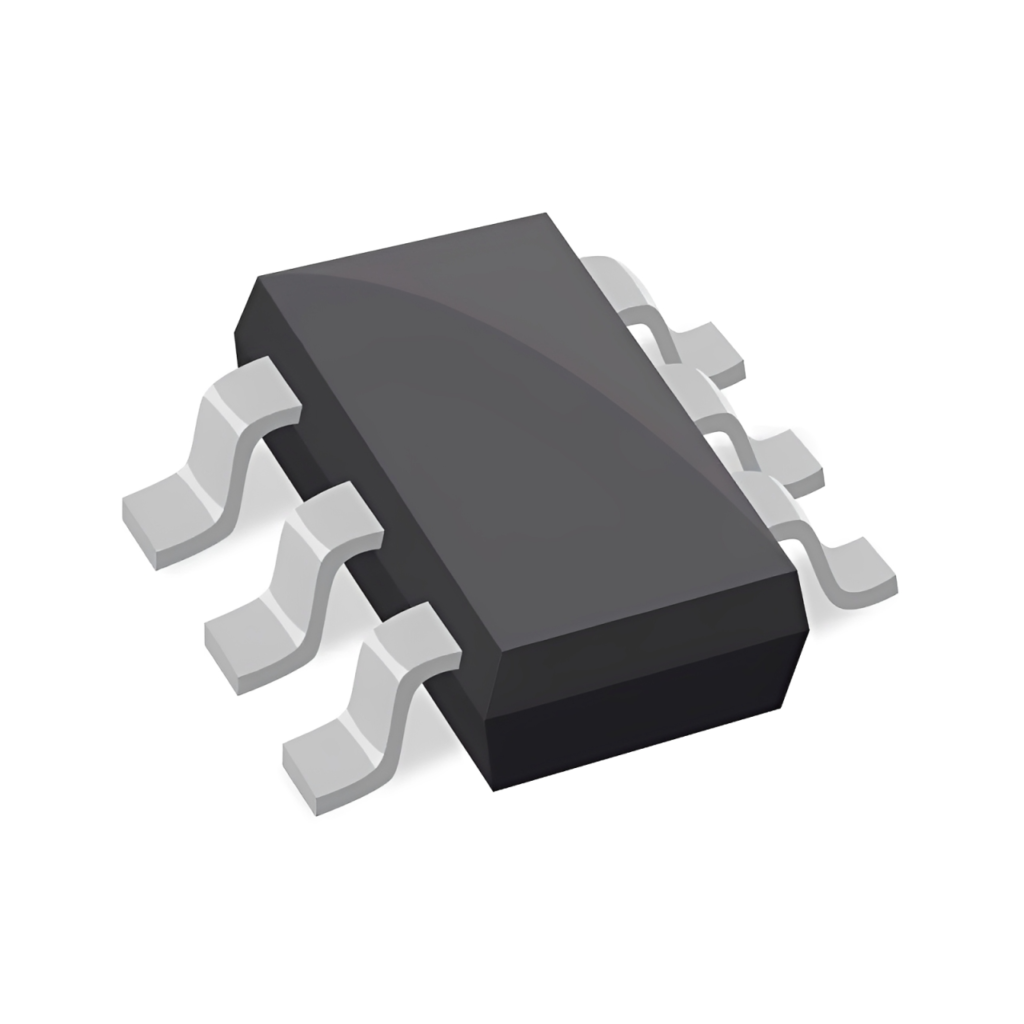
Discrete semiconductors
Discrete semiconductors are fundamental components that help electronic systems control, convert, switch, protect, and amplify electrical energy. Although integrated circuits often attract more attention because they combine many functions into a single package, discrete semiconductor devices remain essential in countless applications where precise control, higher power handling, flexibility, or specialised performance is required.
From a simple power adapter to an electric vehicle inverter, individual semiconductor devices perform important tasks that allow larger systems to operate safely and efficiently. They can direct current, regulate voltage, strengthen weak signals, protect against electrical faults, and switch power at extremely high speeds.
Their value becomes even more significant as industries move toward electrification, renewable energy, automation, intelligent machines, connected devices, and high-efficiency power systems. As technology evolves, discrete semiconductors continue to provide engineers with dependable building blocks for creating reliable and optimised circuit designs.
What Exactly Are Discrete Semiconductors?
Discrete semiconductors are individual electronic components manufactured to perform a specific electrical function.
Unlike integrated circuits, which may contain thousands or even millions of components within one chip, a discrete semiconductor is generally designed around one primary operation.
For example, a diode may be selected to control the direction of current, while a transistor may be used to amplify a signal or switch a load.
Common categories include:
- Diodes
- Bipolar junction transistors
- MOSFETs
- IGBTs
- Thyristors
- Rectifiers
- Zener diodes
- Schottky diodes
- TVS diodes
- Photodiodes
- Darlington transistors
Each device has electrical characteristics that determine where and how it can be used.
Why Are Discrete Semiconductors Still Important Today?
The continued growth of integrated electronics has not reduced the importance of discrete devices. In many applications, individual semiconductor components provide advantages that cannot easily be replaced by highly integrated solutions.
A designer may need a device that can handle substantial current, survive high voltage, dissipate heat effectively, or switch a load independently from other circuit functions.
Discrete semiconductors offer several practical benefits:
- Flexible selection of electrical characteristics
- High current and voltage capabilities
- Simplified replacement in many designs
- Dedicated protection for individual circuit sections
- Efficient power switching
- Better control over thermal behaviour
- Support for customised circuit architectures
- Suitability for both low-power and high-power systems
These characteristics make them especially valuable in power electronics and industrial applications.
How Do Semiconductor Materials Control Electricity?
Semiconductor materials have electrical properties between those of conductors and insulators.
Silicon is the most widely used semiconductor material because its behaviour can be controlled by introducing carefully selected impurities through a process known as doping.
This allows manufacturers to create regions with different electrical properties.
When these regions are combined, they form structures such as PN junctions, which are used in devices like diodes and transistors.
These controlled junctions allow semiconductor components to respond predictably to voltage and current.
As a result, engineers can design circuits that perform precise switching, amplification, rectification, sensing, and regulation functions.
What Role Do Diodes Play in Electronic Systems?
Diodes are among the simplest and most widely used discrete semiconductors.
Their primary purpose is to allow current to flow mainly in one direction.
This makes them useful in many applications where electrical direction must be controlled.
Typical diode applications include:
- Converting AC power into DC power
- Protecting circuits from reverse polarity
- Regulating voltage
- Suppressing electrical spikes
- Detecting signals
- Protecting communication lines
- Preventing unwanted current flow
Different types of diodes offer different electrical characteristics.
Rectifier Diodes
Rectifier diodes are designed for power conversion.
They are frequently used in power supplies, chargers, adapters, and industrial equipment to convert alternating current into direct current.
Zener Diodes
Zener diodes are commonly used for voltage regulation and protection.
They are designed to operate in a controlled reverse breakdown region, allowing them to maintain a relatively stable voltage across a circuit.
Schottky Diodes
Schottky diodes are valued for their low forward voltage drop and fast switching behaviour.
They are often used in high-frequency converters, power supplies, and circuits where energy efficiency is important.
TVS Diodes
Transient voltage suppression diodes help protect sensitive electronics against sudden voltage spikes.
They are frequently used in automotive electronics, industrial equipment, communication interfaces, and power inputs.
How Do Transistors Control and Amplify Electrical Signals?
Transistors are among the most influential electronic components ever developed.
They can act as electronic switches or amplifiers.
A small input signal can control a larger current, allowing transistors to manage everything from audio signals to high-power motors.
Two major transistor families are commonly used.
Bipolar Junction Transistors
Bipolar junction transistors, also known as BJTs, are current-controlled devices.
They are commonly used for:
- Signal amplification
- Driver circuits
- Switching
- Audio electronics
- Analogue control circuits
- Sensor interfaces
BJTs are available in NPN and PNP configurations.
Each type operates differently depending on the direction of current and polarity used in the circuit.
Field-Effect Transistors
Field-effect transistors are controlled by voltage rather than current.
MOSFETs are among the most widely used field-effect devices.
They are particularly important in power electronics because they can switch quickly and operate with relatively low conduction losses.
MOSFETs are frequently found in:
- Power converters
- Motor controllers
- Battery systems
- Computer power supplies
- Automotive electronics
- LED drivers
- Switching regulators
- Renewable energy equipment
Why Are IGBTs Important in High-Power Applications?
Insulated-gate bipolar transistors combine some of the useful characteristics of MOSFETs and bipolar transistors.
They are particularly suitable for applications involving higher voltages and significant power levels.
IGBTs are widely used in:
- Industrial motor drives
- Railway traction
- Electric vehicles
- Renewable energy inverters
- Welding equipment
- Uninterruptible power supplies
- Large power converters
Their ability to handle substantial power while remaining electronically controllable makes them important in industrial and transportation systems.
How Do Thyristors Manage Large Electrical Loads?
Thyristors are semiconductor switching devices designed primarily for power control.
Once triggered, many thyristors remain conducting until the current drops below a certain level.
This behaviour makes them useful in systems where large electrical loads must be controlled efficiently.
Typical applications include:
- AC power control
- Motor speed regulation
- Heating systems
- Lighting controls
- Industrial power conversion
- Soft-start circuits
Silicon-controlled rectifiers and TRIACs are common members of the thyristor family.
How Do Discrete Semiconductors Improve Power Conversion?
Modern electronic systems rely heavily on power conversion.
Electricity may need to be converted between AC and DC, stepped up or down in voltage, or controlled before reaching a load.
Discrete semiconductors make these functions possible.
In a switching power supply, for example, power transistors rapidly turn electrical current on and off.
Diodes direct current through the appropriate paths, while additional semiconductor devices provide protection and regulation.
Efficient semiconductor switching allows power systems to achieve:
- Higher conversion efficiency
- Smaller component size
- Reduced energy waste
- Lower thermal output
- Improved power density
- Faster response
- Better control over output voltage
These benefits are especially important in portable electronics and high-power equipment.
Why Is Thermal Management Critical for Semiconductor Performance?
Heat is one of the biggest challenges in semiconductor design.
Every electronic component produces some amount of heat when electrical current flows through it.
If a device becomes too hot, its electrical characteristics may change, efficiency may decrease, and long-term reliability can be affected.
Power semiconductor systems often use several methods to control temperature:
- Heat sinks
- Thermal pads
- Cooling fans
- PCB copper areas
- Thermal vias
- Ventilation
- Liquid cooling in advanced systems
- Low-resistance devices
Proper thermal management allows semiconductors to operate safely within their rated temperature limits.
How Do Discrete Semiconductors Support Automotive Electronics?
Modern vehicles contain numerous electronic control systems.
Discrete semiconductor devices are used throughout these systems to manage power, control lighting, protect circuits, operate motors, and regulate energy flow.
Applications can include:
- Electric power steering
- Electronic braking systems
- Battery management
- LED headlights
- Window and seat motors
- Infotainment systems
- Engine control modules
- Charging circuits
- Sensor interfaces
Electric and hybrid vehicles place even greater demands on semiconductor technology because they rely heavily on power conversion and high-current switching.
What Is Their Role in Electric Vehicles?
Electric vehicles use discrete semiconductors in several critical systems.
The traction inverter, for example, converts battery power into the form required by the electric motor.
High-performance transistors such as IGBTs and advanced MOSFETs perform rapid switching during this process.
Discrete semiconductors are also used in:
- On-board chargers
- DC-to-DC converters
- Battery protection circuits
- Thermal control systems
- Auxiliary power systems
- Charging stations
Efficiency is especially important in electric vehicles because wasted energy can reduce driving range.
How Do Discrete Semiconductors Support Renewable Energy?
Renewable energy systems require efficient electrical conversion.
Solar panels produce DC electricity, while many electrical grids operate using AC power.
Inverters convert the electricity from one form to another.
Power semiconductor devices perform much of this conversion.
They are commonly found in:
- Solar inverters
- Wind turbine power converters
- Battery energy storage systems
- Smart grid equipment
- Charging controllers
- Power conditioning units
Efficient semiconductor devices help reduce energy losses during conversion and improve overall system performance.
Why Are Discrete Semiconductors Essential in Industrial Automation?
Modern factories rely on automation systems that must control motors, sensors, actuators, and other electrical equipment.
Discrete semiconductor devices allow these systems to respond quickly to electronic commands.
Industrial applications include:
- Robotic systems
- Variable-frequency drives
- Machine control units
- Automated production equipment
- Conveyor systems
- Process control systems
- Industrial power supplies
- Protection circuits
Industrial environments can involve electrical noise, heat, vibration, and continuous operation.
Therefore, component reliability is extremely important.
How Are Discrete Semiconductors Used in Consumer Electronics?
Consumer electronics also depend on large numbers of individual semiconductor devices.
They may not always be visible to users, but they perform important tasks behind the scenes.
Examples include:
- Television power supplies
- Laptop charging systems
- Mobile device chargers
- Audio amplifiers
- Gaming systems
- Household appliances
- Smart home devices
- Portable electronic equipment
In these products, manufacturers often prioritise energy efficiency, small size, low heat generation, and cost-effectiveness.
What Electrical Ratings Matter When Selecting a Device?
Choosing the correct discrete semiconductor requires careful examination of its electrical specifications.
Important ratings may include:
- Maximum voltage
- Continuous current
- Peak current
- Power dissipation
- Forward voltage
- Breakdown voltage
- On-state resistance
- Switching speed
- Leakage current
- Junction temperature
- Thermal resistance
A component should normally be selected with an appropriate safety margin.
Operating continuously at the absolute maximum rating can reduce reliability.
Why Does Switching Speed Matter?
Switching speed describes how quickly a semiconductor can transition between conducting and non-conducting states.
Faster switching allows power systems to operate at higher frequencies.
Higher operating frequencies can help reduce the size of transformers, inductors, and capacitors.
However, faster switching can also create challenges such as electromagnetic interference and switching losses.
Engineers therefore need to balance speed with efficiency, cost, and circuit stability.
How Does Package Design Affect Semiconductor Performance?
The physical package of a semiconductor affects more than just its dimensions.
Packaging influences heat dissipation, mounting, current handling, insulation, and mechanical durability.
Common package categories include:
- Surface-mount packages
- Through-hole packages
- Power modules
- Leadless packages
- Metal-tab power packages
Compact surface-mount packages are useful in dense circuit boards.
Larger packages may provide better heat transfer and easier mounting for high-power applications.
What Is Semiconductor Derating?
Derating means operating a component below its maximum electrical or thermal limits.
For example, a transistor rated for a certain maximum current may be operated at a lower level to improve reliability.
Derating can help protect against unexpected electrical conditions, temperature changes, component variation, and ageing.
It is widely used in automotive, aerospace, industrial, and high-reliability electronics.
How Are Silicon Carbide Devices Changing Power Electronics?
Silicon carbide is a wide-bandgap semiconductor material that is becoming increasingly important in power electronics.
Compared with conventional silicon devices, suitable silicon carbide components can operate at higher voltages, higher temperatures, and faster switching speeds.
Potential advantages include:
- Lower switching losses
- Improved efficiency
- Smaller cooling systems
- Higher operating temperatures
- Increased power density
- Compact converter designs
Silicon carbide devices are increasingly used in electric vehicles, renewable energy systems, and high-performance industrial power equipment.
Why Is Gallium Nitride Becoming More Popular?
Gallium nitride is another wide-bandgap semiconductor material.
GaN devices are particularly attractive for high-frequency switching applications.
They can enable compact power converters with improved efficiency.
Common areas of interest include:
- Fast chargers
- Data centre power systems
- Telecommunications equipment
- Compact power adapters
- High-frequency converters
- Consumer electronics
The ability to switch efficiently at high frequency can allow designers to reduce the size of supporting components.
How Do Discrete Semiconductors Support Data Centres?
Data centres consume significant amounts of electricity.
Efficient power management can therefore have a major impact on operating cost and energy consumption.
Discrete semiconductor devices are used in power distribution, voltage conversion, server power supplies, backup power systems, and cooling controls.
Lower electrical losses can reduce both direct power consumption and the amount of heat that cooling systems must remove.
As cloud computing and artificial intelligence infrastructure expand, efficient power semiconductor technology will become increasingly important.
Why Is Circuit Protection So Important?
Sensitive electronic components can be damaged by voltage spikes, current surges, reverse polarity, or electrostatic discharge.
Discrete protection semiconductors can help prevent this damage.
Devices such as TVS diodes, Zener diodes, and specialised protection transistors can react quickly to harmful electrical conditions.
Protection may be required in:
- Automotive systems
- Communication ports
- Power inputs
- Industrial controls
- Battery systems
- USB interfaces
- Outdoor equipment
Effective protection can reduce failures and improve product reliability.
How Do Engineers Match a Semiconductor to an Application?
The best discrete semiconductor is not simply the device with the highest specifications.
It must match the actual requirements of the circuit.
Engineers typically evaluate:
- Operating voltage
- Expected current
- Switching frequency
- Thermal environment
- Available PCB space
- Efficiency targets
- Cooling method
- Cost requirements
- Reliability expectations
- Package compatibility
A balanced selection usually produces better results than choosing a component based on a single specification.
What Future Trends Will Influence Discrete Semiconductors?
Several technology trends are increasing demand for advanced discrete semiconductor devices.
These include:
- Electric transportation
- Renewable energy
- Smart factories
- Artificial intelligence infrastructure
- Robotics
- Battery storage
- Fast charging
- Energy-efficient computing
- Industrial electrification
- Connected devices
Each of these areas requires efficient control of electrical energy.
As a result, semiconductor manufacturers continue to develop devices with lower losses, faster switching, improved thermal performance, and higher power density.
Why Will Discrete Semiconductors Remain Essential?
Discrete semiconductors continue to provide an ideal combination of flexibility, precision, efficiency, and specialised electrical performance.
They allow engineers to select exactly the right component for switching, rectification, amplification, protection, sensing, or power conversion.
Their importance extends from tiny portable devices to large industrial machines and high-power energy systems.
As electronics become more powerful and energy efficiency becomes increasingly important, the demand for reliable discrete semiconductor technology will continue.
New materials such as silicon carbide and gallium nitride are expanding what these devices can achieve, while traditional silicon technology continues to support countless established applications.
Discrete semiconductors therefore remain more than simple individual components. They are essential tools that allow modern electronic systems to operate efficiently, safely, and intelligently. Their role in power conversion, automation, transportation, renewable energy, communications, and advanced computing ensures that they will remain central to electronic design for many years to come.