Distribution ERP| Latest Trends Transforming Business Operations in 2026
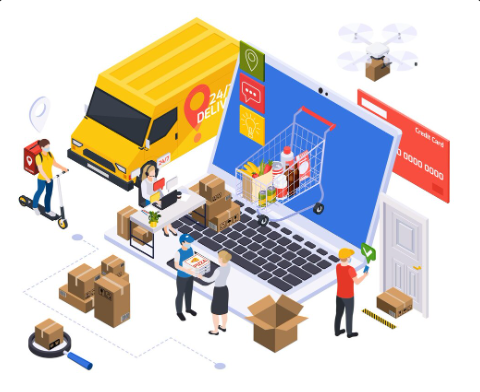
Distribution ERP is becoming an essential technology for businesses that manage inventory, purchasing, sales, warehousing, logistics, and customer relationships. As distribution networks become more complex in 2026, companies need faster access to accurate information and better control over daily operations. Traditional systems that rely on spreadsheets, disconnected software, and manual processes can make it difficult to maintain efficiency and respond to changing customer demands.
Modern Distribution ERP solutions bring key business functions together on a single platform. They help distributors coordinate inventory, orders, procurement, finance, sales, and warehouse activities while providing real-time visibility across operations. With automation, analytics, cloud technology, and artificial intelligence becoming more accessible, Distribution ERP is evolving from a back-office management system into a strategic business platform.
Understanding the latest Distribution ERP trends can help businesses identify opportunities to improve efficiency, reduce operational costs, and create more responsive distribution processes.
What Is Distribution ERP?
Distribution ERP is enterprise resource planning software designed to support the specific needs of distribution businesses. It connects important operational functions within one centralized system.
Depending on the business, a Distribution ERP platform may manage:
- Inventory and stock levels
- Purchasing and procurement
- Sales orders and invoicing
- Warehouse operations
- Supplier management
- Customer management
- Distribution and logistics
- Financial management
- Sales team activities
- Reporting and business analytics
Instead of maintaining separate systems for different departments, businesses can use ERP software to create a connected flow of information. This reduces duplicate data entry and makes it easier for managers to understand what is happening throughout the organization.
Why Distribution ERP Matters in 2026
Distribution businesses are dealing with changing customer expectations, expanding product ranges, complex supply chains, and increasing pressure to control costs. Customers increasingly expect accurate product availability, fast order processing, and reliable delivery.
At the same time, distributors need to manage working capital carefully. Overstocking can increase storage costs, while insufficient inventory can result in missed sales.
Distribution ERP helps businesses address these challenges by connecting operational data and automating repetitive processes. Managers can use centralized information to make faster decisions, monitor performance, and identify potential issues before they become major problems.
The latest ERP developments are also making these systems more flexible, intelligent, and accessible for businesses of different sizes.
1. AI-Powered Distribution ERP
Artificial intelligence is one of the most important trends shaping ERP technology in 2026. AI can help distribution companies analyze large amounts of operational data and identify patterns that may be difficult to detect manually.
AI-powered ERP systems can support areas such as demand forecasting, inventory planning, sales analysis, and anomaly detection. For example, historical sales data can be analyzed to identify purchasing patterns and potential changes in demand.
AI can also assist employees with routine tasks by generating reports, summarizing information, and helping users locate relevant business data.
The goal is not simply to add AI to ERP software. The larger trend is using intelligent automation to help employees make faster and more informed decisions.
2. Real-Time Inventory Management
Inventory visibility remains a major priority for distributors. In 2026, modern ERP systems are increasingly focused on providing real-time information about stock levels and product movement.
A centralized inventory system can help businesses monitor:
- Available stock
- Reserved inventory
- Incoming products
- Damaged or returned items
- Warehouse transfers
- Fast-moving products
- Slow-moving products
Real-time inventory information can reduce the risk of inaccurate stock records. It also helps sales teams provide customers with more reliable availability information.
For businesses operating multiple warehouses or distribution locations, centralized inventory visibility can be particularly valuable.
3. Cloud-Based ERP Solutions
Cloud ERP continues to transform how distribution businesses access and manage their software. Instead of depending entirely on locally installed systems, companies can use cloud-based platforms that are accessible through internet-connected devices.
Cloud-based Distribution ERP can provide several practical benefits. Businesses can access current information across locations, support remote teams, and simplify software maintenance.
Cloud deployment can also make ERP technology more scalable. As a company expands into new warehouses, branches, or markets, its ERP environment can often be adjusted without requiring a complete replacement of the system.
For growing distributors, this flexibility can make cloud ERP an important part of long-term technology planning.
4. Automated Warehouse Operations
Warehouse efficiency has a direct impact on distribution performance. In 2026, ERP systems are becoming increasingly connected with warehouse technologies and automated workflows.
Automation can support processes such as receiving, picking, packing, stock transfers, and order fulfillment. Barcode scanning and mobile warehouse applications can help employees update inventory records as products move through the facility.
When warehouse activities are connected with ERP data, businesses can improve visibility from purchasing to final delivery.
Automation also reduces dependence on repetitive manual data entry, allowing warehouse teams to focus more on operational activities that require human attention.
5. Advanced Demand Forecasting
Accurate demand forecasting is essential for maintaining balanced inventory. Ordering too much stock can increase carrying costs, while ordering too little can lead to stockouts.
Modern Distribution ERP platforms increasingly use historical sales information, inventory data, and other business signals to support demand forecasting.
Advanced forecasting tools can help businesses identify seasonal patterns, changes in product demand, and purchasing trends. Managers can then use these insights when planning procurement and inventory levels.
Forecasting does not eliminate uncertainty, but it can give businesses a more structured approach to inventory planning.
6. Mobile ERP Access
Mobile access is another important Distribution ERP trend in 2026. Employees no longer need to be tied to desktop computers to view or update business information.
Mobile ERP applications can allow authorized employees to access information while working in warehouses, stores, distribution centers, or customer locations.
Sales representatives can review product information, check orders, and update customer information. Warehouse employees can scan products and update stock records from the warehouse floor.
Mobile accessibility creates a more connected workforce and can help businesses respond more quickly to operational requirements.
7. Better Integration With Business Systems
Distribution businesses often use multiple technologies for different activities. ERP systems are therefore becoming more focused on integration.
A modern Distribution ERP can connect with systems and tools used for:
- E-commerce
- Customer relationship management
- Payment processing
- Warehouse management
- Transportation management
- Accounting
- Business intelligence
- Supplier management
Integration reduces the need to manually transfer information between platforms. When systems communicate with each other, businesses can create more consistent workflows and improve data accuracy.
This is particularly important for distributors that operate across multiple sales channels.
8. Data Analytics and Business Intelligence
Data has become a critical resource for distribution businesses. ERP platforms are increasingly offering advanced dashboards, reports, and business intelligence features.
Managers can use analytics to examine sales performance, inventory turnover, purchasing activity, customer behavior, and operational costs.
For example, a distribution company may analyze which products generate the highest sales volume or which items remain in inventory for extended periods.
Instead of relying only on historical reports, businesses can use real-time dashboards to monitor current performance and identify trends.
9. Improved Supply Chain Visibility
Supply chains can involve manufacturers, suppliers, warehouses, transportation providers, distributors, retailers, and customers. A disruption at one point can affect the entire network.
Distribution ERP systems are increasingly designed to improve visibility across the supply chain. Businesses can track purchasing activity, incoming inventory, order status, and distribution processes from a centralized environment.
Greater visibility can help managers identify delays and respond to supply chain changes more effectively.
This trend is especially relevant for distributors that work with multiple suppliers or operate across different regions.
10. Smarter Procurement Management
Procurement is another area being transformed by ERP automation. Modern systems can help purchasing teams monitor stock requirements, supplier information, purchase orders, and purchasing history.
Automated alerts can notify employees when inventory reaches specific thresholds. Purchasing teams can also review supplier performance and historical purchasing data before making decisions.
By connecting procurement with inventory and sales information, businesses can create a more coordinated purchasing process.
11. Customer-Centric Distribution
Customer expectations continue to influence distribution technology. Businesses increasingly need to provide accurate order information, faster service, and consistent communication.
Distribution ERP can help create a customer-centric process by connecting customer information with sales, inventory, and order management.
Sales and customer service teams can access relevant information without requesting data from multiple departments. This can make it easier to answer customer questions and manage orders.
Better internal visibility can ultimately support a smoother customer experience.
12. Stronger Data Security and Access Control
As businesses store more operational information digitally, data security becomes increasingly important. Distribution ERP platforms are incorporating stronger security controls to protect business information.
Common security features include role-based access, authentication controls, activity monitoring, backups, and permission management.
Role-based access allows organizations to determine which information different employees can view or modify. This can help protect sensitive financial, customer, supplier, and operational information.
Security should remain an important consideration when businesses evaluate any ERP platform.
Benefits of Adopting Modern Distribution ERP
The latest Distribution ERP trends are not simply about new technology. They are designed to solve practical business challenges.
A well-implemented ERP system can help organizations achieve:
Greater Operational Efficiency
Automation reduces repetitive tasks and helps employees complete processes more consistently.
Better Inventory Control
Real-time inventory information can improve stock visibility and support better purchasing decisions.
Faster Decision-Making
Centralized data and dashboards give managers access to information when they need it.
Reduced Operational Errors
Automated workflows and integrated data can reduce mistakes caused by duplicate manual entry.
Improved Scalability
Cloud-based and modular ERP solutions can support businesses as they expand their operations.
Better Customer Service
Accurate order and inventory information can help customer-facing teams respond more effectively.
How to Choose a Distribution ERP in 2026
Businesses should evaluate ERP software according to their operational requirements rather than selecting a system based only on the number of features it offers.
Important considerations include scalability, inventory management, warehouse capabilities, reporting, automation, integration, security, mobile access, and ease of use.
Companies should also consider implementation requirements and employee training. Even advanced ERP software may not deliver expected results if employees cannot use it effectively.
Before selecting a platform, businesses should identify their current operational challenges and define measurable goals for the ERP implementation.
The Future of Distribution ERP
The future of Distribution ERP will likely involve greater automation, stronger analytics, deeper integration, and more intelligent decision support. AI will continue to influence how businesses forecast demand, analyze performance, and automate routine processes.
At the same time, ERP systems are becoming more connected to warehouses, sales channels, customer platforms, and supply chain technologies.
The most important shift is that ERP is moving beyond basic record keeping. Modern platforms are becoming central operating systems for distribution businesses, connecting people, processes, and data across the organization.
Conclusion
Distribution ERP is playing an increasingly important role in modern business operations in 2026. AI-powered insights, cloud technology, real-time inventory management, warehouse automation, mobile access, advanced analytics, and stronger system integration are changing how distributors manage their daily activities.
For businesses facing complex inventory, sales, procurement, warehouse, and supply chain requirements, modern ERP technology can provide a centralized foundation for managing operations. However, successful implementation depends on choosing technology that matches the organization’s processes, goals, budget, and growth plans.
As distribution continues to become more data-driven and customer-focused, businesses that adopt connected and adaptable ERP practices can create more organized workflows and gain better visibility across their operations. The latest Distribution ERP trends therefore represent not just technological changes, but a broader shift toward smarter, more integrated, and more responsive distribution management.