Facial contours play an important role in creating a balanced and refreshed appearance. With age, the skin gradually loses collagen and elasticity, which can cause the cheeks to appear less lifted, the jawline to become less defined, and mild sagging to develop around the lower face. Thread lift treatment offers a minimally invasive option for people who want to improve these concerns without undergoing traditional facial surgery.
For individuals considering Thread Lift Treatment in Islamabad, understanding how the procedure works and what results it can realistically provide is essential. A thread lift uses temporary, dissolvable threads placed beneath the skin to support targeted tissues and create a subtle lifting effect. It may help improve facial definition in suitable candidates, although the results depend on skin quality, the degree of sagging, and individual anatomy.
1. How Does Thread Lift Treatment Improve Facial Contours?
A thread lift is designed to support areas of the face where mild skin laxity has affected natural contours. During the procedure, a qualified practitioner inserts specialized threads beneath the skin using an appropriate technique. These threads help lift and reposition selected tissues, creating a more defined appearance.
The treatment may improve the appearance of the cheeks, lower face, jawline, and other suitable areas. For example, a person experiencing mild sagging around the lower cheeks may notice a subtle improvement in facial definition after treatment.
Thread lifts can also stimulate a healing response that encourages collagen production around the treated areas. Collagen is a structural protein that helps maintain skin support and firmness. As the threads gradually dissolve, the collagen response may continue to provide some benefit, although it does not guarantee a lasting lifting effect.
The procedure is not intended to change a person’s natural facial structure dramatically. Instead, it aims to provide a modest improvement while preserving individual features. The final result depends on the treatment plan, thread type, placement technique, and the patient’s natural healing response.
2. Which Facial Areas Can Benefit From a Thread Lift?
Different areas of the face may benefit from thread lift treatment, depending on the patient’s concerns and the amount of skin laxity present. A professional assessment helps identify which areas are suitable for treatment.
Common areas include:
- Cheeks: A thread lift may provide subtle support to mildly sagging cheeks, helping the midface appear more lifted.
- Jawline: The treatment may improve jawline definition when early sagging affects the lower face.
- Jowls: In selected patients, a thread lift may soften the appearance of mild jowling near the corners of the jaw.
- Eyebrows: Certain techniques may create a modest brow lift, making the upper face appear more open.
- Lower face and neck: Depending on the method used, threads may help address selected areas of mild laxity.
Not every patient will benefit equally from treatment in each area. Significant excess skin, pronounced jowls, or advanced facial sagging may require a different approach. A thread lift cannot remove excess skin in the way that surgery can, so realistic expectations are important.
3. Can Thread Lift Treatment Create a More Defined Jawline?
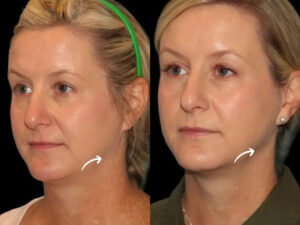
The jawline is one of the facial areas where mild skin laxity can become noticeable with age. As the skin and underlying tissues lose support, the boundary between the lower face and neck may appear less distinct. A thread lift may help improve this appearance in carefully selected patients.
By providing support to targeted tissues, the threads can create a subtle lifting effect around the lower face. This may make the jawline look more defined and reduce the appearance of mild sagging near the jowls.
However, the procedure does not remove fat or significantly alter the underlying bone structure. If a less defined jawline is mainly caused by excess fat, a recessed chin, or other structural factors, a thread lift alone may not provide the desired result.
A consultation helps determine the main cause of reduced definition. Depending on the individual’s anatomy and goals, another treatment may be more appropriate. The best treatment plan considers the whole face rather than focusing on a single feature in isolation.
4. Does a Thread Lift Improve Cheek Shape and Facial Balance?
Cheek shape contributes to the overall balance of the face. When the cheeks begin to sag, the midface may appear less lifted, and the transition between the cheeks and lower face can become less defined.
A thread lift may provide support to selected cheek tissues, helping create a slightly lifted appearance. In some patients, this can improve the overall impression of facial balance without producing a dramatic change.
The procedure is not the same as adding volume with dermal fillers. Fillers are designed to add volume or support specific areas, while thread lifts primarily focus on lifting and supporting tissues. The two treatments address different concerns, and neither is automatically suitable for every patient.
Facial symmetry, skin elasticity, and the amount of natural tissue volume all influence the outcome. A qualified practitioner should assess the patient’s facial proportions and explain what level of improvement is realistic. A natural-looking result generally focuses on enhancing existing features rather than making the face appear noticeably different.
5. When Do Facial Contour Improvements Become Visible?
Some lifting may be visible immediately after a thread lift, but the early appearance is not necessarily the final result. Swelling, bruising, tenderness, and temporary tightness can affect facial contours during the first part of recovery.
As these effects settle, the treated area becomes easier to assess. Collagen-related changes may develop gradually over time, although the extent of this response varies from person to person.
Recovery recommendations depend on the treatment technique and individual circumstances. Patients may be advised to avoid strenuous exercise, limit pressure on the treated areas, and follow specific instructions about sleeping positions and facial movements. Rubbing or massaging the face should be avoided when the practitioner advises against it.
Patients should also contact their practitioner if they experience severe or worsening pain, increasing redness, unusual discharge, fever, or unexpected skin discoloration. Prompt medical assessment is important when symptoms are concerning.
For those exploring Thread Lift Treatment in Islamabad, discussing the expected recovery timeline during the consultation can help them plan their activities and understand when results should be evaluated.
6. How Long Can Improved Facial Contours Last?
Thread lift results are temporary, and their duration varies according to the type of threads used, the treatment technique, skin quality, age, and individual healing. Some patients may notice improvement for several months, while others may experience benefits for around a year or longer. No particular duration can be guaranteed.
Many threads gradually dissolve as the body absorbs them. The collagen response may provide some continuing support, but the lifting effect generally decreases over time. Natural aging also continues, meaning that facial contours may gradually change even after a successful procedure.
Several factors can influence the longevity of results:
- The original degree of skin sagging.
- Skin elasticity and overall skin condition.
- Thread type and placement technique.
- Individual collagen production and healing.
- Sun exposure, smoking, and lifestyle habits.
- Significant changes in body weight.
Good skincare and sun protection support skin health but cannot prevent the natural aging process or guarantee longer-lasting results. Any decision about repeat treatment should follow a professional assessment rather than a fixed schedule.
7. Who Is a Suitable Candidate for Facial Contouring With Threads?
Thread lift treatment may be suitable for adults with mild to moderate skin laxity who want a subtle improvement without traditional surgery. People with relatively good skin quality and realistic expectations may be more likely to appreciate the results.
However, the procedure is not suitable for everyone. Individuals with significant loose skin may achieve better results from another treatment. Certain active skin infections, medical conditions, or factors that affect healing may also make the procedure unsuitable or require additional precautions.
Before treatment, a qualified and appropriately trained practitioner should review the patient’s medical history, current medications, skin condition, and aesthetic goals. The consultation should include a discussion of possible side effects, limitations, recovery, and alternative treatments.
Potential risks include bruising, swelling, tenderness, asymmetry, dimpling, visible or palpable threads, infection, and unsatisfactory results. Although many side effects are temporary, complications sometimes require further treatment. Patients should have the opportunity to ask questions and make an informed decision before proceeding.
Ultimately, a thread lift can improve facial contours for selected individuals, but its effectiveness depends on choosing the right patient and setting realistic goals. A personalized assessment is the best way to determine whether the treatment can address a particular concern safely and effectively.
Frequently Asked Questions
1. Does thread lift treatment permanently improve facial contours?
No. Thread lift results are temporary because the threads gradually dissolve and the face continues to age naturally. The duration of visible improvement varies depending on individual factors and the treatment technique.
2. Can a thread lift make the jawline look sharper?
A thread lift may improve jawline definition when mild skin sagging contributes to a less defined appearance. It does not remove excess fat or change the underlying bone structure, so results depend on the cause of the concern.
3. Is thread lift treatment better than dermal fillers for facial contours?
Neither treatment is universally better. Thread lifts focus on supporting and lifting selected tissues, while dermal fillers add volume or support specific facial areas. The most suitable option depends on the individual’s anatomy, skin condition, and desired outcome.
4. Is there downtime after a thread lift?
Most patients experience some recovery time, which may involve swelling, bruising, tenderness, or tightness. Recovery varies, and patients should follow their practitioner’s aftercare instructions before returning to strenuous activities.