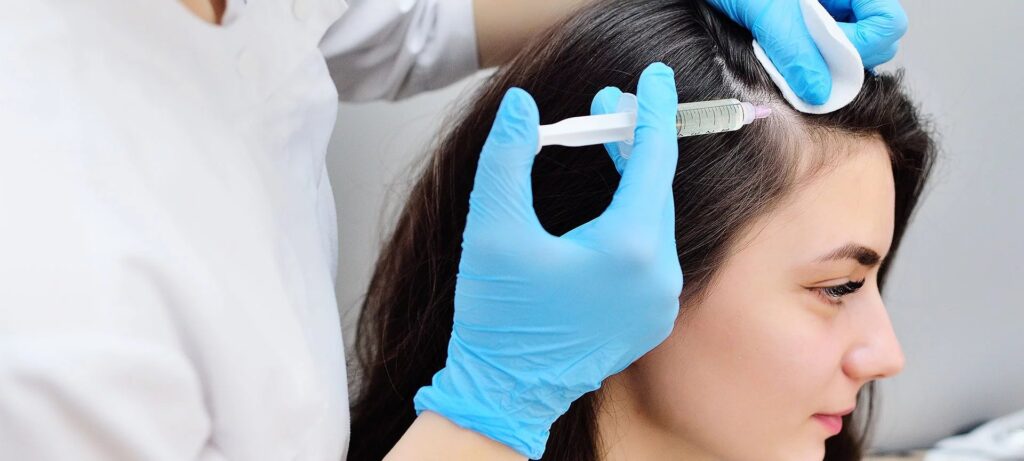
Hair thinning in women can develop for many different reasons, including hereditary tendencies, hormonal changes, nutritional deficiencies, certain medical conditions, stress, and gradual follicular miniaturization. Because the underlying cause and pattern can vary significantly from one person to another, hair restoration for women requires a carefully individualized approach rather than a standard treatment plan. For suitable candidates, Female Hair Transplant in Dubai can offer a surgical option for restoring areas where natural growth has become significantly reduced.
Unlike a general approach to hair restoration, female-focused planning considers factors such as the existing hairline, density across the scalp, donor-area strength, hair texture, and the way the patient’s hair is normally styled. A detailed assessment is therefore important before deciding whether transplantation is appropriate.
Modern techniques can involve carefully extracting follicular units from a suitable donor region and placing them into areas affected by thinning or loss. The objective is not simply to add more follicles, but to create a natural transition between existing and transplanted hair. Angulation, direction, spacing, and graft distribution can all influence the final appearance.
Understanding the cause of hair loss is equally important. A specialist may evaluate the scalp, review medical and family history, and recommend laboratory investigations when hormonal, nutritional, or other contributing factors are suspected. This helps establish whether transplantation is appropriate and what type of restoration may be realistic.
Why Personalized Planning Matters for Women
Female hair loss does not always follow the same pattern seen in typical male-pattern hair loss. Some women experience widening of the central parting, while others develop diffuse thinning across the crown or reduced density around the frontal region.
This variation makes individualized planning particularly important. A specialist needs to determine whether enough stable donor follicles are available and whether the recipient area is suitable for transplantation.
Existing hair can also make the procedure more technically demanding. Transplanted follicles must be positioned carefully among the patient’s natural strands without unnecessarily disturbing them. The planned density should complement the surrounding hair rather than creating an artificial-looking concentration.
Another consideration is future progression. If ongoing hair loss remains untreated, newly transplanted areas may appear denser than surrounding native hair over time. For this reason, the long-term restoration plan should consider both current density and the possibility of continued thinning.
How Female Hair Transplantation Is Planned
The process generally begins with an in-depth consultation. The specialist examines the scalp and donor region while discussing the patient’s history, previous treatments, expectations, and preferred appearance.
Photographic assessment may be used to document the existing pattern and help with treatment planning. In some cases, additional investigations are recommended to identify factors that could affect hair growth or surgical suitability.
Once the assessment is complete, the treatment team can determine whether transplantation is appropriate. If it is, the recipient area is mapped according to the patient’s facial proportions, existing hairline, density, and future expectations.
The donor area is also assessed carefully. Hair caliber, follicular density, available grafts, and the stability of the donor region can influence how much coverage can realistically be achieved.
Choosing a Suitable Hairline and Density
A natural-looking result depends heavily on how the new hairline is designed. For women, the objective may be to restore a receding or sparse frontal region while preserving the softness and natural irregularity of the hairline.
Overly straight or excessively dense placement can make transplanted hair appear artificial. Instead, specialists generally consider the direction and angle of existing strands and use finer grafts where a softer transition is required.
Density also needs to be planned realistically. The number of grafts available is limited, so distributing them strategically can provide better visual coverage than concentrating them in a small area.
The final design should take into account hairstyles as well. Women who frequently part their hair in a particular direction may require a restoration plan that provides adequate coverage in that region.
Techniques Used for Female Hair Restoration
Follicular unit extraction-based procedures are commonly considered when individual follicular units can be harvested from a suitable donor area. The follicles are separated and then implanted into carefully prepared recipient sites.
The exact technique depends on the patient’s anatomy, hair characteristics, degree of thinning, and treatment goals. A specialist may also consider how existing follicles can be protected during implantation.
Precision becomes especially important when transplanting into areas where native hair remains. Careful placement helps reduce unnecessary trauma and allows transplanted follicles to blend with existing strands.
Not every woman with thinning hair will require transplantation. Depending on the diagnosis, medical therapies, nutritional correction, or other non-surgical approaches may be more appropriate. A consultation should therefore focus on identifying the underlying problem rather than automatically recommending surgery.
What Recovery May Involve
Recovery varies according to the procedure and the number of grafts transplanted. Mild redness, swelling, sensitivity, or crusting can occur during the early healing period.
Patients are generally given instructions concerning scalp cleansing, physical activity, sleeping position, and protection of the treated area. Following these instructions can help support uncomplicated healing.
It is also important to understand that transplanted follicles do not produce an immediate cosmetic transformation. Newly placed hairs may initially shed as part of the normal growth cycle before new growth develops.
Visible improvement generally takes place gradually. Hair characteristics, individual growth cycles, graft survival, and the original degree of thinning can all affect how quickly the result becomes noticeable.
Enfield Royal Clinic
Enfield Royal Clinic approaches female restoration with attention to the individual pattern of thinning rather than treating every patient according to the same template. During consultation, factors such as donor availability, existing density, hairline characteristics, and restoration goals can be considered before a treatment plan is developed.
For patients considering Female Hair Transplant in Dubai, personalized graft planning is particularly relevant because transplanted follicles may need to be positioned among existing hair. The assessment can therefore focus on creating appropriate density while maintaining natural direction and proportion.
A detailed consultation also provides an opportunity to discuss the limitations of transplantation, expected recovery, and the possibility of future changes in native hair. This type of planning can help patients make an informed decision about whether surgical restoration is suitable for their individual circumstances.
How to Choose the Right Approach for Female Hair Transplant in Dubai
Experience and Qualifications
Hair transplantation requires specialized knowledge of scalp anatomy, follicular units, hair direction, and surgical technique. Patients should review the qualifications and experience of the medical professional responsible for assessment and treatment.
Experience with female patients is particularly relevant because diffuse thinning and the presence of existing hair can create different planning considerations.
Technology and Techniques
Modern transplantation can involve detailed follicular extraction, magnification, specialized implantation instruments, and photographic assessment. However, technology alone does not determine the quality of a treatment plan.
Patients should ask which technique is being proposed and why it is appropriate for their specific pattern of hair loss. The procedure should be selected according to clinical suitability rather than simply the availability of a particular technology.
Safety Standards
A proper medical assessment should take place before surgery. The treatment environment, sterilization procedures, infection-control protocols, anesthesia practices, and postoperative support should all be considered.
Patients should also disclose medications, allergies, previous procedures, and relevant medical history so potential risks can be evaluated appropriately.
Consultation Process
A meaningful consultation should allow enough time to discuss the cause of hair loss, donor-area capacity, expected coverage, treatment alternatives, recovery, and long-term planning.
Be cautious of consultations that focus only on the number of grafts or a promised final appearance without explaining the clinical reasoning behind the proposed treatment.
Patient Experience
Clear communication is an important part of the treatment journey. Patients should understand what happens before, during, and after the procedure and know whom to contact if questions arise during recovery.
A well-structured treatment pathway should also provide realistic information rather than relying on overly optimistic expectations.
Expected Results
Hair transplantation can improve density in appropriately selected areas, but the outcome differs between individuals. Donor availability, follicular characteristics, underlying hair-loss progression, surgical technique, and postoperative growth all influence the result.
Before proceeding, patients should understand what level of improvement is realistically achievable and whether additional treatment may be needed to manage ongoing native hair loss.
Frequently Asked Questions
Is female hair transplantation suitable for every woman?
No. Suitability depends on the cause and pattern of hair loss, donor-area availability, scalp condition, and overall health. Some patients may benefit more from medical or non-surgical treatment.
Can a transplant restore a woman’s original hair density?
A transplant generally aims to improve coverage rather than reproduce the exact density of naturally occurring hair. The available donor follicles are limited, so treatment planning focuses on using them strategically.
Does transplanted hair look natural in women?
It can appear natural when graft placement, hair direction, density, and hairline design are carefully planned. Existing hair must also be considered when placing follicles in areas of partial thinning.
How long does it take to see growth after transplantation?
Growth is gradual. Early shedding can occur after transplantation, followed by a period of new follicular activity. Noticeable changes develop over subsequent months, while the final maturation of transplanted hair takes longer.
Can female hair loss continue after a transplant?
Yes. Transplantation does not necessarily stop the underlying process responsible for thinning. Native hair can continue to change, which is why long-term monitoring and appropriate medical management may be recommended.
Conclusion
Female hair loss often requires a more individualized assessment because thinning patterns, causes, donor availability, and existing density can differ considerably between patients. A successful restoration plan therefore begins with diagnosis and careful evaluation rather than focusing solely on the surgical procedure.
For women considering Female Hair Transplant, factors such as hairline design, graft selection, donor-area stability, implantation technique, safety standards, and realistic expectations should all be discussed before treatment. When transplantation is clinically appropriate, personalized planning can help create coverage that works naturally with the patient’s existing hair while taking future changes into consideration.