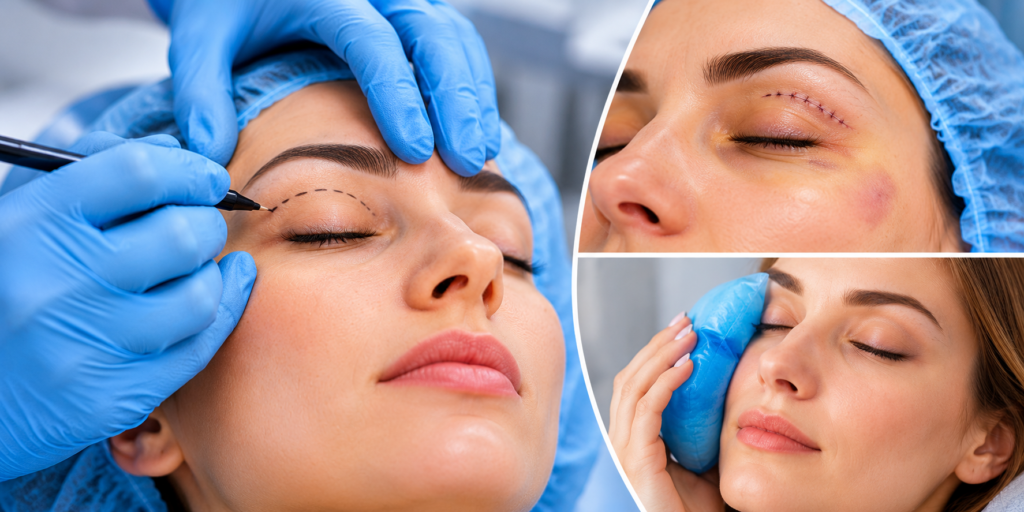
Your eyelids are the thinnest curtains on your face, and surgery adjusts them with care. The days afterward ask for calm, patience, and a few smart habits. Swelling and bruises arrive on schedule, then leave on schedule too. A clear day-by-day blepharoplasty recovery timeline helps patients know what is normal and when to contact their surgeon.
Each stage is explained in simple terms, along with care steps to protect your results. Recovery generally improves gradually, though symptoms may fluctuate as you heal. A few extra pillows and steady rest help the body do its quiet work.
Blepharoplasty Recovery Timeline Day by Day
Healing happens gradually, with swelling and bruising improving at different rates for each person.
Days 1 to 3: Peak Swelling
Swelling and bruising are usually most noticeable during the first few days. Your eyelids may feel tight, and ointment or swelling can temporarily blur your vision. Rest with your head elevated, use prescribed drops or ointment as directed, and avoid strenuous activity.
Days 4 to 7: Early Improvement
Swelling usually begins to soften, and bruises may change from purple or blue to green or yellow as they fade. Your surgeon often removes external stitches during the first week, depending on how the incision is healing. Your eyelids may still look puffy, so continue following your surgeon’s instructions.
Days 8 to 14: Bruising Fades
Bruising and swelling generally become less noticeable during the second week. Many people feel comfortable returning to work or social activities around this time, although some puffiness and pink incision lines may remain. Resume makeup only after the incisions have sealed and your surgeon approves. Wait for medical clearance before wearing contact lenses.
Weeks 3 to 4: A More Natural Appearance
Most visible bruising has usually resolved by this stage, and the eyelids begin to look more natural. Incision lines continue to soften, while mild swelling, particularly beneath the eyes, may persist. Healing varies depending on the procedure and individual recovery.
Months 2 to 3 and Beyond: Continued Healing
Most swelling typically resolves over the following months, while subtle changes in eyelid contours continue. Scars may take 6 months to a year to mature fully. Protect healing incisions from sunlight and avoid applying scar products or massaging the area unless your surgeon advises it.
Aftercare Tips for Upper Eyelid Surgery
Simple daily habits protect your incisions and keep healing on track.
- Apply Cold Compresses: Use a clean, cool compress gently around your eyes to help reduce swelling and bruising after eyelid surgery. Follow your surgeon’s instructions and avoid applying pressure.
- Keep Your Head Elevated: Sleep with your head raised using extra pillows to help minimize swelling during early recovery.
- Follow Eye Care Instructions: Apply prescribed ointments and eye drops as directed, and wash your hands before touching the treated area.
- Avoid Rubbing Your Eyes: Handle your eyelids gently and pat the surrounding skin dry to avoid irritating healing incisions.
- Pause Contact Lens Use: Wear glasses until your surgeon confirms it is safe to resume using contact lenses.
- Protect Your Eyes Outdoors: Wear sunglasses to shield healing eyelids from sunlight and wind, and follow your surgeon’s sun-protection advice.
Cool cloths and raised pillows do quiet work while your lids heal. Coastal Dermatology & Plastic Surgery brings board-certified expertise to cosmetic eyelid plastic surgery, keeping your recovery safe and your results natural. Choose Coastal Dermatology & Plastic Surgery today for expert eyelid care and results that speak for themselves.
Post Op Eyelid Surgery Restrictions to Follow
Restrictions protect your incisions and reduce bleeding risk. Avoid bending, heavy lifting, and strenuous exercise during early recovery, as these activities can increase pressure in your head. Resume swimming only after your surgeon confirms it is safe.
Smoking can delay healing, so avoid it while your wounds recover. Avoid driving while using prescription painkillers or experiencing vision problems due to swelling. Follow your surgeon’s guidance on when to safely restart each activity.
Do’s and Don’ts After Eyelid Surgery
Simple precautions during recovery help protect your incisions and support proper healing.
| Do | Avoid |
| Apply cool compresses as directed by your surgeon | Pressing ice packs directly against your eyelids |
| Sleep with your head elevated | Resting your face against the pillow |
| Use prescribed medication as instructed | Applying unapproved eye drops or skin products |
| Keep incisions clean according to medical advice | Rubbing or scratching healing eyelids |
| Wear sunglasses outdoors | Exposing healing incisions to direct sunlight |
| Attend scheduled follow-up appointments | Resuming strenuous exercise without medical clearance |
| Contact your surgeon about concerning symptoms | Ignoring worsening pain or changes in vision |
Frequently Asked Questions
When can you wear makeup after blepharoplasty?
Resume eye makeup once your incisions have healed and your surgeon approves. Apply and remove products gently.
How long do swelling and bruising after eyelid surgery last?
Most bruising improves within the first week. Mild swelling may persist for several weeks, particularly around the lower eyelids.
When are stitches removed?
External stitches are commonly removed during the first week, depending on incision healing. Some stitches dissolve on their own.
When can I wear contact lenses again?
Wait until your surgeon confirms it is safe to resume contact lenses. Wear glasses during early recovery, as swelling may make lenses uncomfortable.
When should I call my surgeon?
Seek urgent care for sudden vision changes, severe eye pain, significant bleeding, or rapidly increasing swelling. Contact your surgeon promptly if you have a fever or worsening redness.
Conclusion
Eyelid surgery recovery rewards patience. Swelling and bruises fade, stitches come out, and your final look settles in slowly. Aftercare tips for upper eyelid surgery are simple: cool the area early, sleep with your head raised, and follow every restriction. Stay in touch with your surgeon, and report anything that feels wrong. Gentle care protects results.
Small habits, steady rest, and a good plan add up to a smooth recovery. Coastal Dermatology & Plastic Surgery helps patients build that plan with experienced doctors and a patient-first approach to care. The Mohs surgery recovery guide from Coastal Dermatology & Plastic Surgery covers simple steps that protect any healing site.