Choosing the right training environment can make a significant difference in how consistently you exercise, develop your skills, and work toward your fitness goals. A Muay Thai Personal Training Gym can provide focused instruction and individualized workouts, making it an option for beginners, fitness enthusiasts, and experienced practitioners alike.
However, not every personal training program is structured in the same way. Before committing, it is important to consider your goals, the coaching approach, training environment, schedule, and overall program suitability.
Start by Defining Your Training Goals

The first step in finding the right gym is understanding what you want to accomplish. Muay Thai can support several different goals, including improving cardiovascular fitness, building strength, learning striking techniques, developing confidence, or preparing for competition.
For someone primarily interested in fitness, sessions may emphasize conditioning, strength, endurance, mobility, and calorie-burning exercises. Those focused on technique may need more time dedicated to punches, kicks, knees, elbows, footwork, defense, and combinations.
If competition is the goal, training may include more advanced conditioning, technical development, strategy, and controlled sparring. Knowing your priorities makes it easier to identify a Muay Thai Personal Training Gym that can structure sessions around your needs.
Look for Qualified and Experienced Coaches
The quality of coaching is one of the most important factors to evaluate. A good trainer should be able to explain techniques clearly, demonstrate movements correctly, and adjust instruction according to your experience and physical ability.
Ask about the coach’s background, training experience, and approach to working with beginners. At Sibai Muay Thai, Head Coach Ziad Sibai brings competitive experience and training exposure with fighters and coaches from around the world. This type of experience can help provide students with technical guidance while keeping training appropriate for their current level.
A knowledgeable coach should also understand the importance of proper warm-ups, recovery, technique, and controlled progression.
Consider One-on-One Attention
One of the main advantages of personal training is individualized attention. In a group class, a coach may need to divide attention among many participants. Personal sessions allow the trainer to observe your movements closely and provide immediate feedback.
This can be especially useful when learning unfamiliar techniques or correcting movement patterns. A trainer can also modify exercises based on your current fitness level and gradually increase the challenge as you improve.
Personalized training may cover fitness development, technique improvement, competition preparation, or carefully structured recovery-focused exercises.
Evaluate the Training Environment
The gym environment can strongly influence your experience. Look for a clean, organized space with appropriate equipment and enough room for safe movement.
Essential Muay Thai equipment may include gloves, hand wraps, Thai pads, shin guards, and other protective gear. A suitable training environment should also emphasize safety and responsible instruction.
Pay attention to how coaches and students interact. A respectful environment can make training more comfortable, particularly for people who are new to martial arts.
Check Scheduling and Program Flexibility
Consistency is important in any fitness routine. Even an excellent program may not be suitable if its schedule does not work with your lifestyle.
Ask about session availability, scheduling options, and how personal training appointments are arranged. Flexible scheduling can make it easier to maintain regular training around work, school, family responsibilities, or other commitments.
A Muay Thai Personal Training Gym that offers individualized scheduling may be particularly useful for people who cannot regularly attend fixed group classes.
Choose a Program That Matches Your Experience
Beginners should not feel pressured to perform advanced techniques immediately. A well-structured program should introduce fundamental movements progressively.
New students may begin with basic stance, balance, footwork, punches, kicks, defensive movements, and conditioning exercises. As their technique and fitness improve, training can become more complex.
More experienced practitioners may benefit from sessions that focus on specific technical weaknesses, advanced combinations, conditioning, or competition preparation.
The key is finding a program that challenges you without progressing faster than your ability to perform techniques safely and correctly.
Ask About Personalization and Progress Tracking
Personal training should be more than simply following a standard workout. Ask how the coach determines what you should work on and whether sessions are adjusted as you progress.
A personalized program might change based on improvements in endurance, strength, technique, mobility, or specific goals. Regular feedback can help you understand where you are improving and where additional attention may be useful.
This approach can also make training more engaging because workouts evolve rather than remaining identical from session to session.
Consider Sibai Muay Thai for Personalized Training
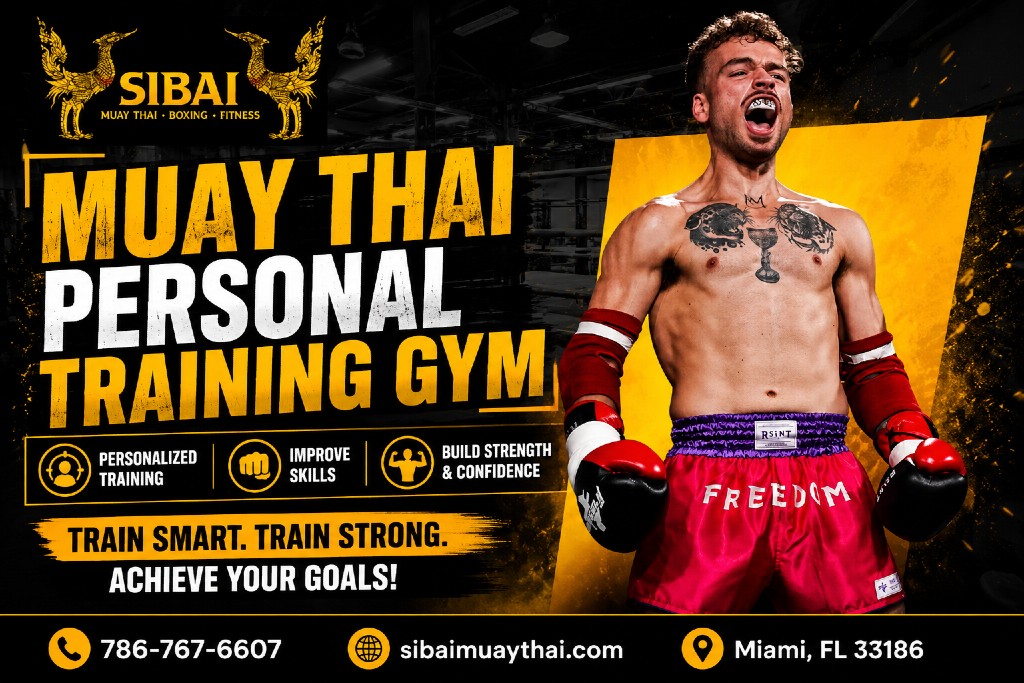
Sibai Muay Thai offers one-on-one training designed around different objectives, including general fitness, Muay Thai technique, competition preparation, and individualized conditioning. The focus on personalized instruction allows sessions to be adapted to different experience levels and goals.
For those interested in exploring the program, Sibai Muay Thai provides information about its personal training options and introductory sessions. You can learn more about the approach before deciding whether it matches your expectations.
Final Thoughts
Finding the right Muay Thai Personal Training Gym requires more than choosing the nearest facility. Consider your goals, coaching experience, training environment, scheduling needs, safety practices, and opportunities for individualized instruction.
The right program should provide a structured path that challenges you while remaining appropriate for your experience and abilities. By comparing these factors before starting, you can choose a training environment that supports consistent development and makes your Muay Thai journey more purposeful.
FAQs
1. Is personal Muay Thai training suitable for beginners?
Yes. One-on-one training can be suitable for beginners because the coach can introduce fundamental techniques at an appropriate pace and provide individual feedback.
2. What can I achieve through personal Muay Thai training?
Goals can include improving fitness, strength, endurance, technique, coordination, confidence, and self-defense skills. Training can also be structured for competition preparation.
3. How often should I attend personal Muay Thai training?
The ideal frequency depends on your goals, fitness level, schedule, and recovery needs. A coach can help establish a practical training routine.
4. What equipment is needed for Muay Thai personal training?
Common equipment includes boxing gloves, hand wraps, shin guards, Thai pads, and appropriate training clothing. Additional protective equipment may be recommended depending on the activities.
5. How does personal training differ from group Muay Thai classes?
Personal training provides one-on-one coaching, allowing the trainer to focus specifically on your technique, fitness level, weaknesses, and goals. Group classes provide a broader shared training environment.