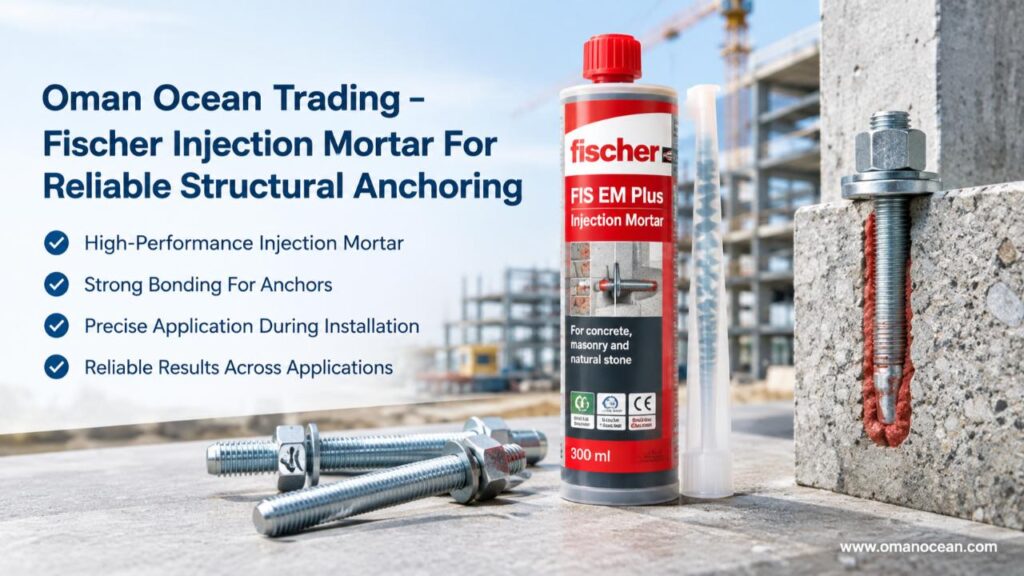
When you are tackling heavy-duty construction or serious home improvement projects, securing massive loads into old or hollow brickwork can feel like a high-stakes guessing game. Standard mechanical plugs or wedge anchors often crack fragile bricks or simply slip out under pressure, leaving you with an unsafe installation. This is precisely why Fischer Injection Mortar has become a total game-changer for tradespeople and DIY enthusiasts alike. By filling every tiny crevice and void deep inside the wall before the threaded rod goes in, Fischer Injection Mortar creates an unbreakable bond that holds firm where traditional fixings fail completely.
Understanding the Core Challenges of Deep Anchoring in Masonry
Masonry walls are not built like solid concrete. Inside a typical brick, block, or stone structure, you will often find air pockets, hollow cavities, and brittle materials that crumble under load. When you attempt to set an anchor deep inside these surfaces, expansion anchors push outward against the material. In soft or aged masonry, this outward expansion force can easily crack the surrounding brick or compromise the structural integrity of the wall.
Deep anchoring requires a fixing method that holds the load without exerting continuous outward pressure on the internal walls of the brickwork. Chemical anchoring solved this exact headache by switching the mechanism from mechanical expansion to chemical bonding. Instead of wedging itself into place, liquid resin flows into the host material and hardens into a custom-molded solid plug. This allows heavy structural items, such as canopy brackets, timber joists, and structural steelwork, to hang securely on walls that would otherwise shatter under standard fittings.
Key Features That Make This Solution Unbeatable
The secret behind successful deep masonry anchoring lies in how liquid resins behave inside uncertain cavity environments. Unlike basic construction adhesives, high-performance chemical anchoring resin is specifically engineered to handle structural loads, resist environmental factors, and set predictably regardless of deep wall conditions.
Here are the standout properties that make fluid mortar anchors so reliable for deep masonry installations:
-
Zero Expansion Stress: Because the liquid cures without expanding outward, you can place anchors close to brick edges or near other anchors without risking structural cracks in the masonry.
-
Complete Cavity Adaptation: Liquid mortar automatically conforms to the irregular interior shapes of hollow blocks and porous stones, creating a custom fit every single time.
-
High Load Capacity: Once fully cured, the chemical bond spreads the weight evenly along the entire embedded length of the rod, maximizing hold in deep holes.
-
Watertight Sealing: The dense resin seals the drill hole entirely, preventing water ingress, moisture migration, and internal rusting of the metal anchor rod.
-
Versatile Application: Works flawlessly across a huge variety of base materials, including perforated brick, aerated concrete, natural stone, and dense solid brickwork.
Best Practices for Installing Deep Masonry Anchors Successfully
Even the best structural products need proper technique to deliver their full strength. Setting an anchor deep into a masonry wall requires patience and meticulous preparation, especially when dealing with hidden inner cavities.
First, drill your hole to the exact depth and diameter specified for your hardware. Once the hole is ready, cleaning it out thoroughly is the single most important step. Dust and drill debris act like a barrier between the wall and the liquid resin, drastically reducing the final bond strength. Use a combination of a wire brush and compressed air or a hand pump to clear out all loose powder inside the hole.
Next, if you are working with hollow bricks or blockwork, insert a mesh sleeve into the cleaned hole. This sleeve keeps the liquid contained while letting just enough squeeze through the mesh windows to lock into the brick’s internal webs. Inject the compound starting from the back of the hole, slowly pulling the nozzle outward to avoid trapping air bubbles. Finally, insert your threaded rod using a smooth twisting motion. Allow the compound to cure completely according to the manufacturer’s recommended time before applying any weight or torque.
Why Quality Mortar Is Crucial for Long-Term Structural Safety
Structural safety is never an area where you want to take shortcuts. Over time, buildings undergo temperature shifts, subtle settling, and continuous load vibration. Cheap or improper adhesives can degrade when exposed to internal wall moisture, heat fluctuations, or heavy static loads, leading to anchor failure down the road. High-grade injection mortars undergo rigorous testing to ensure they maintain their bond strength for decades, keeping heavy fixtures safely attached to the building envelope.
Investing in a proven, high-performance injection resin gives you absolute confidence that your deep masonry anchors will hold up under severe weather, heavy load stress, and daily wear and tear. Whether you are retrofitting historic masonry or building a modern extension, reliable chemical fixings protect both the building structure and the people around it.
Conclusion
Securing heavy structural elements deep inside masonry walls requires a fixing method that blends high load capacity with gentle treatment of delicate materials. By replacing destructive expansion forces with a strong, custom-molded chemical bond, injection systems provide the ultimate reliability for tough anchoring jobs. When you need dependable strength and long-term safety for your most demanding construction projects, turning to high-quality solutions from trusted suppliers like Oman Ocean Trading LLC ensures your deep masonry anchors stay rock-solid for years to come.