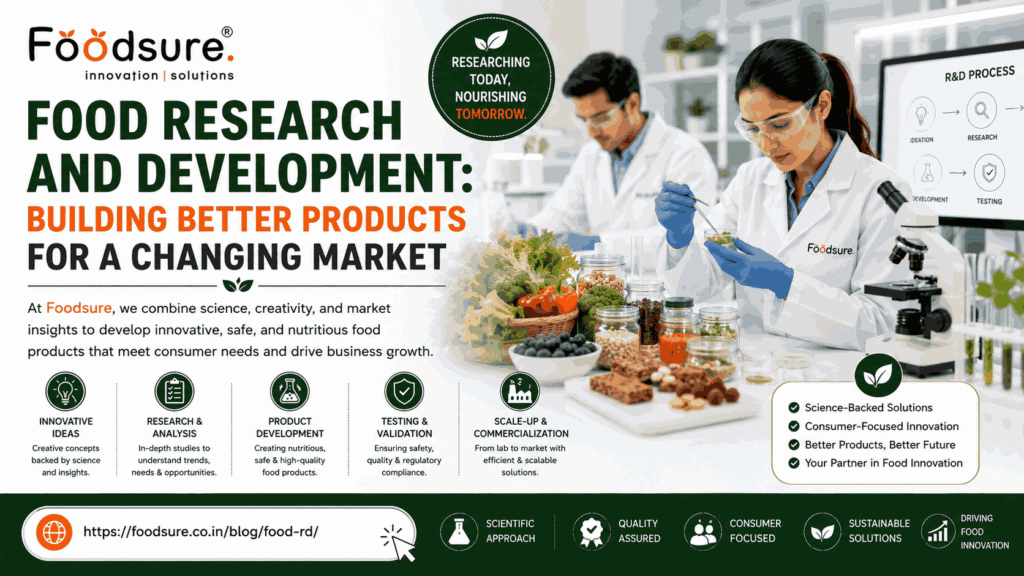
Food Research and Development
In the food industry, there is a continuous innovation of food products due to changing demands from consumers for health, convenience, quality, sustainability, and flavor. In business, however, transforming an innovative idea about food products into commercial products takes considerable effort. Food research and development can play a role in facilitating the process from conception of ideas to safe, consistent, appetizing, and commercially viable products. foodsure provides support to startups, entrepreneurs, and existing food companies with effective methods through the development process.
Why Food Research and Development Is Important
It may seem that food product looks very simple on the shelf, but developing such products involves many technical questions. Proper choice of ingredients, consideration of processing conditions, maintenance of certain characteristics after packaging and transport of finished products are some of them.
Structured Food research and development enables companies to examine all these questions before moving on to commercial production of a product. It integrates food science, ingredient selection, sensory assessment, consumer knowledge, and processing.
This process can be useful for reducing formulation issues, providing better consistency, shelf life knowledge, and meeting consumers’ expectations.
From an Idea to a Market-Ready Product
Developing a food product normally involves several stages. Each stage contributes to the quality and commercial potential of the final product.
1. Market Research
Before developing a product, businesses need to understand their target customers. Market trends, competitor products, pricing, consumer preferences, and emerging categories can help identify opportunities.
2. Product Concept
Once an opportunity has been identified, the product concept is defined. This may include the target audience, flavor profile, nutritional positioning, packaging format, serving size, and intended price point.
3. Ingredient Selection
Ingredients influence taste, texture, nutrition, appearance, stability, and cost. Selecting suitable ingredients requires an understanding of their functionality and compatibility with other components.
4. Prototype Development
Initial prototypes are prepared based on the product concept. Developers may create several versions before achieving the desired taste, texture, aroma, appearance, and overall eating experience.
5. Product Testing
Prototypes can undergo sensory evaluation, stability checks, shelf-life studies, and other relevant assessments. Testing helps identify areas that require improvement before commercial production.
6. Commercial Scale-Up
A recipe that performs well in a laboratory may behave differently when produced in larger quantities. Commercial scale-up therefore requires careful attention to processing conditions, equipment, ingredient handling, and batch consistency.
A systematic development process makes Food research and development more efficient and gives businesses greater confidence before launching a product.
The Importance of Food Product Development
The value of any concept lies in its conversion into a commercially viable product. Food Product Development is all about creating products that can be produced, packaged, marketed, and distributed.
Professional Food product Development can help businesses:
- Improve product consistency
- Optimize ingredient functionality
- Enhance sensory characteristics
- Improve nutritional value
- Address manufacturing challenges
- Reduce development risks
- Prepare products for commercial production
This approach can be applied to a wide variety of categories, including bakery products, snacks, dairy foods, sauces, ready-to-eat meals, frozen foods, functional foods, and plant-based products.
When Expert Food Consulting Can Help
Food companies may have the right concept but the lack of necessary technological capacity to develop them efficiently. Here an experienced food consultant can help through giving practical advice in various aspects of the development process.
Consulting support may include:
- Product concept evaluation
- Ingredient selection
- Recipe optimization
- Prototype development
- Sensory assessment
- Shelf-life planning
- Manufacturing guidance
- Packaging considerations
- Regulatory support
Working with a food consultant can be especially useful for startups and growing brands that do not have a dedicated technical development team.
How Foodsure Supports Food Innovation
foodiesure offers end-to-end food consulting and product development services for food entrepreneurs, manufacturers, and established companies. Their philosophy combines scientific background and practical business experience.
Foodsure can assist businesses with:
- Customized Food research and development
- Food product Development
- Ingredient optimization
- Product formulation
- Prototype preparation
- Sensory evaluation
- Shelf-life studies
- Product testing
- Manufacturing guidance
- Packaging recommendations
- Regulatory assistance
The aim is to make product development more structured and commercially focused, helping businesses move from an early-stage concept toward a product ready for manufacturing.
Food Categories That Can Benefit From Development Support
Modern food innovation covers many categories, and each has its own technical requirements. Development support can be useful for:
- Healthy snacks
- Bakery products
- Dairy products
- Frozen foods
- Ready-to-eat meals
- Ready-to-cook foods
- Sauces and condiments
- Functional foods
- Plant-based products
- Nutritional foods
- Confectionery
- Convenience foods
Customized development is important because ingredients, processing methods, packaging, and storage conditions can vary significantly between categories.
Future Trends in Food Innovation
The preferences of consumers continue affecting the direction of development in the food industry. There are many innovative trends such as the development of clean-label products, high-protein foods, alternatives to conventional foods based on plants, low sugar content in recipes, functional ingredients and fortified foods, sustainable packaging and convenient meals.
Ongoing Food research and development allows businesses to respond to these trends while improving their existing products. Research-driven innovation can also help brands identify new opportunities and differentiate themselves in competitive markets.
Conclusion
Food innovation involves not only the search for a new recipe or concept. Food research and development is a combination of scientific and technological aspects, knowledge about ingredients, testing, and manufacturing. With professional food product development, expert assistance of food consultant, and end-to-end service of Foodsure, you can develop your product more efficiently.
For brands looking to launch a new product, improve an existing recipe, or expand into a new category, a structured development approach can help reduce risks while creating products that are better aligned with consumer expectations.
Frequently Asked Questions
1. What is Food research and development?
Food research and development is the process of researching, designing, testing, improving, and preparing food products for commercial production while considering quality, safety, stability, nutrition, and consumer expectations.
2. Why is Food product Development important?
Food product Development helps businesses turn an initial food concept into a practical market-ready product by optimizing ingredients, improving quality, addressing manufacturing requirements, and preparing for commercial scale-up.
3. How can Foodsure help with food development?
foodsure provides support across product research, formulation, prototype development, testing, shelf-life evaluation, manufacturing guidance, and regulatory requirements to help businesses develop innovative and commercially viable food products.