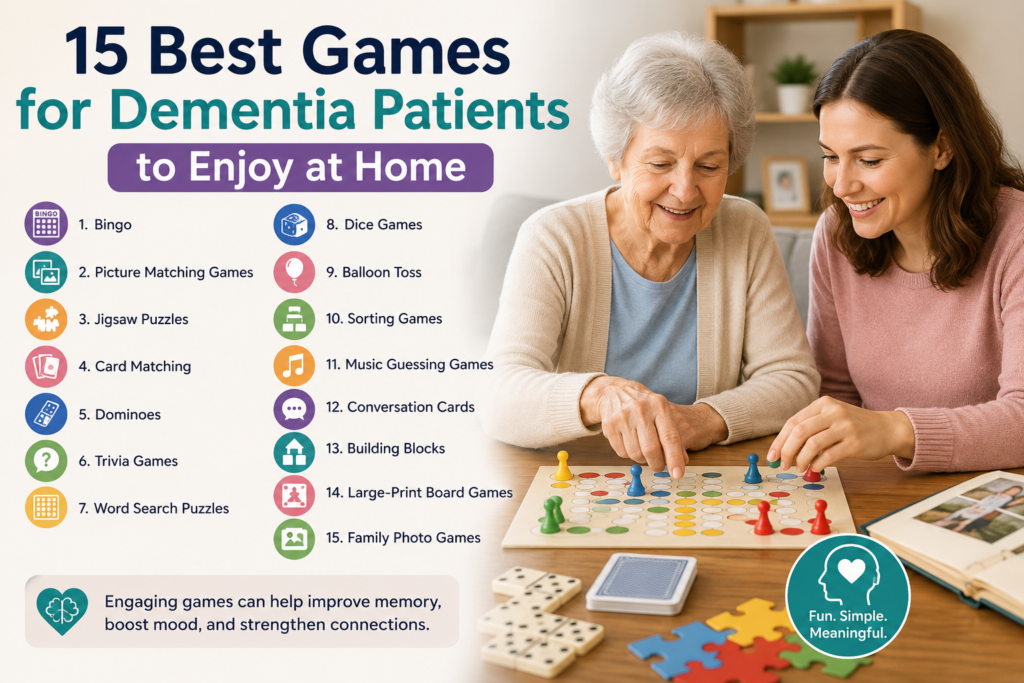
Dementia can affect memory, communication, attention, and problem-solving, but meaningful activities can still help individuals stay engaged and connected. Choosing the right games for dementia patients encourages cognitive stimulation, social interaction, emotional well-being, and a greater sense of purpose. Whether someone is living with Alzheimer’s disease, vascular dementia, Lewy body dementia, or another form of cognitive impairment, simple, familiar games can create enjoyable moments while reducing boredom and anxiety. The best games are those that match a person’s abilities, interests, and stage of dementia, allowing them to participate without frustration.
Why Games Matter for People Living with Dementia
Games are more than entertainment they help support quality of life.
Benefits include:
- Stimulating memory and thinking skills
- Encouraging conversation and social interaction
- Reducing stress, agitation, and loneliness
- Promoting confidence through achievable activities
- Creating meaningful time with family and caregivers
Do Games Help People with Dementia?
Yes. Games can help people with dementia stay mentally engaged, encourage communication, reduce anxiety, and improve overall well-being. While games do not stop dementia progression, they can support cognitive function and create enjoyable, meaningful experiences at home.
15 Best Games for Dementia Patients
Bingo
Bingo is easy to understand, encourages concentration, and offers social interaction without requiring complex decision-making.
Picture Matching Games
Matching familiar objects, animals, or family photos helps stimulate recognition and memory while remaining enjoyable.
Jigsaw Puzzles
Large-piece puzzles improve focus, visual perception, and problem-solving. Choose puzzles with simple, familiar images.
Card Matching (Memory)
Matching pairs of cards strengthens recognition skills. Use fewer cards for individuals with moderate or advanced dementia.
Dominoes
Simple domino games encourage counting, pattern recognition, and hand-eye coordination.
Trivia Games
Questions about music, history, childhood, or family memories often spark conversation and positive reminiscence.
Word Search Puzzles
Large-print word searches provide gentle mental stimulation for individuals in the early stages of dementia.
Dice Games
Simple dice games involving counting or matching numbers are easy to learn and adapt.
Balloon Toss
A lightweight balloon creates a safe, enjoyable activity that encourages movement, coordination, and laughter.
Sorting Games
Sorting buttons, cards, colored blocks, or household objects strengthens attention and fine motor skills.
Music Guessing Games
Playing familiar songs and asking participants to identify the artist, decade, or lyrics often triggers meaningful memories.
Conversation Cards
Prompt cards featuring questions about hobbies, travel, or favorite foods encourage storytelling and social connection.
Building Blocks or Stacking Games
Simple stacking activities improve coordination while providing a calming, repetitive task.
Large-Print Board Games
Classic games with simplified rules and larger pieces help maintain participation without overwhelming the player.
Family Photo Games
Looking through family albums and identifying people, places, or events promotes reminiscence and emotional connection.
Tips for Choosing the Right Game
Every person experience dementia differently. Consider these factors:
- Match the activity to their cognitive abilities.
- Choose familiar games whenever possible.
- Keep instructions short and simple.
- Avoid competitive games that may cause frustration.
- Celebrate participation instead of winning.
- Stop if the person becomes tired or overwhelmed.
What is the Best Game for Someone with Dementia?
The best game for someone with dementia is one that matches their current abilities and interests. Familiar games such as bingo, matching cards, simple puzzles, dominoes, music activities, and family photo games are often the most enjoyable because they reduce frustration while encouraging engagement.
How Family Caregivers Can Make Games More Enjoyable
The experience matters more than the outcome.
Try to:
- Play in a quiet, distraction-free room.
- Allow extra time for responses.
- Offer encouragement instead of corrections.
- Keep sessions between 15 and 30 minutes.
- Focus on having fun rather than completing the activity.
Even a short game can brighten someone’s day and strengthen relationships.
What Research Says
Organizations including the Alzheimer’s Association and the National Institute on Aging (NIA) encourage meaningful activities as part of person-centered dementia care. Although games cannot cure dementia, regular cognitive and social engagement may help maintain existing abilities, reduce isolation, and improve emotional well-being.
Frequently Asked Questions
What are the best games for dementia patients at home?
Bingo, picture matching, dominoes, simple puzzles, music games, conversation cards, and family photo activities are among the best home-based games because they are familiar, engaging, and easy to adapt.
Are memory games good for dementia patients?
Yes. Memory games can provide gentle cognitive stimulation, encourage recognition, and support engagement when matched to the person’s abilities.
Can games slow dementia progression?
There is no evidence that games stop or reverse dementia. However, mentally stimulating activities may help maintain cognitive function, improve mood, and encourage social interaction.
How long should a person with dementia play games?
Most people benefit from sessions lasting 15 to 30 minutes. End the activity sooner if signs of fatigue, frustration, or confusion appear.
What games should be avoided?
Games with complicated rules, fast-paced competition, or excessive time pressure may increase frustration. Simpler, familiar activities usually work best.
Can caregivers play games with dementia patients every day?
Yes. Daily games and meaningful activities can become part of a consistent routine, helping reduce boredom while strengthening the relationship between caregivers and loved ones.
Are digital games suitable for dementia patients?
Some tablet-based games designed for older adults may be appropriate in the early stages of dementia. However, many people respond better to hands-on activities, music, puzzles, and face-to-face interaction.