Golden Triangle with Varanasi Tour: An Introduction
India has many regions where history, culture, architecture and everyday life come together. For first-time international travellers, combining the famous Golden Triangle with Varanasi can be an excellent way to experience several different sides of the country in one trip.
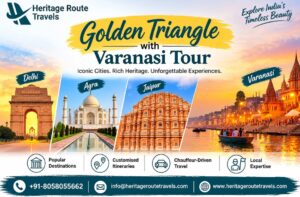
The classic route usually covers Delhi, Agra and Jaipur. These three cities form the Golden Triangle and are known for major monuments, historic buildings, colourful markets and royal heritage. Adding Varanasi brings a very different atmosphere. The ancient city on the banks of the Ganges is strongly associated with Hindu traditions, temples, spiritual practices and the famous evening Ganga Aarti.
A Golden Triangle with Varanasi Tour therefore offers more than sightseeing. It brings together Mughal history, Rajput architecture, busy city life and the spiritual character of one of India’s oldest living cities.
What Is the Golden Triangle of India?
The Golden Triangle is one of the most popular travel circuits in northern India. It connects three important destinations:
- Delhi: India’s capital and a major centre of history and culture
- Agra: Home to the Taj Mahal and several Mughal-era attractions
- Jaipur: The capital of Rajasthan, known for forts, palaces and colourful bazaars
The route is convenient because these destinations are relatively well connected by road and rail. Travellers can also use domestic flights for selected sections when time is limited.
For visitors planning their first trip to India, Golden Triangle India tours are popular because the circuit provides a broad introduction to the country’s heritage within a manageable travel route.
Delhi: Begin With History and Modern India
Delhi is often the starting point for an India tour because of its international airport and wide range of accommodation.
The city has two distinct historical identities. Old Delhi reflects the Mughal period, while New Delhi contains broad avenues, government buildings and landmarks from the British period and independent India.
Important places to include are:
- Red Fort
- Jama Masjid
- India Gate
- Humayun’s Tomb
- Qutub Minar
- Lotus Temple
- Raj Ghat
Apart from monuments, Delhi is also a good place to experience Indian food. Street food areas, traditional restaurants and modern cafés offer plenty of choices.
International travellers should allow enough time for traffic, especially during busy hours. A private vehicle with a local driver can make sightseeing more comfortable.
Agra: Home of the Taj Mahal
From Delhi, many travellers continue to Agra. The city is best known for the Taj Mahal, one of India’s most recognised monuments.
Built during the Mughal period, the Taj Mahal is particularly impressive around sunrise when the changing light creates different shades across the marble surface.
Agra Fort is another major attraction. Its large courtyards, walls and palaces provide insight into the Mughal royal lifestyle.
Other places worth considering include:
- Itmad-ud-Daulah’s Tomb
- Mehtab Bagh
- Akbar’s Tomb in Sikandra
- Local marble and handicraft workshops
Agra is often visited for one night, although travellers with more time can stay longer and explore the surrounding heritage sites.
Jaipur: Royal Rajasthan and Colourful Markets
Jaipur introduces travellers to the architecture and culture of Rajasthan. Known as the Pink City, it has an impressive mix of forts, palaces, markets and traditional neighbourhoods.
Amber Fort is one of the city’s main attractions. Located outside the central area, the fort sits on a hill and contains courtyards, halls and decorative interiors.
Other popular Jaipur attractions include:
- City Palace
- Hawa Mahal
- Jantar Mantar
- Jal Mahal
- Albert Hall Museum
- Local bazaars
Jaipur is also a good place to shop for textiles, jewellery, handicrafts and traditional souvenirs. Travellers should compare prices and choose reputable shops, particularly when purchasing higher-value items.
Varanasi: A Different Side of India
After visiting Delhi, Agra and Jaipur, Varanasi changes the pace of the trip.
Situated along the Ganges, Varanasi is known for its ghats, temples, religious ceremonies and long-standing cultural traditions. The city can feel busy and intense, but that is also part of its character.
A sunrise boat ride on the Ganges is one of the most memorable activities. From the water, travellers can observe the ghats as the city begins its day.
In the evening, visitors can attend the Ganga Aarti at Dashashwamedh Ghat. Lamps, chanting and ceremonial rituals create a powerful atmosphere along the river.
Varanasi also has several temples and narrow lanes filled with small shops, cafés and local businesses.
Suggested Route for the Tour
A comfortable itinerary could look like this:
Day 1: Arrive in Delhi
Day 2: Delhi sightseeing
Day 3: Delhi to Agra
Day 4: Agra sightseeing
Day 5: Agra to Jaipur
Day 6: Jaipur sightseeing
Day 7: Jaipur exploration
Day 8: Travel to Varanasi
Day 9: Varanasi sightseeing and Ganga Aarti
Day 10: Sunrise boat ride and departure
The number of nights can be adjusted depending on flight schedules and personal interests.
Best Time to Plan the Trip
The cooler months, generally from October to March, are often preferred for this route. Daytime sightseeing is usually more comfortable than during the hotter months.
December and January can bring cooler mornings and fog in northern India. This may occasionally affect road and train travel.
Summer can be very hot, especially in Delhi, Agra and Rajasthan. Travellers visiting during this period should plan outdoor sightseeing during the cooler parts of the day and stay hydrated.
The monsoon season can bring rain, particularly from July to September, although the landscape can look greener during this period.
Travel Tips for International Visitors
A few practical preparations can make the trip easier.
Keep some local currency: Small shops, local transport and markets may accept cash more readily than cards.
Dress comfortably: Light clothing works well in warm weather, while modest clothing is useful when visiting religious places.
Start sightseeing early: Major attractions can become crowded later in the day.
Allow travel time: Indian cities can experience heavy traffic, so road journeys may take longer than expected.
Use trusted transportation: A reliable tour operator can arrange private transfers, hotels and sightseeing according to the traveller’s schedule.
Carry basic essentials: Sunscreen, comfortable footwear, a refillable water bottle and a small day bag can be useful.
Why Choose a Private Tour?
A private tour gives travellers more control over the schedule. Instead of following a fixed group itinerary, visitors can spend more time at places they find interesting.
For example, a history enthusiast might want additional time at Agra Fort, while someone interested in local culture may prefer more time in Jaipur’s markets or Varanasi’s old lanes.
Heritage Route Travels provides private and customized India tours for international travellers, with options covering the Golden Triangle, Rajasthan and Varanasi. A chauffeur-driven arrangement can also make travel between cities easier.
Final Thoughts
A Golden Triangle with Varanasi Tour combines some of northern India’s most recognisable experiences. Delhi introduces the country’s capital and its layered history. Agra brings the architectural legacy of the Mughal era. Jaipur showcases Rajasthan’s royal traditions, while Varanasi offers a closer look at India’s spiritual and cultural life along the Ganges.
For travellers visiting India for the first time, this combination offers variety without requiring a complicated route. With sensible planning, comfortable transportation and enough time in each destination, it can become a well-balanced introduction to India’s history, culture and traditions.