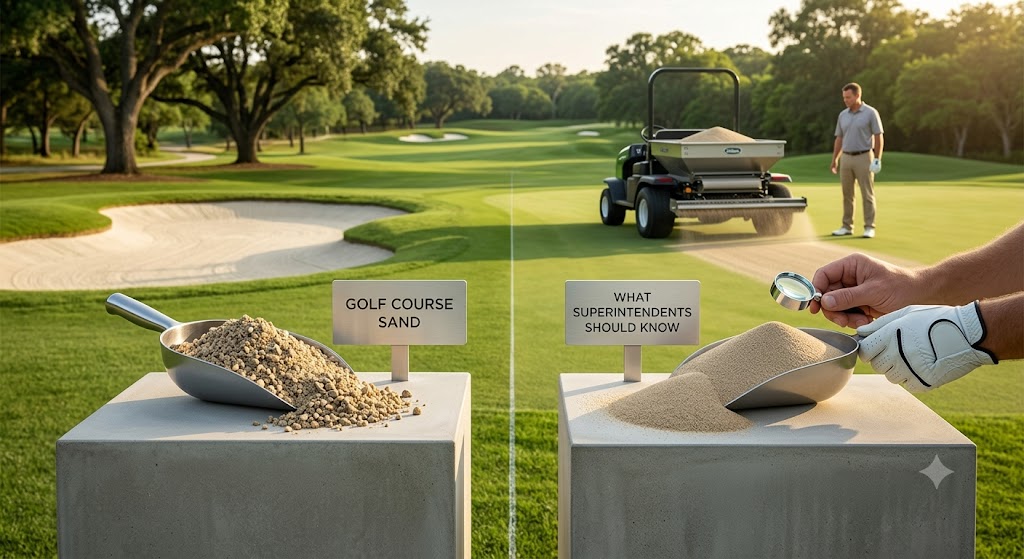
Let us be honest… bunker sand does not sound like the most exciting part of running a golf course. But spend a little time around a busy bunker and you will notice how much it matters. Choosing the right bunker sand in California can make the area easier to maintain and more comfortable to play from. The wrong material? Well, that can turn into a headache pretty quickly.
It Starts With Choosing the Right Sand
Not every pile of sand is going to work well in a golf bunker. Some sand may look great when you first see it, but once golfers start using the bunker, things can change.
We want sand that feels fairly consistent and does not become a mess after regular play. It should also work with the way the bunker is built and maintained.
Sounds simple, right? Sometimes it is not.
Before placing an order, it helps to think about what the sand will actually be doing once it is inside the bunker. Appearance is nice, but how it plays and holds up is what really counts.
How Does the Sand Feel?
Walk into a bunker and you can usually tell pretty quickly if something feels off.
Sand that is too fine may become dusty or shift around more than expected. Material that is too coarse can feel completely different under a golfer’s feet and club. Nobody wants every bunker shot to feel like a guessing game.
A good sand should provide a reasonably consistent surface. Golfers should be able to step in, set up their shot, and have some idea of what they are dealing with.
That little bit of consistency goes a long way.
Do Not Forget About Drainage
Here is another part that is easy to overlook… water.
After rain, bunker sand needs to work with the drainage system underneath it. If water hangs around too long, the bunker can become soft and unpleasant to maintain.
And once a bunker starts holding water, things can get annoying fast.
Before choosing sand, take a look at the existing bunker design and drainage setup. Local weather matters too. A course that gets frequent rain may have different needs from one that usually stays dry.
The goal is not just to choose sand. It is to choose sand that makes sense for the whole bunker.
Think About Everyday Maintenance
Golfers are not the only ones using the bunker. Grounds crews are in there too.
Raking, wind, rain, foot traffic, and regular play can slowly move sand around. Some spots may become thin while other areas collect more material. Over time, the bunker can lose that even look and feel.
This is where a practical choice can really help.
When comparing sand, ask how easy it will be to maintain. Will it need frequent topping up? Does it tend to move around? How does it behave after rain?
These may sound like small questions, but small problems have a funny way of becoming big ones when they happen every week.
Match the Sand to Your Golf Course
There is no reason to assume that the same sand will work perfectly everywhere.
Every course has its own layout, bunker shapes, drainage setup, weather, and maintenance routine. A deep greenside bunker may have different needs from a shallow fairway bunker.
So, when looking at bunker sand in California, we should look beyond the color and price tag. Ask questions about the material. Talk through the application with the supplier. Explain what kind of bunker you are working with.
A helpful supplier should be willing to have that conversation rather than simply point at a pile of sand and say, “That one.”
Make the Bunker Easier to Manage
Good bunker sand does not need to be complicated. We just need to look at the full picture.
Think about playability. Think about drainage. Think about maintenance. Think about how the material will behave after weeks and months of use.
That little bit of planning can save a lot of trouble later.
At the end of the day, golfers want a bunker that feels predictable, while superintendents want one that is not constantly demanding attention. Getting the sand choice right can help with both.
Frequently Asked Questions
1. What should we look for when choosing golf course bunker sand?
Look at the sand’s texture, particle size, drainage behavior, and how easy it is to maintain. It should also suit the bunker design and the way the course is used.
2. Can regular construction sand be used in a golf bunker?
Not necessarily. Sand made for another purpose may not provide the feel or performance needed for a bunker. It is better to discuss the intended use with a supplier before making a decision.
3. Why does bunker drainage matter so much?
Poor drainage can leave bunkers wet and soft after rain. Good sand should work properly with the drainage system already built into the bunker.
4. Does bunker sand affect how a golf shot feels?
Yes. Different types of sand can feel very different under the club and feet. Consistent material can make bunker conditions easier for golfers to understand.
5. How often should bunker sand be checked?
It is a good idea to inspect bunkers regularly. Look for thin areas, uneven spots, sand movement, and places where water may be collecting. Regular checks can help catch problems early.