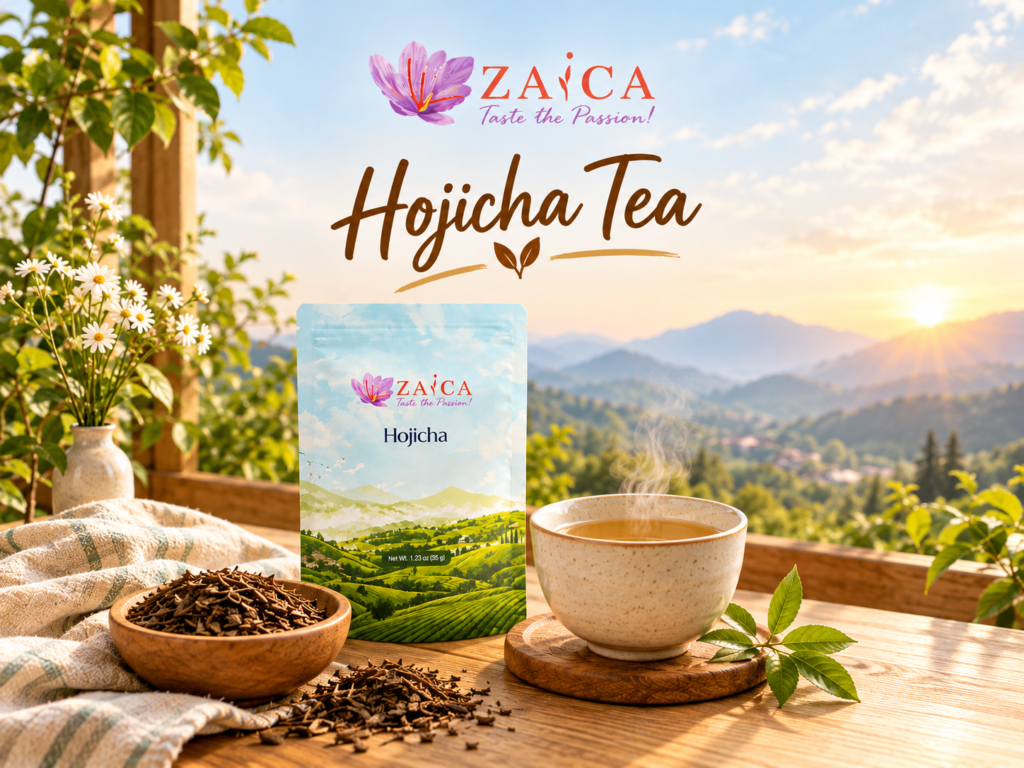
Hojicha Tea
Let’s be honest. Most of us grew up thinking green tea tastes like grass water. Bitter, bland, and something your grandparents drink. Then someone hands you a cup of hojicha tea, and everything changes.
It’s warm, toasty, and a little sweet. It smells like roasted nuts and caramel. And it doesn’t have that sharp bitter bite that makes you pull a face.
In this guide from Zaica Life, we’ll cover everything you need to know about hojicha tea in plain, simple words. No fancy tea-snob talk, promise.
What Is Hojicha Tea?
If you’ve ever typed “what is hojicha tea” into Google, here’s the short answer. Hojicha (say it like “ho-jee-cha”) is a Japanese green tea that gets roasted over high heat. That roasting step is what makes it special.
How Is Hojicha Made?
Regular green tea leaves are steamed and dried to keep them bright green and fresh. Hojicha starts the same way, but then the leaves are roasted in a hot pan or drum, usually at very high temperatures.
The roasting does two big things:
- It turns the leaves from green to a rich reddish-brown.
- It changes the flavor from grassy to warm, toasty, and smooth.
Fun fact: hojicha was reportedly first made in Kyoto, Japan, back in the 1920s. A tea merchant didn’t want to waste leftover tea, so he roasted it. It turned out so good that people still love it today.
What Does Hojicha Taste Like?
Think of roasted nuts, toasted bread, a bit of caramel, and a tiny hint of chocolate. It’s mellow and smooth. If coffee is the loud kid at the party, hojicha is the chill friend who makes everyone feel relaxed.
Why Teens Are Falling for Hojicha Tea
You don’t need to be a tea expert to enjoy hojicha. Here’s why so many younger people are switching to it.
It’s Easy on Your Taste Buds
Regular green tea can turn bitter really fast if you brew it a bit too long. Hojicha is way more forgiving. Roasting takes away much of that bitterness, so it’s hard to mess up.
It Has Less Caffeine Than Coffee
Hojicha does have some caffeine, but because of the roasting, it generally has less than many other green teas, and much less than a cup of coffee. That makes it a nice pick for homework time, a late afternoon pick-me-up, or a calm evening. If you’re sensitive to caffeine, you can always check with a doctor or parent about what’s right for you.
It Fits Every Mood
Hot on a cold day? Perfect. Iced on a hot afternoon? Also perfect. You can even turn it into a creamy latte. Few drinks are this flexible.
Loose Leaf Hojicha Tea vs. Tea Bags
Here’s where things get interesting. You’ve got two main choices: tea bags or loose leaf hojicha tea.
Tea bags are quick and easy, but the tea inside is often chopped into tiny pieces called “dust.” Smaller pieces release flavor fast, but they can taste flat or stale.
Loose leaf hojicha tea is made of bigger, whole pieces of leaf and stem. That means:
- Better flavor. The taste is fuller, smoother, and more roasty.
- Better smell. Open a bag of good loose leaf, and the aroma hits you right away.
- More cups per bag. You can often steep the same leaves two or even three times.
- More control. You decide how strong or light your cup is.
It might sound like extra work, but it really isn’t. You scoop, pour hot water, wait, and sip. That’s it.
How to Choose the Best Hojicha Tea
Not all hojicha is the same. When you’re hunting for the best hojicha tea, keep these simple tips in mind.
1. Check Where It Comes From
Hojicha is a Japanese tea, so look for tea that’s actually grown in Japan. For example, Zaica Life’s hojicha is grown in Japan and packaged in Ann Arbor, Michigan, so it reaches you fresh in the USA.
2. Look at the Color of the Leaves
Good hojicha leaves should look reddish-brown and even. If they look dull gray or crumbly like dust, the tea may be old.
3. Smell It
Fresh hojicha smells toasty, sweet, and nutty. If it smells flat or musty, skip it.
4. Go for Loose Leaf
As we said above, loose leaf hojicha tea usually gives you the best taste and the best value.
5. Try a Sample Pack First
Not sure you’ll like it? Start small. A sample pack lets you try the flavor without committing to a big bag.
How to Brew Hojicha Tea (Step by Step)
Brewing hojicha is simple. You don’t need special gear, just a mug and some hot water.
Hot Hojicha Tea
- Add about 1 teaspoon of loose leaf hojicha tea to your cup or teapot.
- Heat water until it’s almost boiling, around 195–205°F. Hojicha is happy with hotter water than most green teas.
- Pour about 8 ounces of water over the leaves.
- Steep for 30 seconds to 1 minute.
- Strain and enjoy.
Want a stronger cup? Add a bit more tea instead of steeping much longer. That keeps the flavor smooth.
Iced Hojicha Tea
- Brew a strong cup of hot hojicha tea using a little extra tea.
- Pour it over a glass full of ice.
- Add honey or a squeeze of lemon if you like.
Or try cold brew: put leaves and cold water in a bottle, leave it in the fridge for 6–8 hours, then strain. It comes out super smooth.
Hojicha Latte
- Brew a small, strong cup of hojicha tea.
- Heat up your favorite milk and froth it if you can.
- Pour the milk over the tea and add a little sweetener.
It’s like a cozy café drink you can make at home in five minutes.
Hojicha Tea Meets Spices: The Fun Part
Here’s a trick most people don’t know. Hojicha’s roasty, sweet flavor goes really well with warm spices. This is where spice blends and the Spice Mill come in.
A spice mill is a small grinder that crushes whole spices fresh, right when you need them. Freshly ground spices smell stronger and taste better than the stuff that’s been sitting in a jar for months.
Here are some easy ideas to try:
- Cinnamon. Grind a tiny bit over your hojicha latte for a sweet, cozy kick.
- Cardamom. Gives your cup a fancy, chai-style feel.
- Black pepper and ginger. A tiny pinch makes a warming, spicy cup for chilly evenings.
Don’t stop at drinks, either. Spice blends from Zaica Life can make your everyday meals taste way better, from rice and noodles to snacks and grilled food. Pairing a roasty cup of hojicha with a well-spiced meal is a really nice combo. The tea works as a smooth, warm finish after bold flavors.
Using the Spice Mill is simple. Twist, grind, and sprinkle. That’s all you need to add a big flavor in seconds.
Common Hojicha Mistakes to Avoid
Even easy drinks can go wrong. Watch out for these:
- Using water that’s too cold. Hojicha likes it hot, so don’t underheat it.
- Steeping too long. Even though hojicha is forgiving, leaving it for several minutes can make it taste flat.
- Storing it badly. Keep your tea in a cool, dark spot in an airtight container. Light and air wipe out flavor quickly.
- Throwing away leaves too soon. Good loose leaf hojicha tea can often be steeped again. Try a second cup.
Quick Recap
Here’s everything in one place:
- Hojicha tea is a roasted Japanese green tea with a smooth, toasty, slightly sweet taste.
- It’s less bitter and usually lower in caffeine than other green teas.
- Loose leaf hojicha tea beats tea bags for flavor, smell, and value.
- The best hojicha tea comes from Japan, looks reddish-brown, and smells fresh and nutty.
- You can enjoy it hot, iced, or as a latte.
- It pairs nicely with warm spices from a spice mill and with spice blends in your meals.
Final Thoughts
If you’ve always thought green tea wasn’t for you, hojicha tea might just change your mind. It’s gentle, tasty, easy to make, and doesn’t ask for much. Grab a mug, scoop in some leaves, and give yourself a few calm minutes.
Ready to try it? Explore the hojicha tea range at Zaica Life, and don’t forget to check out the Spice Mill and spice blends to make your tea time (and meal time) even better.