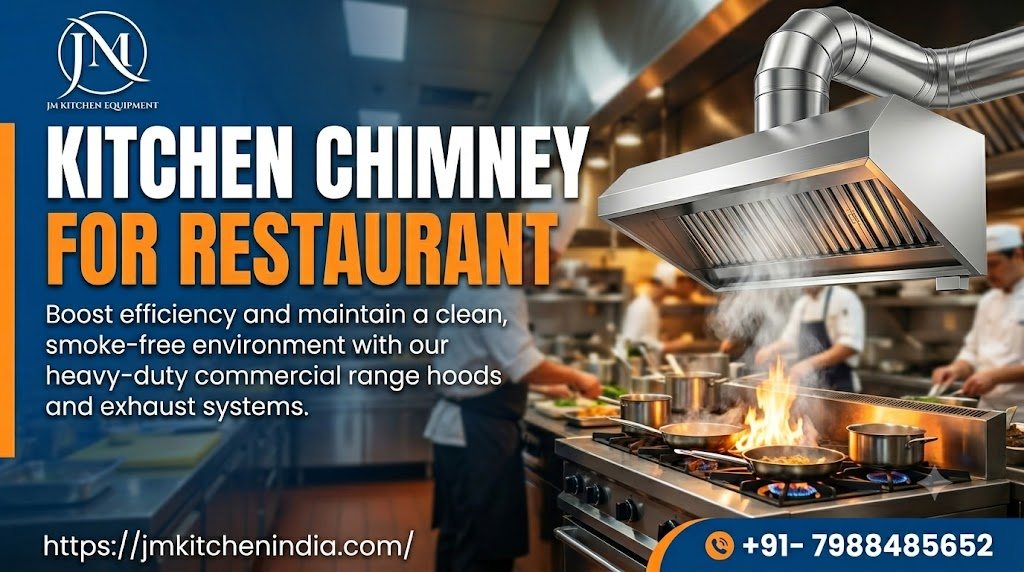
A clean and hygienic kitchen is essential for every restaurant. Food is prepared continuously throughout the day, and cooking activities naturally produce smoke, steam, heat, oil vapours, and grease. Without proper ventilation, these by-products can settle on walls, ceilings, cooking equipment, and other surfaces, making the kitchen harder to maintain.
A properly designed kitchen chimney for restaurant helps remove smoke, grease-laden air, heat, and cooking fumes from the cooking area. Along with regular cleaning and good kitchen practices, an effective chimney system can support a cleaner and more comfortable food preparation environment.
JM Kitchen Equipment provides commercial kitchen solutions for restaurants, hotels, cafés, cloud kitchens, catering businesses, and institutional kitchens. Our approach focuses on practical equipment, durable construction, and ventilation solutions suitable for demanding commercial environments.
Why Kitchen Hygiene Matters in Restaurants
Restaurant kitchens handle large quantities of raw ingredients and prepared food every day. Maintaining clean surfaces, equipment, storage areas, and preparation zones is essential for safe food handling.
Cooking generates airborne grease and vapours that can gradually settle on nearby surfaces. If these deposits are not controlled, they can make cleaning more difficult and contribute to an unpleasant kitchen environment.
A suitable kitchen chimney for restaurant helps control these airborne cooking by-products at their source, supporting easier cleaning and better overall kitchen hygiene.
Removes Smoke from the Cooking Area
Smoke is a common by-product of grilling, frying, roasting, and other cooking processes.
A professional kitchen chimney for restaurant is designed to capture and exhaust smoke generated around cooking equipment. Removing smoke helps prevent it from spreading throughout the kitchen.
A kitchen with effective smoke extraction is easier for staff to work in and helps keep nearby surfaces cleaner.
Helps Control Grease and Oil Vapours
Frying and high-temperature cooking can generate grease-laden vapours. Over time, these vapours may settle on walls, ceilings, cooking appliances, and other surfaces.
An effective kitchen chimney for restaurant helps capture these vapours before they spread extensively throughout the cooking area. This can reduce grease accumulation and make routine cleaning more manageable.
Regular cleaning of chimney filters and exhaust components remains important to maintain effective performance.
Reduces Excess Heat
Commercial kitchens can become extremely hot, particularly during peak operating hours.
Cooking ranges, ovens, fryers, and other appliances continuously release heat into the kitchen. Excessive heat can make the working environment uncomfortable and may affect staff concentration.
A properly designed kitchen chimney for restaurant helps remove hot air and cooking fumes from the kitchen, contributing to improved airflow and a more comfortable workspace.
Helps Maintain Cleaner Surfaces
Kitchen surfaces require frequent cleaning, but excessive grease deposits can make this task more difficult.
By capturing smoke, vapours, and airborne grease near the cooking area, a kitchen chimney for restaurant can help reduce the amount of residue settling on surrounding surfaces.
Cleaner walls, ceilings, equipment, and preparation areas make routine sanitation easier and help maintain a more professional kitchen environment.
Supports Better Staff Hygiene Practices
Good ventilation is one part of a broader kitchen hygiene system.
When smoke and cooking fumes are controlled, employees can work more comfortably and maintain better visibility around cooking and preparation areas. This supports good working practices and allows staff to concentrate on food preparation and cleaning responsibilities.
However, ventilation should always be combined with proper handwashing, equipment cleaning, ingredient storage, and food handling procedures.
Helps Protect Kitchen Equipment
Grease and moisture can affect commercial kitchen equipment when they accumulate over long periods.
A properly installed kitchen chimney for restaurant helps remove airborne cooking residue before it settles heavily on surrounding appliances. This can make equipment cleaning easier and support better maintenance practices.
Keeping cooking equipment clean helps maintain its appearance, functionality, and service life.
Improves Air Quality
Air quality is particularly important in a commercial kitchen where cooking takes place for several hours each day.
Smoke, steam, odours, and cooking fumes can make the air uncomfortable if they are not properly removed. A suitable ventilation system helps exhaust unwanted air and maintain better airflow.
A well-designed kitchen chimney for restaurant can therefore contribute to a more comfortable environment for kitchen employees.
Regular Cleaning Is Essential
Installing a quality chimney is only the beginning. Regular cleaning is necessary to maintain performance.
Grease can accumulate on filters, hoods, ducts, and exhaust components over time. If cleaning is neglected, airflow may decrease and the system may become less effective.
Restaurant operators should establish a cleaning schedule based on cooking volume and the manufacturer’s recommendations. Filters should be cleaned regularly, while ductwork and exhaust systems should receive professional attention when required.
Choose the Right Chimney for Your Kitchen
Every restaurant has different ventilation requirements.
The size of the cooking line, type of cooking, equipment arrangement, kitchen dimensions, and daily production volume should all be considered when selecting a kitchen chimney for restaurant.
A system that is too small may not capture fumes effectively, while an incorrectly designed system may create airflow problems. Professional planning helps ensure the chimney is appropriately sized and positioned.
Why Choose JM Kitchen Equipment?
JM Kitchen Equipment provides commercial kitchen equipment and ventilation solutions designed for restaurants, hotels, cafés, cloud kitchens, catering businesses, and institutional kitchens.
Our solutions can include:
- Kitchen chimneys
- Exhaust hoods
- Ducting systems
- Commercial cooking ranges
- Stainless steel kitchen equipment
- Commercial refrigerators
- Commercial induction systems
- Food preparation equipment
- Customised commercial kitchen solutions
We focus on practical designs and durable materials suitable for demanding commercial operations. Our team can help businesses plan ventilation and equipment according to their kitchen layout, cooking requirements, and operational needs.
Tips for Maintaining Restaurant Ventilation
To keep a kitchen chimney for restaurant working effectively:
- Clean filters regularly.
- Remove grease deposits from accessible surfaces.
- Inspect exhaust components periodically.
- Keep air pathways free from unnecessary obstructions.
- Schedule professional duct cleaning when required.
- Check the system for unusual noise or reduced airflow.
- Follow manufacturer maintenance recommendations.
Regular maintenance improves ventilation performance and helps prevent avoidable problems.
Conclusion
A clean kitchen requires more than regular mopping and surface cleaning. Smoke, heat, steam, grease, and cooking fumes must also be properly managed. A professionally designed kitchen chimney for restaurant helps capture and remove these by-products, supporting better airflow and making routine kitchen cleaning easier.
At JM Kitchen Equipment, we provide reliable commercial kitchen and ventilation solutions for restaurants and other food service businesses. Our focus on durable equipment, practical design, and customised solutions helps businesses create efficient and hygienic cooking environments.
A quality kitchen chimney for restaurant, combined with regular maintenance and proper cleaning procedures, can contribute to better kitchen hygiene, improved staff comfort, cleaner equipment, and more efficient daily operations. For any restaurant aiming to maintain high standards, effective ventilation should be considered an essential part of the overall kitchen setup.