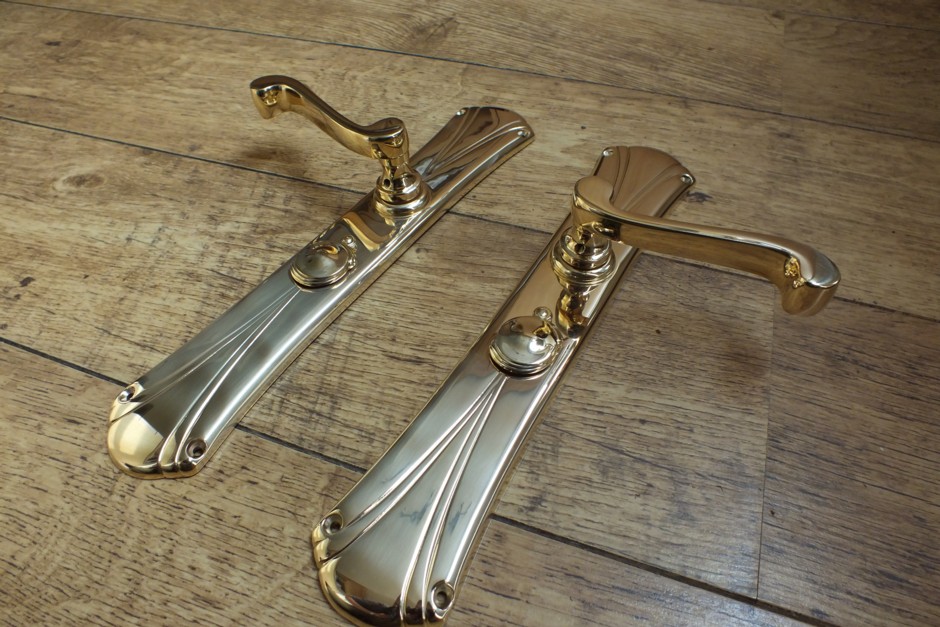
How small architectural details tell the story of a nation is often overlooked. Among these details, British door handles stand out as subtle yet powerful markers of changing design philosophies across centuries. From ornate Victorian interiors to minimalist modern homes, they reflect cultural shifts in taste, technology, and social structure.
While often considered purely functional, door hardware actually reveals how architecture responds to industrial progress and aesthetic ideals. Studying them offers a unique lens into Britain’s architectural evolution that spans domestic, civic, and industrial spaces.
Georgian and Victorian Foundations
During the Georgian and early Victorian periods, architectural design emphasized symmetry, proportion, and refined craftsmanship. Interiors were carefully composed, and even small fittings were expected to contribute to a sense of harmony. In this context, British door handles began to evolve from purely utilitarian objects into decorative elements that matched the elegance of their surroundings.
Early designs were typically made from brass, iron, or bronze, often cast or hand-forged by skilled artisans. Georgian styles favored simplicity with subtle detailing, reflecting the Enlightenment ideals of order and reason.
As the Victorian era progressed, however, design tastes shifted dramatically. Industrialization enabled mass production, allowing more elaborate and ornate forms to become widely available. Intricate floral motifs, scrollwork, and textured surfaces became common, symbolizing both technological progress and the Victorian fascination with decoration and moral expression through design.
Industrial Innovation and Expanding Access
The Industrial Revolution fundamentally transformed architectural hardware production. Mechanized manufacturing allowed fittings to be produced faster, cheaper, and in greater quantity than ever before. This democratization of design meant that middle-class households could now access styles that were once reserved for aristocratic estates.
During this period, british door handles became a reflection of both industrial capability and social aspiration. Factories in cities such as Birmingham and Sheffield played a major role in producing high-quality metalwork, exporting designs across the British Empire. Standardization also emerged, with interchangeable components becoming more common. This shift not only changed aesthetics but also introduced a new relationship between architecture and industry, where function and replication began to rival handcrafted uniqueness.
Edwardian Refinement and Transitional Elegance
The Edwardian era marked a transition away from heavy Victorian ornamentation toward lighter, more restrained design. Homes built during this time often featured brighter interiors, simpler layouts, and more delicate decorative elements. Hardware design followed suit, emphasizing elegance without excessive detail.
In this period, british door handles often featured smoother curves, polished finishes, and more ergonomic forms. Brass remained popular, but designs became less ornate and more focused on comfort and usability. This reflected a broader cultural shift toward modern living, where domestic spaces were designed for ease and everyday practicality rather than purely formal display.
Modernism and Functional Minimalism
The rise of modernist architecture in the 20th century brought a radical departure from historical styles. Influenced by movements such as Bauhaus and international modernism, designers began to prioritize function, simplicity, and honesty in materials. Ornamentation was increasingly seen as unnecessary, even undesirable.
Within this context, british door handles transformed into minimalist objects defined by clean lines and industrial materials such as stainless steel, aluminum, and chrome. The emphasis shifted toward ergonomics and durability rather than decoration. Forms became geometric and understated, aligning with the modernist principle that design should serve purpose above all else. This era also introduced mass-produced standard designs that could be easily integrated into new architectural developments, from office buildings to post-war housing estates.
Materials, Craftsmanship, and Symbolism
Across different eras, the materials used in door hardware have carried symbolic meaning. Brass and bronze often signified tradition, craftsmanship, and permanence, while steel and chrome represented modernity, efficiency, and progress. Even the tactile experience of using a handle—its weight, texture, and resistance—contributes to how people perceive a building’s character.
In contemporary design discourse, british door handles are often studied not just as functional components but as cultural artifacts. They embody the intersection of industrial design, architecture, and social history. Whether handcrafted or machine-produced, they continue to communicate messages about identity, taste, and technological capability.
Contemporary Design and Heritage Revival
In recent decades, there has been a renewed interest in heritage-inspired interiors and restoration projects. Designers often draw on historical styles while integrating modern manufacturing techniques. This has led to a blending of old and new, where traditional forms are reinterpreted for contemporary living spaces.
Today, british door handles can be found in a wide range of styles, from ultra-modern minimalist designs to reproductions of Georgian and Victorian classics. This diversity reflects a broader architectural trend that values both innovation and historical continuity. Homeowners and architects alike often choose hardware not only for practicality but also for its ability to reinforce a building’s narrative and aesthetic identity.
Conclusion
The evolution of door hardware in Britain reveals far more than changes in design taste. It reflects industrial progress, social transformation, and shifting cultural values over time. From handcrafted Georgian pieces to streamlined modern fittings, each era has left its mark on these small yet significant objects. By examining them closely, we gain insight into how architecture continuously adapts to new technologies and changing human needs, while still preserving echoes of its past.