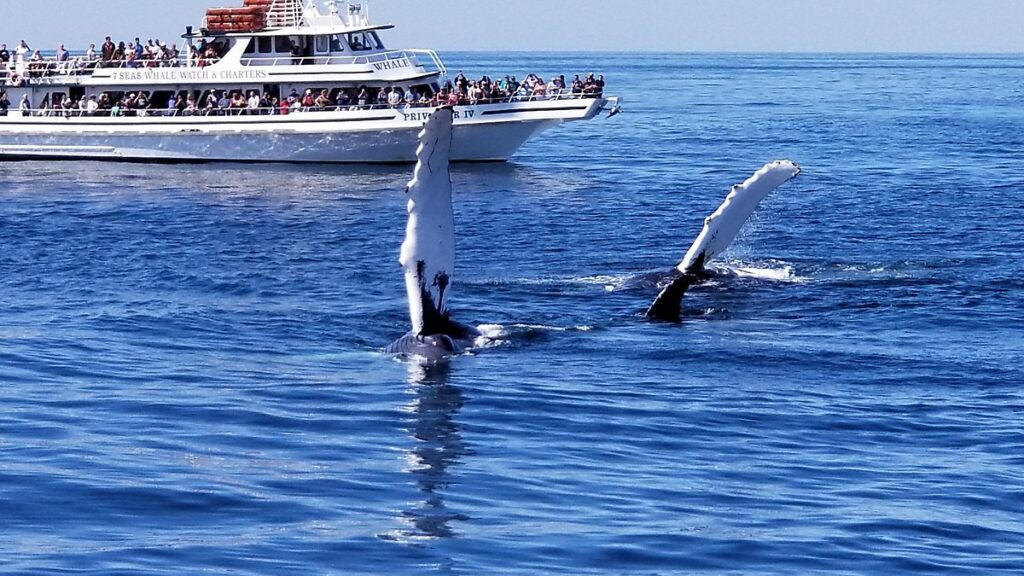
Cape Ann Whale Watch provides perhaps one of the best options for viewing humpback whales and other sea creatures right from Gloucester. Not only are these trips full of adventure, but they provide some great photo opportunities as well. From breaches of the whales themselves to the playfulness of dolphins, it is an unforgettable adventure. (48 words)
Why Cape Ann Whale Watch is Perfect for Photographers
I recall stepping foot on Hurricane II for my very first time, holding my camera and not sure what would come out. This is one large boat, more than 100 feet long, and definitely not wobbly as many of those small boats are. You head about 10 to 25 miles offshore to the Stellwagen Bank area where the food is abundant and the whales congregate.
These aren’t just quick little boat rides. These whale watching trips last anywhere from three to four hours, providing enough time to get comfortable and watch the waves. Morning trips generally do not have too many people jostling for space at the railings. The crew knows the waters after decades of running these. They point out stuff you might miss while you’re fiddling with settings.
Getting Your Gear Sorted Before You Board
Don’t show up in shorts thinking it’s gonna be warm like on land. It drops 10-15 degrees easily once you’re out there, especially with the wind. Layers are key — sweatshirt, jacket, maybe a rain shell. I always bring a hat, sunglasses, and sunscreen because glare off the water is no joke.
For photos, pack extra batteries and memory cards. Your phone works fine but a real camera with some zoom helps a ton. Binoculars are nice for spotting but the naturalists will call out the action anyway. Comfortable shoes that won’t slip on a wet deck matter more than you think. And yeah, grab some snacks or cash for their chowder — keeps the energy up during long waits.
Best Time to Go for Killer Whale Shots
Season kicks off early May and runs through October, but July and August usually deliver the most consistent whale action. The water’s warmer, whales are more active, and the light can be beautiful in the late afternoon. Spring trips might mean whales farther out, so patience is your friend. Fall brings nice colors but packs extra warmth because that breeze cuts.
I wouldn’t recommend April or late October for your first go unless you’re used to rougher seas. Check the schedule — they run morning and afternoon options most summer days. Weekdays feel less packed, giving you better space to move around from different angles. The unpredictability is part of it, but that’s what makes the good shots feel earned.
Positioning Yourself on the Boat for Better Photos
Hurricane II has plenty of rail space but people swarm when whales appear. Get there early and claim a spot on the side facing the wind or where the sun is at your back. The upper deck gives wider views but lower and middle can be steadier for handheld shots.
Don’t stay glued inside the cabin the whole time. Get out on deck, feel the rhythm of the boat. When a humpback surfaces, everyone shifts — stay flexible and ready. The boat’s size helps cut down on that constant rocking compared to smaller charters. I like hanging near the naturalists because they spot behaviors early, giving you a heads-up for the breach or tail slap.
Camera Settings and Techniques That Actually Work
You don’t need pro gear but knowing a few basics helps. Shoot in burst mode because whales move fast and unpredictable. Keep shutter speed high — 1/1000 or faster — to freeze the action when they breach. Aperture around f/8 keeps things sharp, and crank the ISO if light gets flat.
Practice tracking moving subjects before the trip. Whales often show patterns: they blow, then dive, then maybe breach. Watch for the fluke up — that’s your money shot. Get lower angles when possible for drama. And yeah, sometimes the best photos come from just being present instead of staring through the viewfinder nonstop.
Dealing with Seasickness Without Ruining Your Shoot
Some folks feel it more on the upper deck. If you’re worried, sit lower toward the middle or back where it’s more stable. Take motion sickness stuff an hour before boarding. The boat rides pretty smooth for its size, but the ocean doesn’t care about your plans.
Stay hydrated and don’t lock yourself away. Fresh air helps. Once whales show, excitement usually beats any queasiness. Kids handle it better than you expect once the action starts. The education from the naturalists makes the downtime useful too — they explain behaviors that help you anticipate photo ops.
Wildlife Encounters and What to Photograph
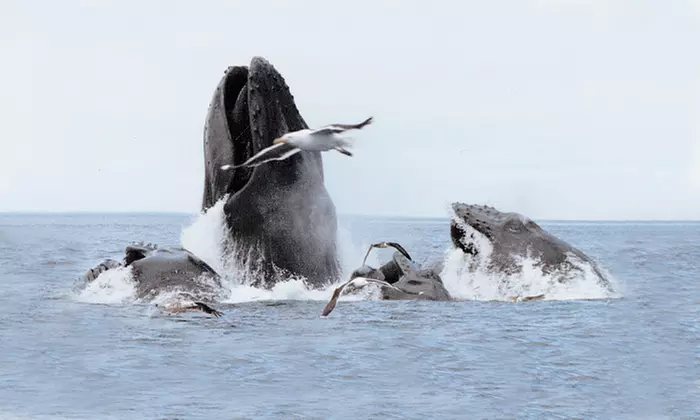
Humpbacks are the stars, no doubt. Those massive bodies, the blows, breaches, and feeding lunges make incredible images. But keep an eye out for dolphins racing alongside or seals popping up. Seabirds diving add nice context to wider shots.
Trips rarely come back empty. They talk about high success rates, which takes some pressure off. One day you might get a group feeding together. Another it’s quieter but the light on the water hits differently. That’s the charm of Cape Ann Whale Watch — you learn to work with what the sea gives you.
Common Photography Mistakes First-Timers Make
Wearing the wrong clothes and freezing halfway through. Forgetting spare batteries so your camera dies at the best moment. Expecting constant documentary-level action the whole trip. The ride out takes time, so bring patience.
Not listening to the crew is a big one — they spot things way before most passengers. Over-planning your whole day around perfect conditions. Weather can change, though they usually sail unless it’s nasty. And don’t forget to look up from the screen sometimes. The real memories happen when you’re actually watching.
Making the Most of Your Time on the Water
Talk to other passengers and the crew. Folks share tips and sometimes point out stuff on the other side of the boat. Stay curious and flexible. Some days the whales put on a full show. Others it’s more chill but still beautiful. Both make for solid stories and photos.
Gloucester harbor has that real working-town feel. No theme park nonsense. You’re out there with people who actually know about marine life. The naturalists have decades between them reading the water. It shows how they explain what you’re seeing and why it matters.
Conclusion
All told, heading out on a Cape Ann Whale trip leaves most folks surprised by how much they loved it. The mix of big wildlife moments, decent crew, and that raw sea air creates something special. Come prepared with your camera ready, stay open to whatever happens, and you’ll head back with photos and stories worth sharing. It’s not perfect every time but that’s the ocean for you — and the Cape Ann Whale makes it worth every bit.