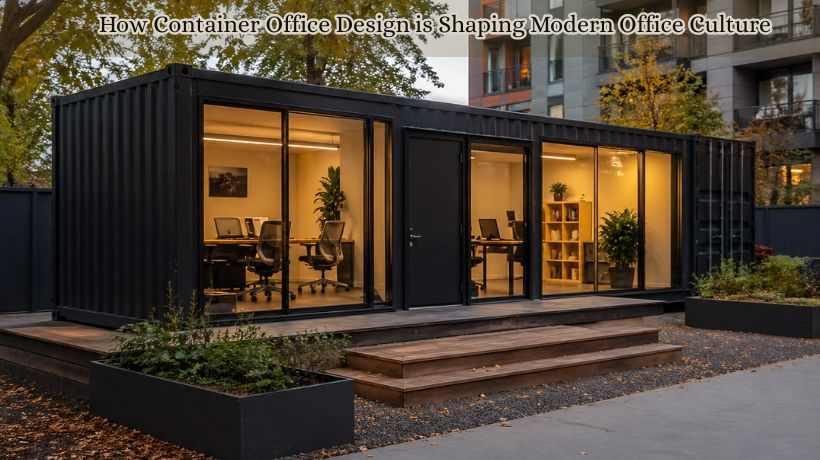
The way we think about workspaces has evolved rapidly over the past decade. Businesses are no longer confined to traditional office buildings with rigid layouts and long construction timelines. Instead, flexible, innovative solutions are taking center stage—and one of the most impactful among them is Container Office Design. Within the first few steps of planning a modern workspace, many companies now consider container-based structures as a smart, efficient alternative to conventional offices.
A Shift Toward Flexibility and Mobility
Modern office culture thrives on adaptability. Companies today need spaces that can grow, shrink, or relocate depending on business demands. Container offices offer unmatched flexibility because they are modular and portable. Whether it’s a startup scaling quickly or a project-based team working on-site, these offices can be easily transported and reconfigured.
This flexibility supports a more dynamic work culture where businesses are not tied down by permanent infrastructure. Teams can work closer to project locations, reducing commute times and increasing productivity.
Faster Setup, Faster Growth
Traditional office construction can take months or even years, often delaying business operations. Container offices, on the other hand, can be designed, fabricated, and installed in a fraction of that time. This speed allows businesses to establish functional workspaces almost immediately.
A faster setup encourages companies to experiment with new locations and business models. It also supports the fast-paced nature of modern industries, where time-to-market can make a significant difference.
Cost-Effective Without Compromising Quality
Budget considerations play a major role in shaping office culture, especially for startups and small businesses. Container offices are typically more affordable than traditional buildings, making them accessible to a wider range of companies.
Despite their cost-effectiveness, these offices do not compromise on quality or functionality. With proper design, they can include all essential features such as insulation, lighting, ventilation, and ergonomic interiors. This balance of affordability and efficiency allows businesses to invest more in innovation and employee development.
Encouraging Creative Work Environments
One of the most noticeable impacts of container office design is its contribution to creativity. Unlike conventional offices, container spaces can be customized in unique and visually appealing ways. From open layouts to vibrant interiors, these offices break the monotony of traditional workspaces.
Creative environments play a crucial role in boosting employee morale and productivity. When people work in spaces that feel fresh and inspiring, they are more likely to think innovatively and collaborate effectively.
Promoting Sustainability and Eco-Friendly Practices
Sustainability has become a core value in modern office culture. Businesses are actively seeking ways to reduce their environmental impact, and container offices align perfectly with this goal. By repurposing shipping containers, companies contribute to recycling and minimize construction waste.
Additionally, these offices can be equipped with energy-efficient systems such as solar panels, natural ventilation, and eco-friendly materials. This commitment to sustainability not only benefits the environment but also enhances a company’s brand image.
Supporting Remote and Hybrid Work Models
The rise of remote and hybrid work has redefined how offices are used. Instead of large centralized spaces, businesses now prefer smaller, decentralized work hubs. Container offices fit seamlessly into this model.
They can be placed in various locations, providing employees with convenient workspaces closer to their homes. This approach reduces travel time, improves work-life balance, and fosters a more flexible work culture.
Enhancing Employee Well-Being
Modern office culture places a strong emphasis on employee well-being. Container offices can be designed to include natural light, proper ventilation, and comfortable interiors, all of which contribute to a healthier work environment.
Moreover, their compact size encourages efficient use of space, reducing clutter and creating a more organized atmosphere. A well-designed workspace can significantly impact employee satisfaction and overall productivity.
Versatility Beyond Offices
The adaptability of container design extends beyond traditional office use. Businesses are increasingly exploring multi-purpose applications, combining workspaces with creative concepts. For example, some companies integrate office spaces with retail or hospitality elements, creating hybrid environments that attract both employees and customers.
In recent years, concepts like the Shipping Container Cafe have gained popularity, showcasing how versatile container structures can be. This trend reflects a broader shift toward innovative, multifunctional spaces that blend work, leisure, and customer engagement.
The Future of Office Culture
As businesses continue to evolve, the demand for flexible, sustainable, and cost-effective workspaces will only grow. Container office design is not just a passing trend—it represents a fundamental shift in how we approach workplace architecture.
By promoting adaptability, creativity, and sustainability, container offices are redefining modern office culture. They empower businesses to think beyond traditional boundaries and create environments that truly support the needs of today’s workforce.
In the years ahead, we can expect container-based solutions to play an even bigger role in shaping how and where we work, making them a key driver of innovation in office design.