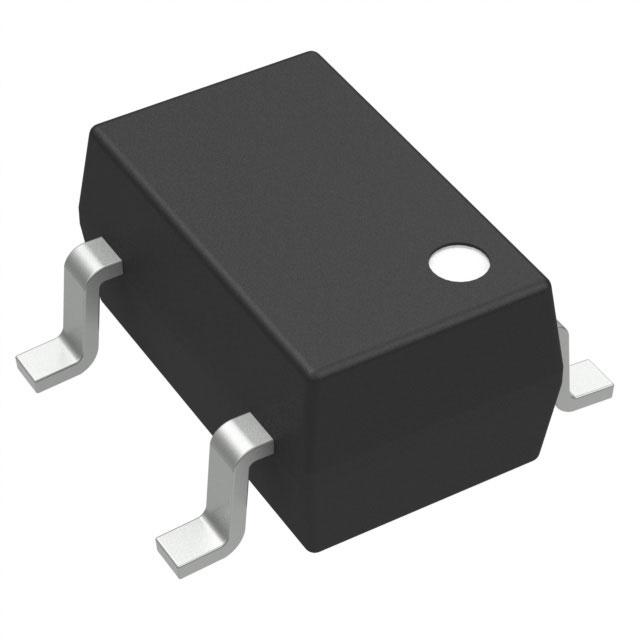
Logic gates
Logic gates are among the most important building blocks in digital electronics. They may appear simple because they work with only two possible signal states, but their impact is enormous. Every modern digital device, from a basic calculator to a powerful computer processor, depends on logic gates to process information, make decisions, and control electronic operations. Without logic gates, digital circuits would not be able to understand binary signals, perform calculations, store information, or respond to commands.
The keyword “Logic Gates” is strongly connected with digital electronics, computer architecture, embedded systems, automation, microprocessors, and circuit design. Anyone studying electronics or working with digital systems must understand how logic gates operate because they form the foundation of almost every digital function. They are used in arithmetic circuits, memory systems, communication devices, industrial machines, control systems, and smart electronic products.
At the simplest level, a logic gate receives one or more input signals and produces one output signal. These signals are usually represented as binary values: 0 and 1. A binary 0 may represent an off state, a low voltage, or false logic. A binary 1 may represent an on state, a high voltage, or true logic. The logic gate applies a fixed rule to these inputs and generates an output based on that rule.
Although the operation sounds basic, the real power of logic gates appears when many of them are connected together. A single gate can make one simple decision, but thousands, millions, or even billions of gates can create advanced computing systems. This is how processors, memory chips, digital controllers, and smart devices perform complex operations with incredible speed and accuracy.
What Is the Core Purpose of Logic Gates?
The main purpose of logic gates is to process binary information. Digital systems cannot directly understand human language, images, sound, or physical actions. Instead, they convert information into binary form and then process it through electronic circuits. Logic gates handle this binary data and determine what output should be produced for each input condition.
A logic gate works like a rule-based decision point. It does not guess or think independently. It follows a fixed logical condition every time. This predictable behaviour makes digital systems reliable and easy to design. Engineers can combine gates in planned ways to create circuits that perform specific tasks.
For example, a circuit may need to activate only when two switches are pressed at the same time. An AND gate can handle this condition. Another circuit may need to turn on if either one of two sensors detects movement. An OR gate can perform that function. A system may need to reverse a signal from active to inactive. A NOT gate can do that.
This simple decision-making ability is what makes logic gates essential in practical electronics. They help circuits respond correctly to input signals and create useful output actions.
Why Binary Logic Is Important in Digital Systems
Digital electronics use binary logic because it is simple, stable, and reliable. Instead of using many signal levels, digital circuits mostly use two states. This makes it easier to design circuits that can separate one condition from another.
In real electronics, these binary values are represented by voltage levels. A low voltage may be treated as 0, while a higher voltage may be treated as 1. The exact voltage levels depend on the technology used, but the concept remains the same. Logic gates read these voltage levels and process them as binary inputs.
Binary logic is powerful because complex information can be represented using combinations of 0s and 1s. Text, numbers, images, audio, video, and software instructions can all be converted into binary data. Once converted, logic gates can process that information inside digital circuits.
This is why binary logic is at the centre of computing. Every click, command, file, calculation, and digital signal eventually becomes a pattern of binary values. Logic gates make it possible for electronic hardware to manage those patterns and produce meaningful results.
How Logic Gates Work in a Circuit
A logic gate has input terminals and an output terminal. The number of inputs depends on the type of gate. Some gates, like the NOT gate, have only one input. Others, such as AND, OR, NAND, NOR, XOR, and XNOR gates, commonly have two or more inputs.
When input signals enter the gate, the internal electronic circuit responds according to the gate’s logical function. The result appears as the output signal. The output is also binary, meaning it is either 0 or 1.
To explain gate behaviour clearly, engineers use truth tables. A truth table shows every possible input combination and the output for each condition. This makes it easier to understand, test, and design digital circuits.
For example, a two-input gate has four possible input combinations:
- 0 and 0
- 0 and 1
- 1 and 0
- 1 and 1
Each type of gate gives a different output for these combinations. By studying these outputs, a designer can predict how the circuit will behave.
What Are the Basic Types of Logic Gates?
There are several main types of logic gates used in digital electronics. Each gate performs a specific logical operation. The most common gates are AND, OR, NOT, NAND, NOR, XOR, and XNOR.
The AND gate produces a 1 output only when all inputs are 1. If any input is 0, the output becomes 0. This gate is useful when multiple conditions must be true before an action happens.
The OR gate produces a 1 output when at least one input is 1. It is useful when any one condition can activate the output.
The NOT gate produces the opposite of its input. If the input is 1, the output becomes 0. If the input is 0, the output becomes 1.
The NAND gate is the opposite of the AND gate. It produces 0 only when all inputs are 1. In all other cases, it produces 1.
The NOR gate is the opposite of the OR gate. It produces 1 only when all inputs are 0. If any input is 1, the output becomes 0.
The XOR gate produces 1 when the inputs are different. If both inputs are the same, the output becomes 0.
The XNOR gate produces 1 when the inputs are the same. If the inputs are different, the output becomes 0.
Each gate has its own role, but together they allow digital circuits to perform complex operations.
How Does an AND Gate Support Controlled Conditions?
The AND gate is one of the most useful gates in digital systems because it checks whether all required conditions are present. It is often used in circuits where output should occur only when every input condition is satisfied.
For example, imagine a machine that should operate only when the main power is on and the safety cover is closed. If either condition is missing, the machine should not start. This is a perfect situation for an AND gate because both inputs must be active before the output becomes active.
AND gates are used in control systems, safety circuits, digital locks, enable circuits, and arithmetic operations. They help ensure that an output is produced only when all required signals agree.
In computing, AND logic is also used for filtering, comparison, and bit-level operations. It allows processors to check specific binary conditions and control how data is handled.
How Does an OR Gate Create Flexible Responses?
The OR gate is used when a circuit should respond if any one input condition is active. Unlike the AND gate, it does not require all inputs to be 1. A single active input is enough to create an active output.
This makes the OR gate useful in alarm systems, emergency controls, selection circuits, and signal-combining applications. For example, a security alarm may need to activate if a door sensor, window sensor, or motion sensor detects activity. An OR gate can combine these signals so that any one of them can trigger the alarm.
OR logic is also used in computing and digital decision-making. It helps systems respond to multiple possible conditions without requiring all of them to occur at once.
Why Is the NOT Gate Called an Inverter?
The NOT gate is called an inverter because it reverses the input signal. It has only one input and one output. If the input is 1, the output is 0. If the input is 0, the output is 1.
This gate is very important because many circuits need the opposite form of a signal. For example, a system may need one part to turn off when another part turns on. A NOT gate can create this opposite relationship.
Inverters are used in timing circuits, control circuits, memory design, signal conditioning, and microprocessor operations. They may seem simple, but they are essential for creating more advanced digital logic.
Why Are NAND and NOR Gates Known as Universal Gates?
NAND and NOR gates are called universal gates because each one can be used to create all other basic logic gates. This means that a complete digital system can be built using only NAND gates or only NOR gates.
This is extremely useful in electronic design and manufacturing. When a circuit can be created using fewer gate types, it may become easier to produce, test, and optimise. NAND gates are especially common in digital integrated circuits because they are efficient and flexible.
A NAND gate is created by combining AND logic with NOT logic. It gives the opposite result of an AND gate. A NOR gate is created by combining OR logic with NOT logic. It gives the opposite result of an OR gate.
The universal nature of NAND and NOR gates shows how digital systems can be built from a small number of repeated logical structures. This helps reduce design complexity and supports large-scale circuit integration.
How Do XOR and XNOR Gates Compare Signals?
XOR and XNOR gates are commonly used when a circuit needs to compare input signals. They are different from AND and OR gates because they focus on whether inputs are the same or different.
The XOR gate produces 1 when the inputs are different. This makes it useful in binary addition, error detection, parity checking, encryption logic, and comparison circuits. In a half-adder circuit, XOR logic is used to generate the sum output.
The XNOR gate produces 1 when the inputs are the same. This makes it valuable in equality-checking circuits. If two binary values match, the XNOR gate can produce a positive result.
These gates are important in systems where relationships between signals matter. They help digital circuits detect differences, confirm matches, and support mathematical operations.
How Logic Gates Build Arithmetic Circuits
Logic gates are essential in arithmetic circuits because computers perform calculations using binary numbers. Addition, subtraction, multiplication, and comparison are all handled through combinations of logic gates.
A simple example is the half-adder. A half-adder adds two binary digits and produces a sum and a carry. It usually uses XOR logic for the sum and AND logic for the carry.
A full-adder is more advanced because it adds three inputs: two binary digits and a carry input from a previous stage. Full-adders can be connected together to add larger binary numbers. These gate-based circuits form the foundation of arithmetic logic units inside processors.
Arithmetic logic units, often called ALUs, are key parts of CPUs and microcontrollers. They perform mathematical and logical operations required by software instructions. Every calculation in a digital processor depends on logic gates working together at high speed.
How Logic Gates Help Store Data
Logic gates are not only used for decision-making and calculations. They also play an important role in storing data. Circuits such as latches and flip-flops are built using logic gates. These circuits can hold a binary value until they are changed by another signal.
A latch can store one bit of information. A flip-flop can also store one bit but usually operates with a clock signal. By combining many flip-flops, engineers can build registers, counters, and memory structures.
Memory circuits are essential in computers and embedded systems. They allow devices to store temporary data, instructions, states, and control information. Without gate-based storage circuits, digital systems would not be able to remember previous conditions or perform sequential operations.
What Is the Difference Between Combinational and Sequential Logic?
Logic gate circuits are often grouped into two major types: combinational logic and sequential logic.
Combinational logic depends only on the current input values. The output changes immediately according to the present input combination. Examples include adders, multiplexers, decoders, encoders, and comparators.
Sequential logic depends on both current inputs and previous states. This means the circuit has memory. Examples include flip-flops, counters, registers, and state machines.
Both types are important. Combinational logic is used for immediate decision-making and data processing, while sequential logic is used for timing, storage, and controlled step-by-step operation.
Together, these two forms of logic allow digital systems to perform both instant calculations and organised sequences of actions.
Where Are Logic Gates Used in Everyday Technology?
Logic gates are hidden inside many devices people use every day. They are not usually visible because they are built into integrated circuits and microchips, but they are constantly working in the background.
Common applications of logic gates include:
- Computers and laptops
- Smartphones and tablets
- Digital cameras
- Calculators
- Smart televisions
- Washing machines
- Microwave ovens
- Traffic light systems
- Security alarms
- Access control systems
- Robotics
- Industrial automation panels
- Medical electronic devices
- Communication systems
- Digital clocks and timers
- Automotive control units
In each case, logic gates help the device process signals and perform controlled actions. A washing machine uses logic circuits to manage wash cycles. A traffic signal system uses logic to control light timing. A smartphone uses gate-based circuits for processing, communication, memory, and power control.
Why Logic Gates Matter in Microprocessors
Microprocessors are made from huge numbers of tiny electronic switches arranged into logic gates. These gates work together to process instructions, move data, compare values, and perform calculations.
When software runs on a computer, the instructions are converted into binary operations. The microprocessor then uses logic gates to execute those operations. This includes arithmetic, decision-making, memory access, and data transfer.
Modern processors contain extremely complex arrangements of logic gates. Even though users interact with software, the actual work happens in hardware through gate-level operations. This connection between software instructions and physical electronic circuits is one of the most important ideas in computing.
How Logic Gates Support Automation and Control
Automation systems depend heavily on logical decisions. A machine may need to start, stop, slow down, speed up, open, close, heat, cool, or alert based on sensor inputs. Logic gates help create the decision structure behind these actions.
For example, an industrial conveyor may run only when the start button is pressed, the emergency stop is inactive, and the motor protection system is normal. This condition can be built using logic gates. If any required signal is missing, the circuit prevents operation.
Logic gates are also used in programmable logic controllers, embedded boards, and control panels. They help machines respond safely and accurately to changing conditions.
What Are Truth Tables and Why Do They Matter?
Truth tables are one of the best ways to understand logic gates. They show how each input condition affects the output. A truth table removes confusion because it presents the complete behaviour of a gate in a clear format.
For students, truth tables make learning easier. For engineers, they are useful for circuit design and verification. When designing a digital circuit, truth tables help confirm that the required output appears for each input condition.
Truth tables are also helpful when troubleshooting. If a circuit is not working correctly, checking the expected truth table against actual output can help identify errors in wiring, design, or component behaviour.
How Logic Gates Improve Digital Reliability
Digital systems are reliable because logic gates operate with clear signal levels and fixed rules. A gate does not produce random results when it is working properly. It responds according to its design every time.
This reliability is important in sensitive applications such as medical devices, aircraft systems, automotive electronics, communication equipment, and industrial controls. Digital circuits must operate consistently because even a small error can cause serious problems in critical systems.
Logic gates also allow circuits to be tested and verified. Engineers can simulate gate behaviour before building hardware. They can check truth tables, timing, signal flow, and output conditions to reduce design errors.
Why Learning Logic Gates Is Important for Beginners
Logic gates are often one of the first topics taught in digital electronics because they explain how digital systems think at the hardware level. Beginners who understand logic gates can better understand circuits, microcontrollers, programming logic, computer architecture, and automation systems.
Learning logic gates helps students understand:
- Binary numbers
- Digital signals
- Boolean algebra
- Circuit diagrams
- Truth tables
- Microprocessor basics
- Memory circuits
- Control systems
- Embedded electronics
This knowledge is useful for electronics students, computer science learners, robotics beginners, technicians, engineers, and anyone interested in how digital devices work.
How Logic Gates Connect with Boolean Algebra
Boolean algebra is the mathematical system behind logic gates. It uses values such as true and false, or 1 and 0, to describe logical relationships. Each logic gate represents a Boolean operation.
AND, OR, and NOT are the basic Boolean operations. More complex operations can be built by combining them. Boolean algebra helps engineers simplify digital circuits, reduce the number of gates, and improve circuit performance.
By using Boolean expressions, designers can describe a circuit before building it. They can then convert the expression into a gate-level diagram. This makes Boolean algebra an important tool in digital circuit design.
What Makes Logic Gates Essential for Future Technology?
As technology continues to advance, logic gates remain essential. Even modern fields such as artificial intelligence, cloud computing, robotics, smart factories, electric vehicles, and Internet of Things devices depend on digital hardware. That hardware is built using logic gates at the fundamental level.
While software and systems are becoming more advanced, the basic need for binary processing remains. Logic gates continue to support faster processors, smarter sensors, improved memory, and more efficient control systems.
Future technologies may use smaller, faster, and more energy-efficient gate designs, but the concept of logical decision-making will remain central to digital electronics.
Final Thoughts
Logic gates are the foundation of digital electronics and modern computing. They process binary inputs, apply logical rules, and generate outputs that allow electronic systems to make decisions, perform calculations, store data, and control operations. From simple circuits to advanced processors, logic gates are present wherever digital information is processed.
Understanding Logic Gates gives learners and engineers a clear view of how electronic devices work behind the scenes. The AND, OR, NOT, NAND, NOR, XOR, and XNOR gates each perform a specific function, but their true power comes from combination. When connected together, they create the circuits that run computers, smartphones, automation equipment, communication systems, and countless smart devices.
Logic gates may be small in structure, but they are massive in importance. They turn binary signals into useful digital actions and make the modern electronic world possible.