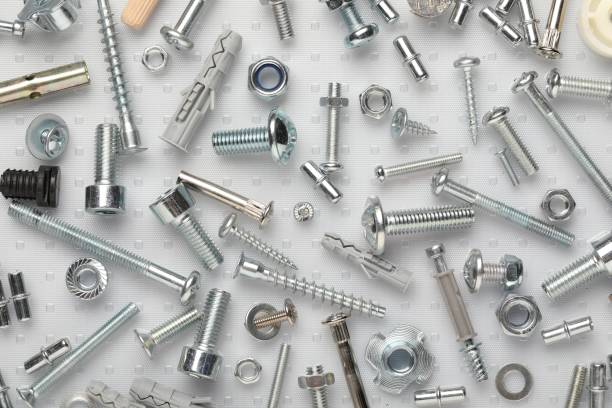
Consistency sounds simple. It isn’t. Anyone who’s dealt with thousands, or millions, of fasteners knows that one tiny deviation can mess up an entire assembly line. In screw nut & bolt manufacturing, the margin for error is ridiculously small. We’re talking microns. And yeah, when you’re producing at scale, keeping every piece identical isn’t just a “nice to have.” It’s survival.
The Reality of Large-Scale Production
Let’s be real. Making one perfect bolt is easy. Making a million identical ones? That’s where things get messy. Heat changes metal behavior. Tools wear out. Machines drift slightly over time. Even humidity can mess with tolerances. So manufacturers aren’t chasing perfection once, they’re chasing repeatability over and over again. The short answer is this: consistency doesn’t come from one thing. It comes from a whole system working together. Machines, materials, people, inspections, all of it.
Material Control Comes First
Before anything gets cut, shaped, or threaded, the raw material has to be right. No shortcuts here. If the steel batch varies even a little, composition, hardness, grain structure, you’re already off track. Good manufacturers test incoming material. Not randomly, but systematically. Chemical composition checks. Hardness tests. Sometimes, even microstructure analysis. Sounds excessive? Maybe. But skipping this step is how you end up with bolts that snap under load or threads that deform too easily. And once a batch is approved, it gets tracked. Traceability matters more than people think.
Precision Tooling (and Constant Monitoring)
Here’s where things get interesting. The machines doing the cutting and forming, especially CNC systems, are insanely precise. But they’re not magic. Tools wear down. Edges dull. Alignment shifts, just a bit. So manufacturers monitor tooling like hawks. They track tool life. Replace inserts before failure, not after. Some shops even use sensors to detect vibration changes, which can signal wear before it becomes visible. And yeah, calibration isn’t a once-a-month thing. It’s frequent. Sometimes daily. Because one misaligned tool can quietly ruin thousands of parts before anyone notices.
Process Standardization Isn’t Optional
This part gets overlooked, but it’s huge. Every step in the process has to be standardized. Same machine settings. Same feed rates. Same cooling methods. Same sequence. If one operator tweaks a setting, even slightly, it can throw off the entire batch. That’s why documented procedures exist. Not just paperwork, but actual working instructions that people follow. Still, humans are humans. Mistakes happen. Which is why the better manufacturers build systems that catch those mistakes early, not after the fact.
Role of Swiss CNC in Tight Tolerances
Now, when things get really tight, like ultra-precise threads or complex geometries, this is where Swiss CNC machine contract manufacturers come into play. These machines are built for stability. The workpiece is supported close to the cutting tool, which reduces deflection. Translation? Better consistency. Especially across long runs. But again, it’s not just about having a fancy machine. It’s about how it’s used. Programming, setup, maintenance, it all matters. A poorly set-up Swiss CNC can still produce inconsistent parts. Technology helps, but it doesn’t fix bad processes.
In-Process Inspection (Not Just Final Checks)
Here’s a mistake some people assume: that quality control happens at the end. Nope. If you wait until the end, you’ve already lost. Smart manufacturers inspect during production. Not every single piece, but at defined intervals. Measurements get logged. Trends get tracked. If something starts drifting, even slightly, they adjust immediately. This is how you avoid large-scale defects. Catch small issues early, fix them fast, move on. Some operations even use automated inspection systems. Cameras, laser measurement tools, things like that. Fast, consistent, and less prone to human fatigue.
Batch Tracking and Traceability
Ever wonder how manufacturers handle recalls or defects? It comes down to traceability. Every batch is tracked, materials, machine settings, operators, timestamps. So if something goes wrong, they don’t shut down everything. They isolate the issue. Maybe it was one machine during one shift. Maybe one batch of raw material. Without this level of tracking, fixing problems becomes guesswork. And guesswork in manufacturing? That’s expensive.
People Still Matter (A Lot)
You can have the best machines in the world, but if the people running them aren’t trained—or worse, don’t care, consistency falls apart. Operators need to understand what they’re making, not just how to press buttons. They need to recognize when something feels off. That slight vibration, that unusual sound, it matters. Training, experience, and honestly, a bit of pride in the work… it shows in the final product. Always does.
Conclusion: It’s a System, Not a Single Fix
So yeah, ensuring consistency across large batches isn’t about one magic solution. It’s layers. Material control. Tool monitoring. Standardized processes. Precision machines. Continuous inspection. Skilled people. That’s where swiss cnc machine contract manufacturers often come in, bringing the precision and repeatability needed for high-volume fastener production. Take one piece out of that system, and things start slipping. Maybe slowly, maybe all at once. The truth is, good screw nut & bolt manufacturing isn’t flashy. It’s disciplined. Repetitive. Sometimes boring, honestly. But that’s exactly what makes it work. Because when every bolt fits exactly like the last one, no one notices. And that’s kind of the point.