Introduction
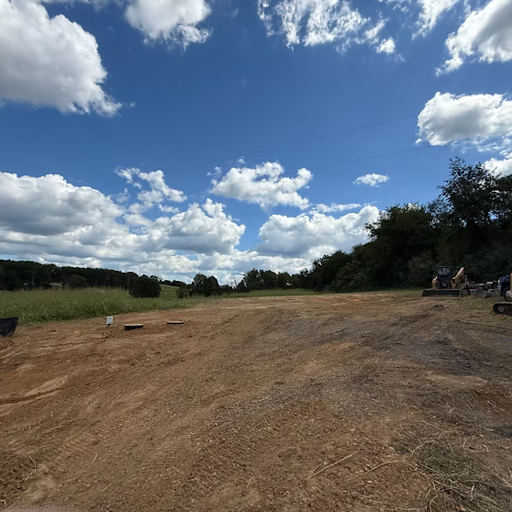
Building a house sounds exciting when you’re talking about layouts and finishes. That part’s easy to picture. What’s harder to picture is the beginning. The dirt stage. The part where nothing looks finished and everything feels slow.
Somewhere in that early phase, site preparation for building a house shows up. Not right away, not in the first sentence of the conversation, but it’s there. And honestly… it’s doing more work than people give it credit for.
It Doesn’t Start With Machines, It Starts With Looking Around
Before anything gets cleared or dug, someone has to actually look at the land. Sounds obvious, but it gets rushed more than you’d think.
Walk the property. Notice the slope. Check where water might go when it rains. See what’s already there—trees, debris, maybe stuff buried you didn’t expect.
Because once machines start moving, it’s harder to slow down and rethink things. And sometimes you need that pause at the beginning.
Clearing Land Feels Fast… Until It Isn’t
At first, clearing looks like quick progress. Trees come down, brush disappears, things open up. Feels like you’re getting somewhere.
But then you hit the slower parts. Roots that won’t come out clean. Soft patches that don’t hold weight. Old materials buried under the surface.
You can rush through it, sure. People do. But whatever you leave behind has a way of showing up later, just at the worst time.
Soil Isn’t Just Dirt, It’s… Complicated
This is where things get a bit less obvious.
Different soil behaves differently. Some hold water, some drains too fast. Some shift when it gets wet, then settle weird when it dries. And you don’t always see that right away.
That’s why a local excavation company pays attention to it early. Not just digging and moving on, but actually adjusting how the ground gets prepped based on what’s there. It’s not flashy work. It’s just necessary.
Grading Is Quiet Work, But It Matters
Grading doesn’t get much attention. It’s not dramatic. No big “before and after” moments.
But it’s one of those things that either works or doesn’t. No middle ground.
Water needs to move away from the house. That’s the goal. If the slope is off—even a little—you end up with water hanging around where it shouldn’t. And water has a way of causing problems slowly, not all at once.
Drainage Issues Don’t Rush, They Linger
Here’s the frustrating part. Bad drainage doesn’t always show up right away.
Everything can look fine for weeks. Maybe months. Then one heavy rain, or a stretch of bad weather, and suddenly you notice pooling water. Soggy areas that don’t dry out.
That usually traces back to early prep. To site preparation for building a house not being handled quite right. And fixing it later? It’s doable, but it’s a pain. No way around that.
Septic and Utilities Complicate Things (A Lot)
Once septic systems or underground utilities get involved, things get more technical.
Placement matters. Depth matters. Soil conditions matter again—probably more than before. You can’t just guess your way through it.
If something’s off, you’re not just tweaking a small issue later. You’re digging things back up. Redoing work. Spending more time and money than planned.
That’s why all these steps tie together. Clearing, grading, excavation—it’s all connected whether people see it or not.
Where People Try to Save Money… and Regret It
Let’s be real for a second. Budget matters. Everyone’s trying to keep costs under control.
But this is one of those areas where going cheap tends to cost more later. Rushed work, skipped steps, not checking the ground properly—it adds up.
And the worst part? The problems don’t show up immediately. They creep in. A little settling here, some water there, things just slightly off until they’re not small problems anymore.
A good local excavation company won’t always be the cheapest. There’s usually a reason for that.
Conclusion
So yeah, site preparation for building a house isn’t the exciting part. It’s not what people talk about when they imagine their future home.
But it’s the part that everything else depends on.
Get it right, and things just work the way they should. Nothing dramatic, no surprises. Get it wrong, and you’ll spend time later fixing things you can’t easily see.
It’s messy work. A bit slow at times. Sometimes frustrating. But skipping details here doesn’t save you—it just delays the problem.
And honestly, that’s the part most people don’t realize until they’re already dealing with it.