Choosing the right grafts is one of the most important parts of planning a natural-looking hair restoration procedure. Grafts are small groups of hair follicles taken from a donor area and carefully placed into regions affected by thinning or hair loss. However, graft selection is not simply about choosing as many follicles as possible. The characteristics of the donor hair, the pattern of loss, the desired density, and the design of the recipient area all influence which grafts are appropriate.
During Hair Transplant in Dubai, personalized graft selection typically begins with a detailed assessment of the scalp. A surgeon may examine donor density, follicular characteristics, hair calibre, growth direction, and the stability of the available donor supply. The number of hairs contained within individual follicular units can also affect how grafts are distributed.
Hairline restoration may require finer, naturally occurring single-hair grafts to create a soft transition from the forehead into denser areas. Larger follicular units containing multiple hairs can be useful farther behind the hairline when greater visual coverage is needed. This strategic approach can help use the donor supply efficiently while maintaining a natural appearance.
What Determines Which Grafts Are Selected?
Graft selection is influenced by several individual characteristics rather than a single standard formula. A surgeon first considers the extent and pattern of hair loss. Someone with isolated frontal recession may require a different graft distribution from someone experiencing diffuse thinning across the frontal scalp, mid-scalp, and crown.
Donor hair characteristics are equally important. Follicles from the back and sides of the scalp may vary in thickness, curl, colour, and growth direction. These differences can influence where particular grafts are most appropriately placed.
The surgeon may also consider the patient’s age and anticipated progression of hair loss. Preserving an adequate donor reserve is important because future thinning could require additional management. Using grafts conservatively can therefore be part of long-term planning rather than focusing only on immediate coverage.
How Single- and Multi-Hair Grafts Are Used
Follicular units naturally contain different numbers of hairs. Some contain a single follicle, while others contain two, three, or occasionally more hairs. Their distribution can be planned according to the anatomy of the scalp.
Single-hair grafts are particularly useful around the leading edge of a hairline. Their smaller size can create a gradual transition that avoids an overly dense or artificial-looking border.
Two- and three-hair grafts can be positioned behind the hairline, where additional volume is generally more appropriate. The objective is not simply to maximize the number of hairs in every area. Instead, grafts can be allocated according to the visual requirements of each zone.
Why Hair Characteristics Matter
Hair calibre can significantly influence perceived density. Thicker hair shafts may provide greater coverage with fewer follicles, while finer hair may require more careful distribution to create a comparable visual effect.
Hair texture also matters. Wavy or curly hair can sometimes provide greater visual fullness because the hair occupies more three-dimensional space. Straight, fine hair may reveal more of the scalp, making placement strategy particularly important.
Colour contrast between the hair and scalp can also affect the appearance of density. A surgeon may take these factors into account when determining the number and type of grafts needed for different areas.
How Graft Selection Supports Hairline Design
The hairline is one of the most visually sensitive areas of a transplant. Its position, shape, irregularity, and density can strongly influence the overall appearance.
Rather than creating a uniformly straight line, surgeons generally consider the patient’s facial proportions, existing hairline characteristics, age, and available donor resources. Finer grafts may be selected for the front edge, while progressively denser follicular units can be used farther back.
The direction and angle of implantation are also important. Grafts need to follow the natural pattern of surrounding hair to blend effectively. A personalized graft plan therefore involves both selection and placement.
Adapting Graft Selection to the Crown
Crown restoration presents different considerations because the hair typically follows a whorl pattern. Simply placing grafts in straight lines can produce an unnatural result.
Graft distribution around the crown can be planned to follow the existing direction of growth. The surgeon may also assess whether the crown is a priority compared with the frontal region. Since donor follicles are limited, treatment planning may involve deciding how available grafts should be distributed between different areas.
For some patients, improving the frontal region may take precedence, while others may benefit from addressing a more prominent crown deficiency. The decision depends on the individual’s pattern of loss and treatment objectives.
The Role of Donor Area Assessment
The donor region is the source of transplanted follicles, so its condition directly affects what can be achieved. Assessment may include examining follicular density, scalp characteristics, hair thickness, and the degree of miniaturization.
A healthy donor area does not necessarily mean unlimited graft availability. The surgeon must consider how many follicles can be safely harvested while maintaining an acceptable appearance in the donor region.
This is particularly relevant for younger patients or individuals with progressive genetic hair loss. A carefully planned procedure should account for potential future changes rather than exhausting the donor supply during one session.
How Technology Can Improve Graft Planning
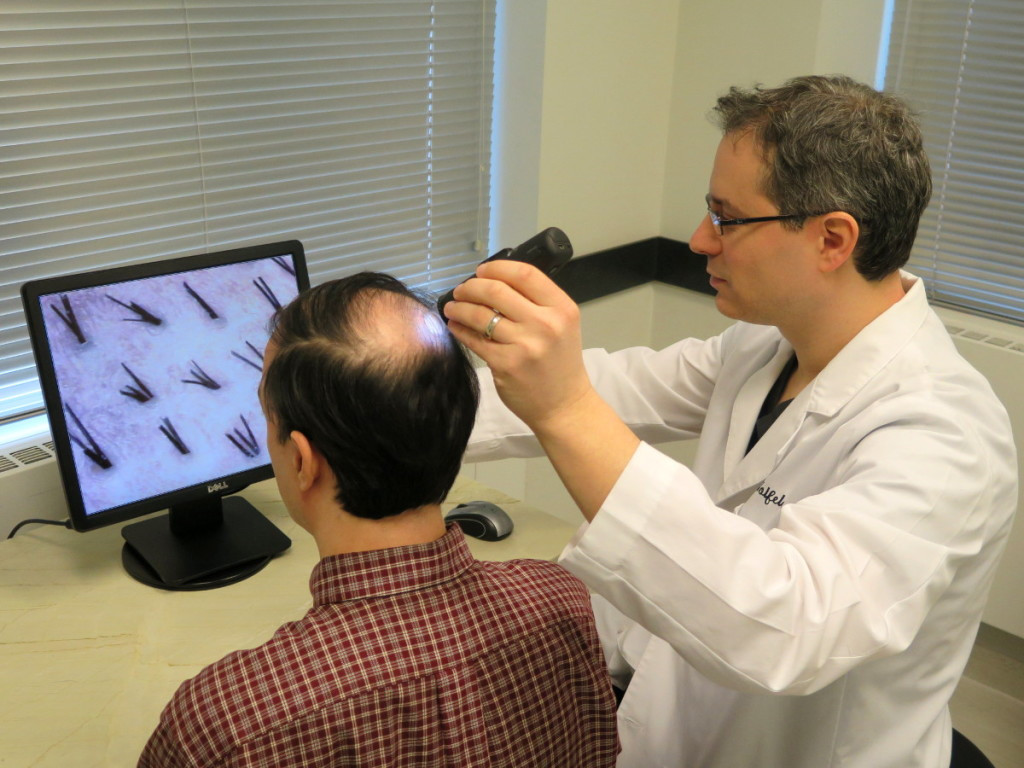
Modern consultation methods can provide more detailed information about the scalp and donor area. Magnified examination and digital imaging may help identify follicular characteristics that are difficult to evaluate visually.
Some practices also use photographic documentation or digital planning to assess hairline proportions and monitor changes over time. These tools can support clinical decision-making, although they do not replace the surgeon’s examination and judgment.
The selected extraction and implantation technique can also influence graft handling. Follicular unit extraction, for example, requires careful removal of individual follicular units to minimize unnecessary trauma. The technique should be chosen according to the patient’s characteristics rather than based solely on technology or marketing terminology.
How a Personalized Graft Plan Is Developed
A detailed consultation usually brings together several pieces of information. The surgeon assesses the extent of hair loss, examines the donor area, discusses the patient’s expectations, and considers the likely progression of thinning.
From there, a graft plan can be developed for the different scalp zones. The plan may specify where finer grafts are required, where larger follicular units can provide additional coverage, and how the available donor supply should be preserved.
For patients considering Hair Transplant in Dubai, understanding this planning process can make consultations more productive. Rather than focusing only on the number of grafts proposed, patients can ask how graft characteristics, donor capacity, hairline design, and long-term preservation have been considered.
How to Choose the Right Approach for Hair Transplant in Dubai
Experience and Qualifications
Look for a qualified physician with relevant training and practical experience in hair restoration. Ask about experience with different patterns of hair loss and whether the physician personally evaluates and plans the procedure.
Technology and Techniques
Technology can support diagnosis, graft assessment, extraction, and implantation, but the equipment itself does not determine the quality of treatment. Ask which technique is being recommended and why it is appropriate for your hair characteristics.
Safety Standards
A proper medical facility should follow appropriate infection-control procedures, sterile techniques, patient monitoring, and established surgical protocols. The consultation should also include discussion of potential complications and aftercare.
Consultation Process
A thorough consultation should involve examination of both donor and recipient areas. Be cautious of treatment plans based only on photographs or a predetermined graft number without an adequate assessment.
Patient Experience
Clear communication is important before and after treatment. Patients should understand preparation requirements, recovery expectations, follow-up arrangements, and the factors that can affect the final appearance.
Expected Results
Results vary between individuals and develop gradually. Ask whether the proposed graft number is based on your actual donor capacity and treatment objectives. A responsible plan should distinguish between achievable improvement and guaranteed outcomes.
Frequently Asked Questions
How many grafts are usually needed for a hair transplant?
There is no universal graft number. Requirements depend on the extent of hair loss, the size of the treatment area, donor density, hair characteristics, and the desired level of coverage.
Are all hair transplant grafts the same?
No. Follicular units can contain different numbers of hairs and may vary in thickness and characteristics. Their placement can therefore be customized according to the scalp region being treated.
Why are single-hair grafts used at the hairline?
Single-hair grafts can help create a softer transition at the front of the scalp. Using larger follicular units directly along the leading edge may produce a less natural appearance in some patients.
Can graft selection affect the final density?
Yes. The number of hairs within each graft, hair calibre, distribution, placement pattern, and the available donor supply can all influence perceived density. Strategic allocation is therefore important.
Can the graft plan change during treatment?
It can. Although a treatment plan is normally established before the procedure, the surgeon may make technical adjustments based on the condition and characteristics of the follicles during extraction and implantation.
Conclusion
Personalized graft selection is a central component of successful hair restoration because every patient’s donor supply, hair characteristics, loss pattern, and aesthetic goals are different. Single-hair grafts may be valuable for refining the hairline, while multi-hair follicular units can contribute greater coverage behind it. Donor preservation, future hair loss, scalp anatomy, and hair texture also need to be considered.
For anyone researching Hair Transplant, the most useful consultation is one that explains not only how many grafts are proposed, but also why particular grafts are being selected and where they will be placed. A carefully individualized plan can make better use of the available donor supply while supporting a natural and proportionate result.