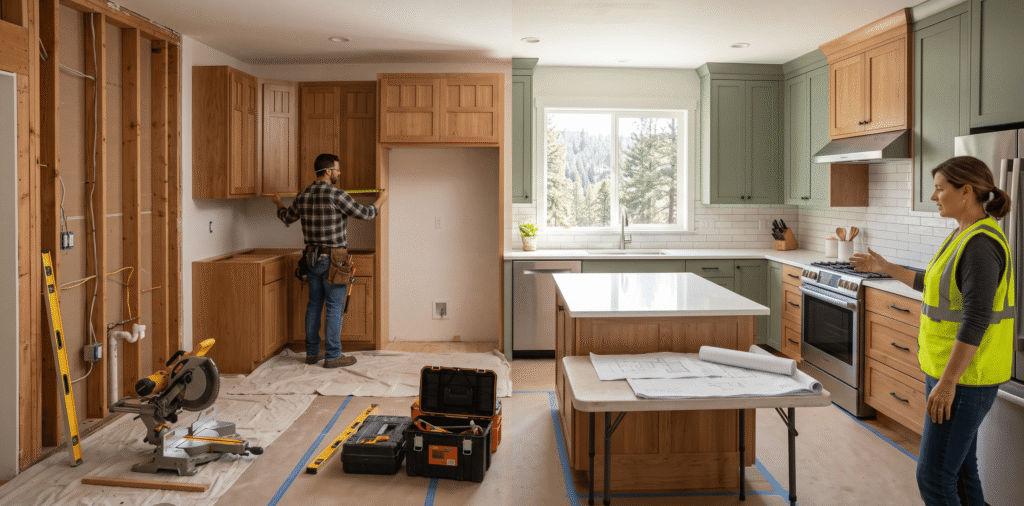
You have saved the photos, picked a few cabinet colors, and started picturing your new kitchen. Then a practical question comes up. Where will your family eat during the work, and how long will it take before life feels normal again? In Grass Valley, the answer can vary based on your project scope, material availability, permits, and the condition of your home. So, how long does a kitchen remodel take in real life? There is no single timeline that fits every project.
A straightforward update may move faster, while changes involving new cabinets, layout adjustments, inspections, or several trades can take longer. This guide explains each phase, highlights common scheduling challenges, and shares practical ways to keep your remodel moving.
What Is the Typical Timeline?
Many full kitchen remodels need about 5 to 8 weeks of on-site construction. The full project runs longer once you add design, permits, and ordering, so the average kitchen remodel duration depends heavily on the scope you choose. A 2026 remodeling contractor guide lays out ranges like these:
Project Scope |
Typical Total Timeline |
| Stock cabinet refresh with no layout change | 6 to 8 weeks |
| Mid-range remodel with a new layout, semi-custom cabinets, and stone countertops | 12 to 16 weeks |
| Custom cabinets with structural work | 18 to 24 weeks |
These totals cover everything between your first design meeting and move-in day. Crews are only in your home for part of that time, which is good news if the numbers look large at first glance.
Kitchen Renovation Timeline in Grass Valley, Phase by Phase
Every kitchen follows the same basic order, and each step depends on the last. Here is what happens and how long it usually takes.
Phase 1: Planning and Design
Design comes first, and it takes longer than most people expect. You choose the layout, cabinets, countertops, fixtures, and appliances, and you finalize every selection before ordering anything. Plan for several weeks at this stage, and more if you want custom work.
This is also the moment to set a budget, measure the room carefully, and decide if you will move plumbing or gas lines, because those choices shape the permit and the schedule. Rushing here creates problems later, and the delays below show exactly how.
Phase 2: Permits and Ordering
Permit paperwork and material orders usually happen together, which saves time. Do you know which parts of your project need approval?
● What Needs a Permit in Nevada County
The Permit you need depends on the type and extent of work planned for your project remodel and the property’s jurisdiction. Nevada County requires permits for construction that is not specifically exempt, while properties within the City of Grass Valley follow the city’s applicable building requirements.
Confirm the current requirements with the appropriate building department before work begins. Projects submitted in Nevada County on or after January 1, 2026, must follow the 2025 California Building Standards Code and applicable local requirements
● How Long a Permit Stays Active
Permit expiration and extension rules depend on the applicable jurisdiction and permit conditions. Ask the building department about the expiration date and any available extension options for your project.
● Cabinet Lead Times
Cabinet lead times vary by manufacturer, product line, availability, and order specifications. Stock cabinets may be available more quickly, while semi-custom and custom cabinets generally require more lead time. Confirm the expected delivery date with your supplier before setting the construction schedule.
Phase 3: Demolition and Rough Work
Crews remove the old cabinets, counters, and flooring, then complete framing, plumbing, and electrical rough-in. Older homes can sometimes reveal water damage, outdated wiring, plumbing issues, or other conditions once walls and flooring are opened.
Required inspections generally take place at designated stages of the project, including after applicable rough-in work and before affected areas are concealed. If an inspection identifies a correction, the work may need to be completed and re-inspected before the project can proceed to the next stage.
Phase 4: Cabinets, Countertops, and Finishes
Cabinets go in first because countertop templating cannot begin until they are installed. Fabrication may take several business days, depending on the material, fabricator, project specifications, and current workload. Many homeowners assume the job has stalled during this gap, but the pause is normal. Backsplash, fixtures, lighting, and paint follow once the countertops arrive.
Phase 5: Final Inspection and Walkthrough
After required inspections are completed, you can walk through the finished kitchen with your contractor and review a punch list of remaining items. Take your time during this walkthrough, and check drawers, doors, outlets, and finishes so you don’t miss anything. Once those items are complete, your kitchen is ready for daily use.
Factors That Delay Kitchen Remodels
Even carefully planned jobs can slip. Does that mean you should expect trouble? Not at all, but knowing the usual causes helps you avoid them.
- Changes after ordering: Switching cabinet colors, countertops, or other selections after ordering can require new materials and disrupt the schedule.
- Backordered items: Delays in receiving cabinets, appliances, fixtures, or specialty materials can hold up the next stage of work.
- Hidden problems: Water damage, rot, outdated wiring, or other issues discovered during demolition may require repairs before work can continue.
- Permit and inspection issues: Missing documents, required corrections, or failed inspections can pause progress until the issue is resolved.
- Trade scheduling gaps: Plumbers, electricians, tile installers, and other trades may not always be available when needed.
- Weather conditions: Severe weather can occasionally affect deliveries, site access, or outdoor work.
Most of these delays are easier to manage when you make decisions early and work with a contractor who tracks each stage of the schedule.
Good planning can prevent many common delays before they affect your kitchen. R&R General Contracting uses construction management to coordinate each stage, track project progress, and keep trades moving in the right order. Connect with the team to plan your kitchen remodel with fewer surprises and a clearer path forward.
What to Expect for Kitchen Remodel Cost in Nevada County, CA
Time and money go hand in hand, so it helps to consider both. Do you know which choices affect the price most? Cabinet quality, countertop material, appliance selection, and layout changes usually take the largest share of a budget. Local pricing depends on kitchen size, materials, and layout, and no article can replace a written estimate for your home.
Kitchen remodeling costs vary based on kitchen size, materials, cabinetry, appliances, labor, and whether the layout changes. Current 2026 cost data from Fixr places kitchen remodeling at about $15,000 to $45,000 nationally, with an average of roughly $27,000. These figures are general planning ranges, not estimates for a specific Nevada County project. Local labor rates, material selections, permits, and project scope can affect the final cost. A written estimate should clearly describe the work involved, materials, labor, and expected schedule.
Frequently Asked Questions
1. How long does a small kitchen refresh take?
A refresh with stock cabinets and no layout change is generally faster than a full renovation. The overall timeline still depends on design decisions, material availability, and the scope of the work.
2. Can you remain at home during a kitchen remodel?
Yes, many homeowners choose to stay home during a remodel. Since the kitchen may be unusable during construction, creating a temporary kitchen area with a microwave, compact refrigerator, and a portable cooktop can make daily routines easier.
3. Do I need a permit for a kitchen remodel in Grass Valley?
Permit needs vary based on the scope of the work and if your property falls under Nevada County or the City of Grass Valley. Confirm the current requirements with the appropriate building department before starting work.
4. What causes the longest delays?
Cabinet lead times, material availability, unexpected issues, and changes made during construction can all affect the schedule. Finalizing selections early and avoiding unnecessary changes can help keep the project moving.
5. How can I keep my remodel on schedule?
Finalize your selections before demolition, order materials promptly, and discuss the expected timeline with your contractor. Clear communication and early decisions can help reduce avoidable delays.
Conclusion
A kitchen remodel goes best with patience and planning. Most projects need several weeks of construction, plus extra time beforehand for design, permits, and ordering. The biggest gains start with early decisions, such as choosing cabinets, finalizing selections, and confirming permits. Keep your expectations realistic and ask for a written schedule, and you will spend less time worrying and more time looking forward to your new space.
Once your kitchen feels finished, you may start dreaming bigger. R&R General Contracting also handles new construction and remodeling projects across Nevada County, giving you an experienced team for your next project. Request a free estimate and share your plans with the team.