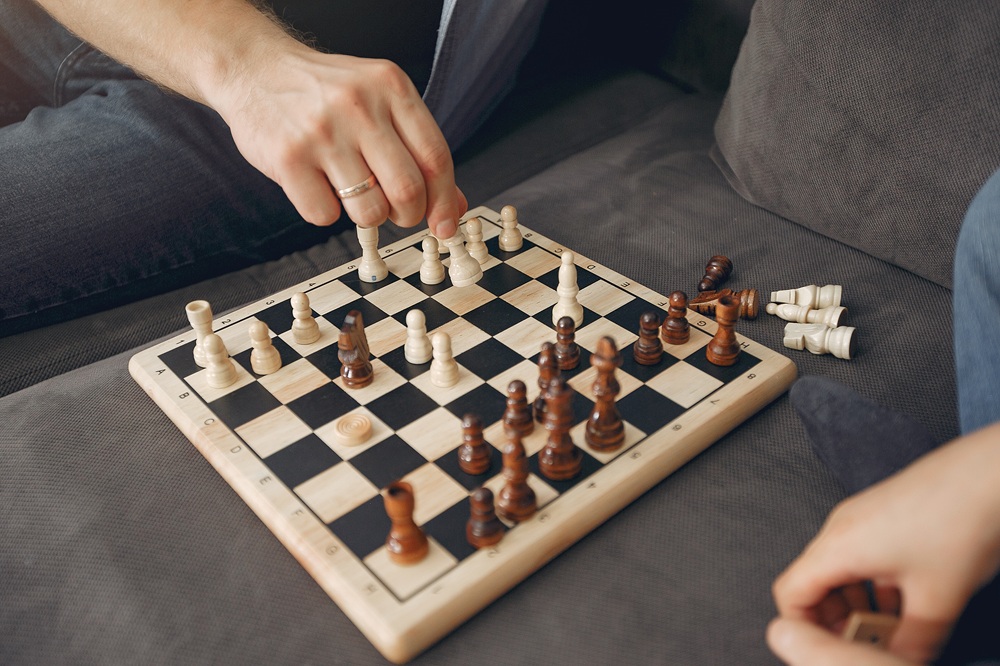
There’s a quiet truth in chess that doesn’t shout, but wins games anyway. Control the center, and the rest of the board begins to listen. Ignore it, and things slowly fall apart… sometimes without you even noticing why.
In many virtual chess lessons, this idea comes up early. Not because it’s basic, but because it’s foundational. Everything flows from it. Your pieces, your plans, even your confidence over the board. The center is not just four squares. It’s influence, space, and direction.
Why the Center Matters More Than You Think
The center—those key squares like e4, d4, e5, and d5—acts like the heart of the position. When your pieces control these squares, they breathe easier. They move freely. They coordinate.
When they don’t, they stumble. They get stuck behind pawns, or pushed to the edges where they struggle to find purpose.
Think of it like this. A knight in the center sees everything. A knight on the rim… sees very little.
It’s not just about occupying the center. That’s where many beginners get confused. It’s about controlling it. Sometimes from a distance. Sometimes quietly.
The First Moves: Claiming Space Early
Most openings begin with a simple idea—place a pawn in the center.
Moves like:
- 1.e4
- 1.d4
These aren’t random. They immediately challenge central space.
But placing a pawn is only the first step. What matters next is how you support it.
A common mistake? Pushing pawns too quickly without thinking. You might grab space, sure. But without support, that space collapses.
Better approach:
- Develop pieces behind your pawns
- Protect your center
- Avoid unnecessary pawn moves
This is something often emphasized in chess courses for beginners, because it builds strong habits early. Not flashy, but effective.
Control vs Occupation (Subtle, but Important)
You don’t always need to sit in the center to control it.
Take openings like the Sicilian Defense or even certain setups against 1.e4. Black often allows White to occupy the center early… then challenges it later.
This is where control becomes more strategic.
You might:
- Attack central pawns
- Use pieces to pressure key squares
- Wait for the right moment to strike
It’s less obvious, but often more powerful.
Piece Development and the Center
Here’s where things connect.
Good development = better central control.
When you bring your knights to f3 and c3 (or f6 and c6 as Black), you’re not just developing. You’re influencing the center.
Same with bishops. A bishop on c4 or g5 can quietly support central pressure without directly standing there.
A common mistake intermediate players make is developing pieces without purpose. They follow opening “rules,” but forget the reason behind them.
Every move should ask:
👉 Does this help me control the center?
If not, it might not be the best move.
Typical Mistakes Players Make
Let’s be honest for a moment. Most players lose control of the center without realizing it.
Some common patterns:
- Moving the same piece multiple times early
- Ignoring opponent’s central pawns
- Playing on the side while the center collapses
- Overextending pawns without support
And then suddenly, your position feels cramped. Your pieces don’t coordinate. You’re reacting instead of playing.
It doesn’t happen instantly. It builds slowly.
That’s why awareness matters more than memorization.
Simple Strategy to Control the Center
You don’t need complicated theory to do this well.
Start with a few grounded ideas:
- Place one or two pawns in the center
- Develop knights and bishops to support them
- Castle early to keep your king safe
- Watch your opponent’s central plans
And then… pause.
Don’t rush.
Sometimes the best move is simply improving your position, quietly strengthening your control.
A Short Example (Real Game Feeling)
Imagine this:
You play 1.e4. Your opponent responds with 1…c5. A Sicilian setup.
Now instead of rushing, you develop:
- Knight to f3
- Pawn to d4
You challenge the center, not just occupy it.
After exchanges, your pieces become active. Your control expands.
Compare that to pushing random pawns on the side. The difference is clear. One builds pressure. The other creates weaknesses.
Why Beginners Struggle Here
It’s not lack of effort. It’s lack of clarity.
Beginners often:
- Focus on attacking too early
- Ignore structure
- Copy moves without understanding
That’s why structured guidance helps. Especially through well-designed chess courses for beginners, where these concepts are explained slowly, with context.
Because once you see the center properly, your entire game changes.
Learning Through Virtual Lessons
There’s something effective about learning this concept through virtual chess lessons.
You can:
- See positions visually
- Pause and reflect
- Replay critical moments
More importantly, you start noticing patterns.
You begin to ask better questions:
- Who controls the center here?
- What happens if I ignore it?
- Where should my pieces go next?
That shift in thinking is what actually improves your game.
FAQs
What does controlling the center actually mean?
It means influencing key central squares with your pawns and pieces, even if you’re not occupying them directly.
Is it necessary to always play e4 or d4?
No. Those are common moves, but control can be achieved in different ways depending on the opening.
Why do I lose control of the center so easily?
Usually due to overextending pawns, poor development, or ignoring your opponent’s threats.
Are virtual chess lessons good for learning openings?
Yes, especially when they focus on ideas instead of just memorized moves.
Do beginners need to study center control deeply?
Not deeply, but consistently. Understanding the basics goes a long way.
Final Thoughts
Control of the center isn’t a trick. It’s not a tactic you apply once and forget. It’s something you build, move by move, decision by decision.
And once you start paying attention to it, really paying attention, your games begin to feel different.
More stable. More connected. Less chaotic.
You’re not just moving pieces anymore. You’re guiding the position.
Quietly. But with purpose.