Most PR boxes do not make it onto camera. Influencer PR kit boxes arrive in volume to creators who receive 10, 20, sometimes 50 packages a week, and the brutal truth of the format is that most never get opened in front of an audience. The box that does get unboxed almost always has the same handful of design traits, and they have very little to do with budget. A £15 PR mailer that nails the fundamentals will outperform a £60 box that misses them.
After working with dozens of D2C brands on their first major influencer push, we have seen which design choices reliably get an unboxing and which ones get a polite thank-you note (or nothing at all). The difference is structural, sensory, and surprisingly emotional.
The First Three Seconds Determine Everything
An influencer holds your box for roughly three seconds before deciding whether to film. In that window, three things happen: they read the outer label, they feel the weight, and they get a first sensory impression of texture or temperature. Get any one of those wrong and the box gets pushed aside for later, which usually means never.
PR box packaging supplier UK shops we work with see the same pattern: brands that obsess over the inside of the box and treat the outside as an afterthought lose the moment.
The outer mailer needs to look intentional. Plain brown corrugate works if the brand mark is foiled or screen-printed clean on top. Custom unboxing boxes wholesale orders with full-print outer wraps work too. What does not work is a generic Amazon-style brown box with a printed paper label glued on.
Weight is a Silent Storyteller
Heavier feels more expensive. This is not a marketing cliche; it is a measurable cognitive bias confirmed in dozens of consumer-perception studies. A PR box that feels light triggers a sub-conscious assumption that the contents are cheap. A box of identical contents wrapped in heavier outer rigid construction is rated 15% to 30% higher on a perceived-value scale by the same participants.
Rigid gift boxes wholesale UK options solve this problem structurally. The chipboard core adds heft without adding much cost.
If your unit economics cannot support a fully rigid construction, you can fake the effect by adding shaped EVA foam inside a sturdy E-flute corrugate mailer. The foam protects the product and adds enough weight to clear the perception threshold.
Opening Choreography
The best PR boxes choreograph the opening. The customer (in this case, the creator) does not just lift a lid; they pull a ribbon, slide a sleeve, lift a magnetic flap, then reveal an inner tray. Each layer adds a beat to the unboxing video. Each beat is content.
Magnetic gift boxes UK clients specifically request hidden compartments, drawer-style pull mechanisms, and double-lid designs precisely for this reason. The unboxing is the marketing. If your box opens in one motion, you have given the creator one moment of content. If it opens in three motions, you have given them three.
Personalised gift boxes UK with hand-written notes, individually addressed inner cards, or the influencer’s social handle printed on an internal panel almost always make the cut. The cost is negligible. The signal is enormous: this brand sees me.
The Supporting Cast Inside the Box
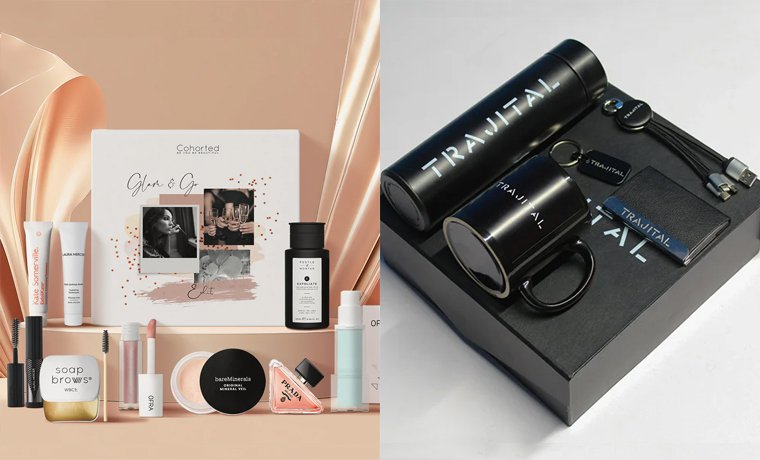
What you put around the product matters as much as the product itself. The hierarchy that works is: hero product, supporting product (or sample), tactile element (a card, a fabric pouch, a small extra), and educational element (the story, the founder, the why).
Avoid filler. Crinkle paper, generic confetti, and printed flyers selling unrelated SKUs all read as cheap, no matter how nice the box. A single embossed thank-you card on textured stock outperforms a stack of glossy product flyers every time.
Custom gift boxes with logo UK orders that include a branded fabric pouch, a small lapel pin, or a sample of an adjacent product (with the unsubtle suggestion to film both) routinely get featured in two pieces of content instead of one.
Targeting Beats Volume
The most expensive mistake in PR box strategy is sending the same box to everyone. A creator with 50,000 niche followers in your exact category is worth ten creators with 500,000 broad lifestyle followers. The packaging budget should follow that logic.
Build two tiers. A flagship tier (50 to 100 units) goes to your top-priority creators with full personalisation, hero packaging, and the supporting cast described above.
A core tier (300 to 1,000 units) goes to a wider segment with a simpler version of the same design language. Both tiers should share visual DNA so user-generated content looks consistent on social.
Measuring What Worked
Track three metrics from any PR box drop: post rate (what percentage of recipients posted within four weeks), share-of-frame (what percentage of those posts gave your packaging more than two seconds of camera time), and conversion lift (whether your branded search volume rose in the week after major posts). Brands that track all three iterate faster than brands that only track post count.
Logistics: Shipping a PR Box is Not Shipping a Normal Package
PR boxes ship to creators on tight timelines (often a campaign launch window of three to five days) and to addresses that are not always commercial. About a third of PR drops to UK creators go to home addresses where the recipient may not be in. Courier choice matters more here than in normal e-commerce.
Express tracked courier services (DPD Same Day, UPS Express, FedEx Priority) cost more per drop but reduce missed-delivery rates dramatically.
Some PR teams now coordinate delivery directly with creator agencies to ensure someone is available to sign. The packaging budget often dwarfs the courier budget, but a perfect PR box that arrives three days late at an unattended address gets recycled, not filmed.
Sustainability in PR: The New Table-stakes Question
Creators ask. They ask whether the box is recyclable, whether the filler is plastic-free, whether the brand has a sustainability stance. Five years ago this was an edge concern. In 2026 it is a default question, especially among Gen-Z and Millennial creators in beauty, fashion, and lifestyle.
PR boxes that fail the sustainability question (excessive plastic crinkle, unrecyclable foil-laminate constructions, single-use plastic inserts) increasingly get called out on camera, which is worse than not being filmed at all.
Brands building PR programmes in 2026 need to be able to answer the sustainability question crisply and provide evidence on request.
Building Your First PR Box Programme This Quarter
If you have never run a PR box drop, the right scale to start at is small. Build a list of 25 to 50 creators whose audience overlaps with your target customer.
Send them a flagship-tier box with proper personalisation. Track who posts and what kind of coverage you get. Use the data to refine your second drop.
Common first-time mistakes include sending to creators who do not actually have engagement with your category, skipping the personalisation step to save budget, and sending without any context note that explains what the box is and why it was sent. Each of these mistakes typically halves the response rate.
Budget realistically. A serious PR drop of 50 flagship boxes including product, packaging, courier, and creator outreach time usually lands between £8,000 and £15,000.
That sounds expensive until you compare it to the equivalent paid social spend required to reach the same audience with comparable conversion.
The Bottom Line
A great PR box is not the most expensive one. It is the one that respects the creator’s time, choreographs a moment worth filming, and feels like it was built for them specifically.
Get those three things right and your packaging stops being a delivery vehicle and starts being a piece of paid media that earns organic distribution. That is the only PR box maths that matters.