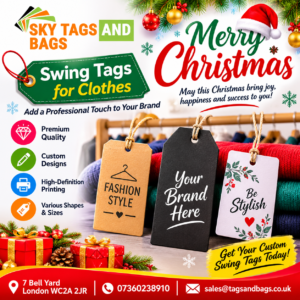
The fashion and clothing industry is continuously evolving, with businesses placing greater emphasis on product presentation, brand identity and customer experience. From independent fashion designers to established clothing retailers, every detail contributes to how customers perceive a product. One often-overlooked detail is the clothing swing tag.
In 2026 and moving into 2027, clothing labels and printed tags are becoming an increasingly important part of retail packaging strategies. They do more than display a brand name or price. They can communicate product information, highlight material quality, support brand recognition and create a more professional presentation.
Well-designed swing tags for clothes can help clothing businesses establish a consistent visual identity while providing customers with useful information. As competition increases across physical retail stores and online fashion marketplaces, businesses are exploring creative printing techniques, sustainable materials and personalised designs.

Understanding current developments in clothing tag printing can help retailers, manufacturers and fashion entrepreneurs make informed decisions about their packaging requirements.
1. Emerging Clothing Tag Design Trends for 2026–2027
Fashion branding is becoming more focused on simplicity, individuality and thoughtful presentation. These developments are influencing how clothing businesses approach their printed tags.
Several design trends are particularly relevant for 2026–2027.
Minimalist and Contemporary Designs
Minimalist designs continue to attract attention because they allow important brand information to stand out without unnecessary visual elements.
Popular design features include:
- Clean typography and readable fonts.
- Neutral colours such as beige, black, white and grey.
- Simple brand logos and carefully positioned graphics.
- Uncluttered layouts with sufficient white space.
- Small but distinctive design details.
For premium clothing brands, minimalist tags can create a sophisticated appearance while maintaining consistency across different product collections.
Personalised and Customised Tags
Personalisation is another important development in fashion retail. Clothing businesses increasingly want packaging elements that reflect their individual brand identities.
Customisation can include:
- Brand-specific colours and typography.
- Printed logos and unique illustrations.
- Different shapes and tag sizes.
- Special messages for seasonal collections.
- Product-specific information.
These details allow independent designers and larger retailers to create recognisable packaging across their product ranges.

Sustainable Materials and Responsible Printing
Environmental considerations are influencing packaging decisions throughout the retail industry. Clothing businesses are exploring recyclable paper, responsibly sourced card and other material options that align with their sustainability objectives.
For example, kraft paper tags can provide a natural appearance, while recycled card may help businesses incorporate recycled materials into their packaging choices.
However, businesses should check the actual material specifications and environmental certifications rather than assuming that every paper-based product is automatically sustainable.
2. Why Professional Clothes Tag Printing Matters for Fashion Businesses
Printed clothing tags are small, but they can communicate several important details about a product and its manufacturer.
Professional clothes tag printing helps businesses maintain consistent branding while presenting essential product information in an organised format.
Building Brand Recognition
A clothing tag is often one of the first branded packaging elements customers notice when examining a new garment.
Consistent use of logos, colours, typography and design elements can make products easier to recognise. When the same visual identity appears across clothing labels, swing tags, packaging bags and product boxes, it creates a more unified presentation.

Communicating Essential Product Information
Clothing tags can display useful details, including:
- Brand name and logo.
- Product name or collection.
- Size information.
- Retail price or barcode.
- Website and social media details.
- Care information where appropriate.
- Material or product descriptions.
It is important to distinguish between a decorative swing tag and a garment’s permanent care or composition label. Legal textile labelling requirements may require specific information to be provided separately.
Improving the Customer Experience
Customers often appreciate clear and professionally presented product information. A well-organised tag makes it easier to identify a product’s brand, size and other relevant details.
For gift clothing, boutique collections and premium garments, thoughtfully designed tags can also contribute to the overall unboxing and presentation experience.
3. Choosing the Right Materials, Shapes and Printing Techniques
Selecting the appropriate material and printing method is an important part of producing effective clothing tags. The right choice depends on the brand’s identity, intended use, budget and product range.
Popular Materials for Clothing Swing Tags
Different materials create different visual and practical results.
Kraft Card: Kraft card is commonly associated with natural and understated packaging styles. It can work particularly well for casual clothing, handmade products and brands with a simple visual identity.
Premium Cardstock: Heavier cardstock can provide a more substantial feel. It is often suitable for premium fashion collections and retail products where presentation is important.
Recycled Paper: Recycled paper options can support businesses looking to incorporate recycled materials into their packaging decisions.
Textured Card: Textured finishes can add visual interest and create a distinctive appearance without requiring complicated graphics.

Selecting Suitable Shapes and Sizes
Although rectangular tags remain widely used, businesses can explore different shapes to create a distinctive identity.
Common options include:
- Rectangular swing tags.
- Square clothing tags.
- Circular and rounded-corner tags.
- Die-cut custom shapes.
- Folded information tags.
The selected dimensions should provide sufficient space for essential information while remaining practical for attaching to garments.
Printing and Finishing Options
Printing techniques and finishing details can influence the appearance and durability of a tag.
Some popular options include:
- Full-colour digital printing.
- Single-colour printing.
- Matte and gloss finishes.
- Foil detailing.
- Embossed and debossed effects.
- Double-sided printing.
For example, foil detailing can create a premium appearance, while a simple matte finish may be more suitable for minimalist clothing brands.
Businesses should request suitable print samples when comparing different finishes, as colours and textures can appear different on screen compared with the finished printed product.
4. How to Find Affordable Clothes Tag Printing Without Compromising Quality
Managing packaging costs is important for clothing manufacturers, independent designers and growing retail businesses. However, reducing costs should not mean overlooking print quality or product suitability.
Finding affordable clothes tag printing requires balancing material selection, order quantities, design complexity and production requirements.

Compare Materials and Printing Specifications
Different card weights, finishes and printing methods can influence the final production cost.
Businesses should compare:
- Paper or card thickness.
- Printing colours and coverage.
- Single-sided versus double-sided printing.
- Finishing requirements.
- Tag dimensions.
- String, ribbon or attachment options.
A simpler design may provide a professional result without requiring expensive finishing techniques.
Plan Order Quantities Carefully
Order quantity can influence the overall cost per tag. Larger print runs may offer better unit economics, depending on the supplier’s pricing structure.
However, businesses should avoid ordering excessive quantities if they regularly update their branding, prices or product collections.
A practical approach is to estimate expected product demand and choose an order quantity that balances cost efficiency with storage requirements.
Prepare Print-Ready Artwork
Incorrect artwork specifications can create delays and additional production costs.
Before submitting a design, businesses should check:
- Correct document dimensions.
- Appropriate image resolution.
- CMYK colour settings where required.
- Bleed and safe margins.
- Correct spelling and product information.
- Suitable logo quality.
Requesting a proof before production can help identify design errors and reduce the risk of unnecessary reprints.

5. Practical Applications of Swing Tags Across the Clothing Industry
Different clothing businesses use swing tags for different purposes. Understanding these applications helps retailers select suitable designs and materials.
Independent Fashion Brands
Small fashion labels often use custom tags to establish a recognisable identity. A consistent design across different garments can help create a more professional appearance, even when production quantities are relatively small.
Clothing Manufacturers and Wholesale Suppliers
Manufacturers may require standardised tags for different product categories, sizes and collections. Clear product information can help retailers identify garments and manage stock more efficiently.
Boutique and Premium Clothing Stores
Boutiques may choose textured cardstock, minimalist layouts or premium finishing techniques to complement their product positioning.
Sportswear and Casual Clothing
Sportswear businesses can use bold typography, distinctive colours and practical layouts to communicate collection names, product details and brand information.
E-commerce Fashion Businesses
Online retailers can incorporate branded swing tags into their packaging to maintain a consistent customer experience between digital shopping and physical product delivery.
A professionally presented tag can complement branded mailer bags, tissue paper, product boxes and other packaging materials.
6. Common Clothing Tag Printing Challenges and How to Avoid Them
Despite their relatively small size, clothing tags can present several production and design challenges.
Poor Readability: Using very small fonts or overcrowding the design can make important information difficult to read. Keep layouts simple and prioritise essential details.
Incorrect Colours: Screen colours may not accurately represent printed results. Request a physical proof or discuss colour matching with the printing supplier.
Unsuitable Card Thickness: A tag that is too thin may not provide the intended appearance or performance. Select a suitable card weight based on the garment and brand positioning.
Weak Attachment Methods: Incorrect string or attachment choices can make tags inconvenient to use. Consider the garment material, tag weight and attachment requirements.
Inconsistent Branding: Using different fonts, colours and logo variations across product collections can weaken brand consistency. Establish clear design guidelines before ordering multiple tag styles.

Businesses looking for examples of clothing packaging and printed tag solutions can explore the clothing tag range available through Tags and Bags at https://www.tagsandbags.co.uk/swing-tags-for-clothing/.
Conclusion: Preparing Clothing Brands for 2026–2027
The clothing and retail industries are placing increasing importance on product presentation, brand consistency and responsible packaging choices. As these priorities continue to influence the market throughout 2026 and 2027, clothing tags remain a practical part of the customer experience.
From minimalist layouts and personalised designs to recycled materials and specialist printing finishes, businesses have several ways to improve the presentation of their garments.
Choosing suitable swing tags for clothes involves more than selecting an attractive design. Retailers should consider material quality, readability, printing specifications, production quantities and the overall relationship between tags and their wider packaging strategy.
By balancing creativity with practical requirements, clothing manufacturers, independent fashion brands and retailers can develop printed tags that communicate useful information, strengthen brand recognition and support a consistent retail identity.
Contact Us : https://www.tagsandbags.co.uk/contact-us/
About Us : https://www.tagsandbags.co.uk/about-us/
Website Link : https://www.tagsandbags.co.uk/
INN-News.Net : https://www.inn-news.net/
Social Media : (Read More)
- https://www.tagsandbags.co.uk/where-can-i-buy-brown-paper-bags/
- https://www.tagsandbags.co.uk/how-to-make-a-gift-bag-out-of-wrapping-paper/
- https://www.tagsandbags.co.uk/should-shops-charge-for-paper-bags/
- https://dailystorypro.com/https-www-tagsandbags-co-uk-wholesale-paper-bags/
- https://viralsocialtrends.com/https-www-tagsandbags-co-uk-kraft-swing-tags-uk/
- https://xuzpost.com/https-www-tagsandbags-co-uk-foiled-swing-tags-uk/