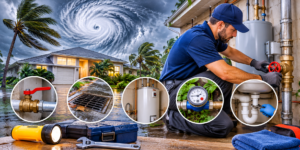
Hurricanes can damage plumbing through flooding, power outages and debris, disrupting the pipes, drains and fixtures that keep your household running. While securing windows and roofs matters, plumbing damage can also cause significant indoor water damage during a hurricane.
A burst pipe, backed-up drain, or damaged water heater can turn a stressful storm into a long, costly recovery. A few simple steps taken early can protect your home, your belongings, and your peace of mind.
Your Hurricane Plumbing Preparation Checklist
Preparation works best when you start days ahead, while roads are open and stores are stocked. Work through these tasks one at a time so you don’t miss anything.
- Find and test your main shutoff valve.
- Take photos of your water heater, fixtures and meter area for insurance records.
- Keep a flashlight and a basic wrench near the shutoff.
- Fill bathtubs with water to flush and clean.
- Clear leaves and debris from yard drains and downspouts.
- Save a licensed plumber’s number in your phone.
Completing these checks before the storm can make it easier to respond to plumbing problems afterward.
How to Locate the Main Water Shutoff Valve
Closing the water quickly is the most effective way to limit damage from a burst pipe. Everyone in the household who is old enough should know exactly where the valve is.
Common Places to Look
In many homes, the valve sits where the water line enters the house, often in a utility room, garage, basement or crawl space. Some homes have it on an exterior wall or near the water meter. Follow the supply line from the meter toward the house, since the shutoff is usually somewhere along that path.
Test the Valve Before the Storm
Close the valve fully, then open a faucet to confirm the flow stops. Open the valve slowly afterward. If it feels stiff or leaks around the handle, have it repaired before the storm arrives. If you cannot find or turn a shutoff, call your water utility for guidance.
Know Your Valve Type
Learn how your valve operates before the storm arrives. This helps you act quickly if a pipe bursts.
● Ball Valves
These have a lever handle. Turn the lever a quarter turn. When open, the handle is generally parallel to the pipe, when closed, it is perpendicular.
● Gate Valves
These have a round wheel handle. Turn it clockwise until it stops, and do not force it if it will not move.
Preventing Sewer Backflow During Storms
Heavy rain and flooding can overload sewer systems and push wastewater back toward homes through the lowest drains. Backflow happens when water reverses its normal flow path, potentially letting contaminants enter the drinking water supply. Preparing early lowers the chance of an unsanitary backup.
● Install the Right Protection
A backwater valve on the sewer line lets wastewater leave the house but closes when flow tries to return. A backflow preventer on the water supply protects your drinking water from contamination. Both should be installed and maintained by a licensed plumber.
● Use Drains Wisely When Water Rises
If water is rising outside or drains are gurgling, stop running sinks, showers and washing machines. Extra water sent down the line can add to a backup. Do not flush toilets if sewage is already coming up.
Water Heater Safety During Flooding
Floodwater can damage a water heater’s electrical components, gas controls and other safety devices, creating potential electrical and gas hazards. If flooding is expected, turn off the heater’s electricity or gas supply before the water arrives, but only if you can reach it safely. Never wade through standing water to reach a switch or valve.
After the water recedes, don’t restart the heater yourself. A licensed plumber should inspect it, because submerged controls and gas valves often need replacement. Wait to drink or cook with the water until local officials confirm the supply is safe.
If a burst pipe, sewer backup, or storm-related leak needs immediate attention, Colvenback Plumbing provides 24/7 emergency plumbing services during storms. Request professional assistance to identify the problem and determine the necessary repairs!
Checking Plumbing Leaks After a Hurricane
Strong winds, shifting soil and fallen trees can crack pipes without any obvious sign. Once it is safe to move around your property, check each area in turn. If you smell gas, leave the building immediately and contact your gas provider or emergency services right away.
Area to check |
What to look for |
| Water meter | The leak indicator moving when no water is being used. |
| Ceilings and walls | Water stains, bubbling paint, sagging surfaces or damp odors. |
| Under sinks and around appliances | Moisture, dripping connections, standing water or swollen cabinet bases. |
| Yard and driveway | Persistent wet patches, unusual pooling or ground that remains saturated after rainfall has stopped. |
| Water pressure | Unexpected pressure changes, discoloration or unusual odors. Follow official advisories if contamination is suspected. |
Read the Water Meter
Close all faucets and switch off water-using appliances, then monitor the meter. If the dial keeps moving or the leak indicator spins, water is escaping somewhere in the system. This test can help identify unexplained water use, although it may not reveal the leak’s exact location.
Inspect Inside Your Home
Check ceilings, walls, floors, and cabinets for stains or soft spots. Dry wet materials as soon as possible, ideally within one to two days to reduce the risk of mold developing.
Walk the Yard and Outdoor Plumbing
Check outdoor faucets, irrigation lines and the ground near your foundation for pooling water. Fallen trees can pull on buried lines, so note any area that stays wet.
Pay Attention to Water Quality
If your water looks or smells unusual, or officials issue a drinking water advisory, follow their instructions. Boiling does not make water contaminated with fuel or harmful chemicals safe to drink.
Frequently Asked Questions
1. Where is the main water shutoff valve usually located?
It is usually where the water line enters your home, often near the meter or in a utility room, garage or basement. Following the pipe from the meter is the easiest way to find it.
2. Should I turn off my water before a hurricane?
Turn it off if you are evacuating, if local officials advise it, or if you suspect pipe damage. If you stay home and see no leaks, you can leave it on, but you should know exactly how to shut it off.
3. Can floodwater cause sewage to enter my home?
Yes, when storm drains and sewers overflow, wastewater can back up through a house’s lowest drains. A qualified plumber can install a backwater valve to help prevent this.
4. Is it safe to use my water heater after flooding?
Not until a licensed plumber has inspected it. Floodwater can damage gas valves, burners and electrical controls.
5. How soon should I check for leaks after a storm?
Check as soon as it is safe to move around your property. Early checks limit water damage and reduce mold risk.
Conclusion
Hurricane season is stressful, but your plumbing does not have to add to the worry. Knowing where your shutoff valve is, protecting your drains from backup, treating the water heater with care, and checking for leaks afterward can help limit plumbing damage and support a safer recovery. Take these steps now, and you will feel more prepared when the next forecast arrives.
Repeated leaks, corrosion, or water-quality issues may indicate aging pipes. Learn the signs of whole-home repiping and ask Colvenback Plumbing to assess your system and recommend the right solution!