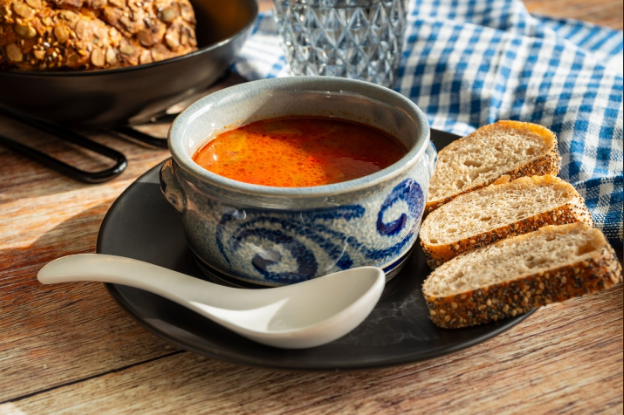
Why does the same packet of instant soup sometimes turn out thick and creamy, but other times seem watery and weak? In many cases, the difference comes down to how much water is added. Instant soup powders often contain starches and other ingredients that absorb water and help create body. Changing the amount of water changes how concentrated that thickening system becomes.
A simple water ratio experiment can show that difference clearly. By preparing the same amount of soup powder with several common water volumes and measuring how each sample flows, it becomes easier to see how serving size affects thickness, texture, and overall consistency.
Key Takeaways
- Less water generally produces a thicker instant soup.
- More water usually creates a thinner, faster-flowing texture.
- Using the same soup powder, temperature, stirring time, and resting time keeps the comparison fair.
- Simple flow and spread tests can compare thickness without laboratory equipment.
- Results should be treated as specific to the soup mix tested because different formulas may behave differently.
How to Run an Instant Soup Water Ratio Experiment to Measure Thickness at a Common Serving Size
The goal of the water ratio experiment is simple: keep the amount of soup powder the same while changing only the water volume.
For a simple comparison, prepare four samples using the same brand and flavor:
Water Volume
Approximate Serving
Expected Texture
120 mL
4 oz
Very thick
180 mL
6 oz
Medium-thick
240 mL
8 oz
Light
360 mL
12 oz
Thin
These serving sizes create a wide enough range to make differences easier to observe. The 120 mL sample has the highest concentration of powder, while the 360 mL sample spreads the same amount of solids through three times as much water.
Keep the Soup Powder Constant
For the comparison to mean anything, every sample needs the same amount of instant soup powder.
For example, if the test uses 20 grams of soup mix, each container should receive exactly 20 grams. Only the water amount should change.
This matters because increasing both powder and water would change the serving size without necessarily changing the concentration. A water ratio experiment works by isolating one variable, in this case, the amount of water.
The same principle applies whether testing a basic packet or a more complex gourmet soup mix containing starches, vegetable powders, seasonings, or other thickeners.
Control Temperature and Mixing
Temperature also affects how starch-based soups thicken, so all four samples should be prepared under the same conditions.
Use water at the same starting temperature for every sample. Stir each one for the same amount of time, such as 30 seconds, then allow each sample to rest for the same period, such as three minutes.
Consistency here is important. One sample stirred longer or allowed to cool much more than another could produce a misleading comparison.
Anyone comparing products from a soup shop or testing different packets purchased as soup mix online should therefore standardize preparation before comparing texture.
Measure Thickness With a Funnel Flow Test
A practical way to compare thickness is to measure how long each soup takes to flow through the same funnel.
Pour an equal amount, such as 100 mL, into the funnel while blocking the opening. Release the opening and record how many seconds the sample takes to drain.
A thicker soup should generally move more slowly because it resists flow more strongly. A thinner sample should pass through more quickly.
For example, the 120 mL preparation would be expected to take longer than the 360 mL preparation. The exact timing will depend on the soup formula, funnel opening, and test temperature, so the numbers should be measured rather than assumed.
Use a Spread Test as a Second Check
A line-spread test provides another simple way to compare consistency.
Place an equal amount of each soup inside the same small ring or cylinder on a flat surface. Lift the ring straight upward and wait a fixed amount of time, such as 10 seconds.
Then measure how far each sample spreads.
A thick soup should remain closer to the center. A thinner soup should travel farther outward.
Using both a flow test and a spread test gives a better picture than relying only on appearance. A sample that looks creamy in a cup may behave very differently when allowed to move freely.
What Changes Across the Four Serving Sizes?
The clearest pattern in the water ratio experiment should be the relationship between water volume and concentration.
- At 120 mL, the soup powder is concentrated into a small amount of water. The sample is therefore likely to feel heavy, coat the spoon strongly, and flow slowly.
- At 180 mL, the texture should become easier to pour while still retaining noticeable body.
- At 240 mL, the soup is more diluted. It should spread more quickly and feel lighter.
- At 360 mL, the same powder is distributed through much more water, so the soup should have the thinnest consistency of the four.
- Flavor intensity may also decrease as more water is added, although this experiment is primarily measuring physical thickness rather than taste preference.
Do Not Treat One Ratio as Universal
The results from one instant soup should not automatically be applied to every product.
Different mixes use different amounts and types of starch, protein, fat, dried vegetables, and other solids. A tomato soup powder may react differently from a cream-style soup or a vegetable broth mix.
That is why package directions remain an important starting point. The experiment is most useful for showing how one specific product responds when water volume changes.
Conclusion
An instant soup water ratio experiment makes the effect of serving size easy to see. Keeping the soup powder constant while testing 120, 180, 240, and 360 mL of water creates a clear comparison between concentrated and diluted preparations.
Simple funnel-flow and spread tests can turn those differences into measurable observations rather than relying only on taste or appearance. The main lesson is that water volume changes how strongly the soup’s thickening ingredients can influence the final texture. Testing several ratios under the same conditions provides a practical way to find how a particular soup mix behaves across common serving sizes.
FAQs
What is the best water ratio for instant soup?
The best ratio varies by product. Follow the package instructions first, then make small adjustments for personal preference.
Does adding more water make soup thinner?
Yes. Increasing the water while keeping the powder quantity the same generally produces a thinner, less concentrated soup.
Why does instant soup thicken after mixing?
Starches and other dehydrated ingredients can continue absorbing water after the initial mixing, causing the soup to thicken as it rests.
Can I adjust soup thickness for a thermos lunch?
Yes. Test the soup at the consistency you expect after it has rested, then make small adjustments to the water ratio.