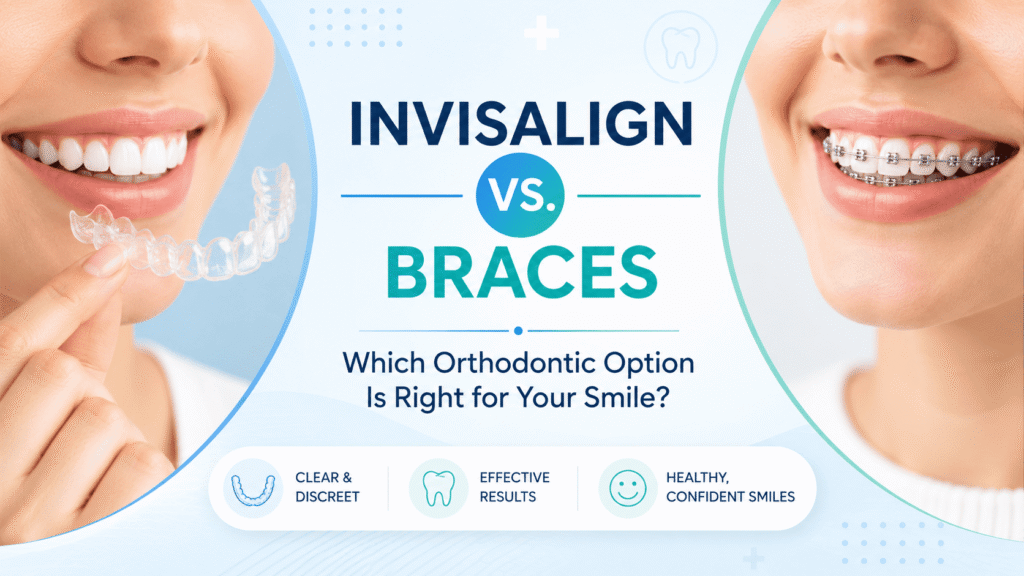
A straight smile can change more than appearance. It can improve the way teeth fit together, make daily cleaning easier, support better chewing, and give many people more confidence in social and professional settings. For anyone thinking about orthodontic care, the first big question is usually simple: should they choose Invisalign or braces?
Both options can move teeth into healthier positions. Both can correct common concerns such as crowding, gaps, bite problems, and crooked teeth. The real difference is how they work, how they fit into daily life, and which type of case they are best suited for.
This guide compares Invisalign and traditional braces in a practical way so readers can better understand what each option involves before speaking with an orthodontist.
What Is Invisalign?
Invisalign is a clear aligner system that uses a series of custom-made trays to gradually move teeth. The aligners are made from transparent plastic and fit closely over the teeth. Patients usually change to a new set of aligners every one to two weeks, depending on their treatment plan.
The biggest appeal of Invisalign is appearance. Since the aligners are clear, many people find them more discreet than metal braces. This makes Invisalign especially popular with adults, working professionals, college students, and teens who want a less noticeable orthodontic option.
Invisalign aligners are also removable. Patients take them out while eating, drinking anything other than water, brushing, and flossing. This can make meals and oral hygiene feel more familiar than life with fixed braces.
For readers in Ohio who are exploring clear aligner treatment, Invisalign treatment at Mellion Orthodontics is one option worth reviewing when comparing local orthodontic care.
What Are Braces?
Braces use brackets, wires, and sometimes small elastic bands to move teeth over time. The brackets are attached to the teeth, and the orthodontist adjusts the wire during appointments to guide tooth movement.
Traditional metal braces are the most recognized type, but they are not the only option. Many orthodontic offices also offer ceramic or clear braces that blend more naturally with the teeth. These can be a good middle ground for patients who need the control of braces but want a less visible look.
Because braces stay fixed to the teeth, they work continuously. Patients do not have to remember to wear them for a certain number of hours each day. This makes braces a strong choice for children, teens, and adults who may not want the responsibility of removable aligners.
Braces are also widely used for more complex orthodontic concerns. When teeth need significant movement, bite correction, rotation, or vertical adjustment, braces can give the orthodontist strong control over each stage of treatment.
How Invisalign and Braces Are Similar
Although they look and feel different, Invisalign and braces share the same goal: moving teeth into better alignment.
Both may be used to address:
Crowded teeth
Gaps between teeth
Overbites
Underbites
Crossbites
Open bites
Crooked teeth
Uneven spacing
Both treatments also require professional planning. Before treatment begins, an orthodontist typically examines the teeth, bite, jaw relationship, X-rays, photos, and digital scans or impressions. This allows the orthodontist to understand what needs to move, how much movement is possible, and which treatment can deliver the most predictable result.
Another important similarity is retention. Whether someone chooses Invisalign or braces, the teeth can shift after treatment if they are not held in position. That is why most patients need retainers once active treatment is complete.
Appearance: Which Option Is More Discreet?
For patients who care most about appearance during treatment, Invisalign usually has the advantage. The clear aligners are difficult to notice at a normal speaking distance, especially when they are clean and properly fitted.
This is one reason many adults choose Invisalign. They may feel more comfortable wearing aligners during meetings, presentations, social events, or photographs. Teens may also prefer aligners because they do not want brackets and wires to show at school or in pictures.
Braces are more visible, especially traditional metal braces. However, modern braces are smaller and more comfortable than older versions. Ceramic braces can also reduce the visual impact because the brackets are tooth-colored or clear.
The right choice depends on how much visibility matters to the patient. Some people do not mind the look of braces at all. Others want the most discreet treatment possible.
Comfort: Which Feels Better?
Both Invisalign and braces can cause some soreness when teeth begin moving. This is normal with orthodontic treatment. The pressure usually feels strongest after getting braces adjusted or switching to a new set of aligners.
Invisalign may feel smoother inside the mouth because there are no brackets or wires. Some patients find aligners more comfortable for the cheeks and lips. However, aligners can still create pressure, and some people need time to adjust to speaking with them.
Braces may cause irritation at first because brackets and wires sit against the lips and cheeks. Orthodontic wax can reduce rubbing while the mouth adapts. After the first few weeks, many patients become used to the feel of braces.
Comfort also depends on the individual case. A mild alignment issue may feel different from a more involved bite correction. An orthodontist can explain what a patient should expect based on their specific treatment plan.
Eating and Drinking: Which Is Easier?
Invisalign gives patients more freedom with food. Since the aligners are removed before eating, there are no major food restrictions. Patients can still eat crunchy, chewy, or sticky foods as long as they brush before putting aligners back in.
This convenience comes with responsibility. Aligners should not be worn while eating. They should also be removed before drinking anything other than water because beverages can stain the trays or trap sugar and acid against the teeth.
Braces require more food awareness. Sticky candies, hard snacks, popcorn kernels, chewing gum, and very crunchy foods can damage brackets or bend wires. Patients with braces often need to cut certain foods into smaller pieces and avoid biting directly into hard items.
For disciplined patients, Invisalign can feel easier at mealtimes. For patients who prefer not to remove and store trays throughout the day, braces may feel simpler.
Oral Hygiene: Which Is Easier to Clean?
Invisalign can make brushing and flossing more straightforward because the trays come out. Patients can clean their teeth normally, then clean the aligners separately before putting them back in.
Still, Invisalign requires consistent hygiene. If someone puts aligners back in after eating without brushing, food particles and bacteria can become trapped against the teeth. This can increase the risk of bad breath, staining, plaque, and cavities.
Braces take more effort to clean around. Food can get stuck near brackets and wires, so patients need to brush carefully around every surface. Flossing can also take longer because the wire blocks normal floss movement. Many patients use floss threaders, interdental brushes, or water flossers to make cleaning easier.
In short, Invisalign may be easier to clean, but only if the patient follows the routine. Braces require more detailed cleaning, but they do not depend on remembering to remove and replace trays.
Treatment Discipline: The Biggest Invisalign Factor
Invisalign works only when the aligners are worn as directed. Most patients are told to wear them around 20 to 22 hours per day. That leaves only a few hours for eating, drinking, brushing, and flossing.
This is where patient discipline matters. If aligners are left out too often, teeth may not move as planned. Treatment can take longer, trays may stop fitting correctly, and results may be less predictable.
Braces remove that issue because they are fixed to the teeth. Patients cannot forget to wear them. This makes braces a strong option for younger patients or anyone who may struggle with aligner compliance.
The best Invisalign candidates are usually people who can follow instructions closely, keep track of their trays, and wear them consistently even when no one is checking.
Treatment Time: Which Is Faster?
Treatment time depends more on the complexity of the case than the appliance itself. Some Invisalign cases may finish in months, while others take much longer. Braces can also vary from shorter cosmetic corrections to multi-year bite correction plans.
In general, Invisalign may work well for mild to moderate alignment concerns, especially when the patient wears the aligners correctly. Braces may be more suitable for cases that need larger tooth movements, major bite correction, or close control of tooth position.
The orthodontist’s diagnosis is the best guide. Two people may have smiles that look similar but require very different treatment because the bite, jaw relationship, and root positions are different.
Cost: Is Invisalign More Expensive Than Braces?
The cost of orthodontic care varies by case complexity, treatment length, location, insurance coverage, and the type of appliance used. Invisalign may cost more than braces in some cases, while in other cases the price may be similar.
Patients should avoid choosing treatment based on cost alone. A cheaper option is not always the better option if it cannot correct the issue properly. At the same time, the most expensive option is not automatically the best choice for every smile.
A consultation gives patients a clearer estimate. During that visit, the orthodontic team can explain treatment options, expected timing, payment plans, insurance use, and what is included in the fee.
Invisalign May Be Right for Patients Who Want Discretion and Flexibility
Invisalign may be a strong option for people who want a less noticeable treatment and can commit to wearing aligners daily.
It may suit patients who:
Want a clear, removable option
Prefer fewer food restrictions
Can wear aligners 20 to 22 hours per day
Have mild to moderate crowding or spacing
Want easier brushing and flossing
Are comfortable keeping track of trays
This option often appeals to adults and teens with busy schedules, public-facing jobs, or social concerns about visible braces.
Braces May Be Right for Patients Who Need Stronger Control
Braces may be better for patients with more complex alignment or bite concerns. They may also be better for people who do not want the responsibility of removable trays.
Braces may suit patients who:
Have severe crowding or spacing
Need major bite correction
Have teeth that require rotation or vertical movement
Prefer a fixed treatment option
May forget to wear aligners consistently
Want a time-tested orthodontic method
For adults comparing treatment choices, reviewing options for orthodontics and braces for adults can give a clearer picture of how braces still fit modern orthodontic care.
Why the Orthodontist’s Recommendation Matters
A patient may prefer Invisalign, but the teeth and bite may respond better to braces. Another patient may assume braces are required, only to learn that clear aligners can treat the concern well.
That is why an orthodontic exam is so important. Smile goals matter, but the clinical details matter just as much. The orthodontist looks beyond the visible front teeth and studies how the upper and lower teeth meet, how the jaws relate, and whether the planned movement is safe and realistic.
The best treatment is not always the most popular one. It is the one that matches the patient’s goals, lifestyle, oral health, and orthodontic needs.
Final Thoughts: Which Option Is Right for Your Smile?
Invisalign and braces can both create healthier, straighter smiles. Invisalign offers a discreet, removable, and flexible treatment experience, making it attractive for many adults and teens. Braces offer constant tooth movement, strong control, and reliable correction for a wide range of cases.
The right option depends on the patient’s bite, treatment goals, age, lifestyle, discipline, and the complexity of tooth movement required. Someone who wants nearly invisible treatment and can wear aligners consistently may prefer Invisalign. Someone with a more complex case or who wants a fixed appliance may be better suited for braces.
The smartest next step is a consultation with an orthodontist. With a professional evaluation, patients can understand their options clearly, compare the benefits of each treatment, and choose the path that gives their smile the best long-term result.