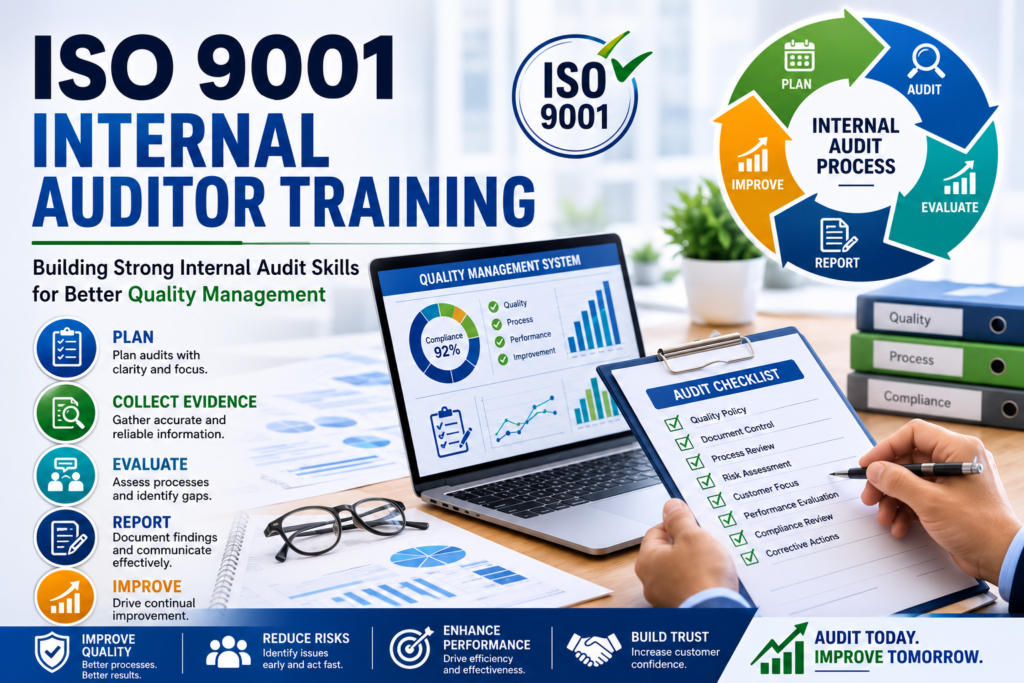
ISO 9001 Internal Auditor Training
Understanding the Role of an Internal Auditor
If your organisation operates under ISO 9001, you already know that maintaining a quality management system isn’t a one-time effort. It requires ongoing evaluation, correction, and improvement. That’s exactly where internal auditors come in — and why getting the right training matters so much.
An internal auditor is responsible for examining your organisation’s processes and checking whether they align with the requirements of ISO 9001 Internal Auditor Training. But this role goes beyond ticking boxes. A well-trained auditor helps identify gaps before they become problems, flags areas for improvement, and supports a culture of accountability throughout the business.
Without trained internal auditors, organisations often find themselves scrambling before external audits. With them, the process becomes far more controlled and far less stressful.
What ISO 9001 Internal Auditor Training Actually Covers
ISO 9001 internal auditor training is designed to give participants both a strong understanding of the standard itself and the practical skills needed to conduct effective audits.
The ISO 9001 Standard in Depth
Training typically begins with a thorough walkthrough of ISO 9001’s clauses and requirements. Participants learn what the standard demands from an organisation, how each clause applies in real-world settings, and what auditors should look for during an audit. This foundation is essential because you can’t audit against a standard you don’t fully understand.
Audit Planning and Preparation
A large portion of the training focuses on the planning stage. Auditors learn how to develop an audit plan, define the scope, prepare checklists, and determine which processes or departments to examine. Good preparation is often what separates a useful audit from one that misses critical issues.
Conducting the Audit
Training also covers the practical side — how to open an audit, interview staff, collect objective evidence, and observe processes in action. Participants learn how to ask the right questions without leading respondents, and how to remain objective throughout. These are skills that don’t come naturally to everyone, and structured training makes a real difference.
Writing Findings and Non-Conformances
One of the more technical aspects is learning how to document findings correctly. Not every deviation from the standard is a non-conformance, and not every non-conformance carries the same weight. Training helps auditors classify their findings accurately and write them clearly so that corrective actions can be taken effectively.
Closing the Audit and Reporting
Finally, trainees learn how to wrap up an audit professionally — presenting findings to management, producing an audit report, and following up on corrective actions. The closing stage is just as important as the audit itself, since findings that aren’t acted upon serve no real purpose.
Who Should Attend This Training?
ISO 9001 internal auditor training is relevant to a wider audience than many people expect. While quality managers and compliance officers are obvious candidates, the training is also valuable for:
Process owners who want to understand how their departments are being evaluated. Team leaders responsible for ensuring their area meets quality requirements. Senior managers who need a clearer view of how internal audits support business objectives.
In short, anyone involved in maintaining or improving your quality management system can benefit from understanding how internal auditing works.
The Difference Between Trained and Untrained Auditors
It’s tempting to assume that someone who knows the business well can conduct an internal audit without formal training. In practice, this rarely works as intended.
Untrained auditors tend to fall into a few common traps. They may audit based on personal familiarity rather than objective evidence. They may miss systemic issues by focusing on surface-level observations. They may inadvertently lead interviews in a way that produces unreliable information. And they often struggle to write findings in a way that’s clear, fair, and actionable.
Trained auditors avoid these pitfalls because they’ve been shown the right techniques and have had the opportunity to practise them in a controlled environment.
How ISO 9001 Internal Auditor Training Supports Continual Improvement
ISO 9001 Internal Auditor Training places a strong emphasis on continual improvement — the idea that your quality management system should never be static. Internal audits are one of the primary tools for driving that improvement.
When auditors are properly trained, they don’t just look for non-conformances. They also identify opportunities for improvement and flag trends that might indicate deeper systemic issues. Over time, this builds a much richer picture of how your organisation is performing and where it can do better.
Investing in ISO 9001 internal auditor training gives your team the skills to conduct meaningful audits that actually move the needle — rather than audits that simply satisfy a procedural requirement.
This distinction matters. An organisation with a well-functioning internal audit programme is one that’s genuinely committed to quality, not just one that’s going through the motions.
Common Misconceptions About Internal Auditor Training
It’s Only for Large Organisations
This is one of the most persistent myths. Small and medium-sized organisations benefit just as much from trained internal auditors — sometimes more, because they typically have fewer resources to deal with the fallout from a failed external audit or a quality failure.
One Training Session Is Enough
Training gives auditors a strong starting point, but competence develops over time. It’s important to give trained auditors the opportunity to practise regularly and, where possible, to receive mentoring from more experienced colleagues. Refresher sessions are also worth considering as the standard evolves or as your organisation’s processes change.
Internal Audits Are Just a Rehearsal for External Audits
Internal audits serve a far broader purpose than preparing for a certification audit. They’re a management tool in their own right — a way of staying on top of what’s actually happening across the organisation and making sure that processes are delivering the intended outcomes.
Making the Most of Your Internal Audit Programme
Training is the starting point, but the value it delivers depends on how well you apply it. A few things that tend to make internal audit programmes more effective:
Audit frequently enough to catch issues early, rather than cramming everything into one annual cycle. Rotate auditors across departments where possible to ensure fresh perspectives. Act on findings promptly and track corrective actions to completion. Use audit results as an input into management review meetings so that leadership stays informed.
When these elements are in place, your internal audit programme becomes a genuine driver of quality rather than an administrative obligation.
Building Auditor Competence Over Time
ISO 9001 Internal Auditor Training requires that internal auditors are competent, and competence is something that needs to be demonstrated and maintained. Keeping records of training, audits conducted, and findings reported is not just good practice — it’s part of meeting the standard’s requirements around documented information.
Organisations that invest in their auditors tend to see better audit results, stronger engagement with the quality management system, and a more proactive approach to identifying and resolving issues. It’s an investment that pays off across the whole organisation, not just in the audit room.
If your team is new to internal auditing or you’re looking to sharpen existing skills, structured training is the most reliable way to build the competence your quality management system needs.