Preparing for your first interview can feel challenging, especially when you are applying for a pharmaceutical sales position without previous work experience. You may have studied pharmacy, life sciences, biotechnology, chemistry, or another subject, but an interview requires more than academic knowledge. Employers also want to understand your communication skills, confidence, willingness to learn, and ability to handle the practical responsibilities of the job.
A Medical Representative Job is generally a field-based role that involves communicating approved pharmaceutical product information, maintaining professional relationships with healthcare professionals, planning visits, and completing reports. The exact responsibilities depend on the company and its products.
For freshers, understanding common interview questions can make the recruitment process less stressful. It helps you organise your thoughts, explain your strengths, and demonstrate that you understand the profession.

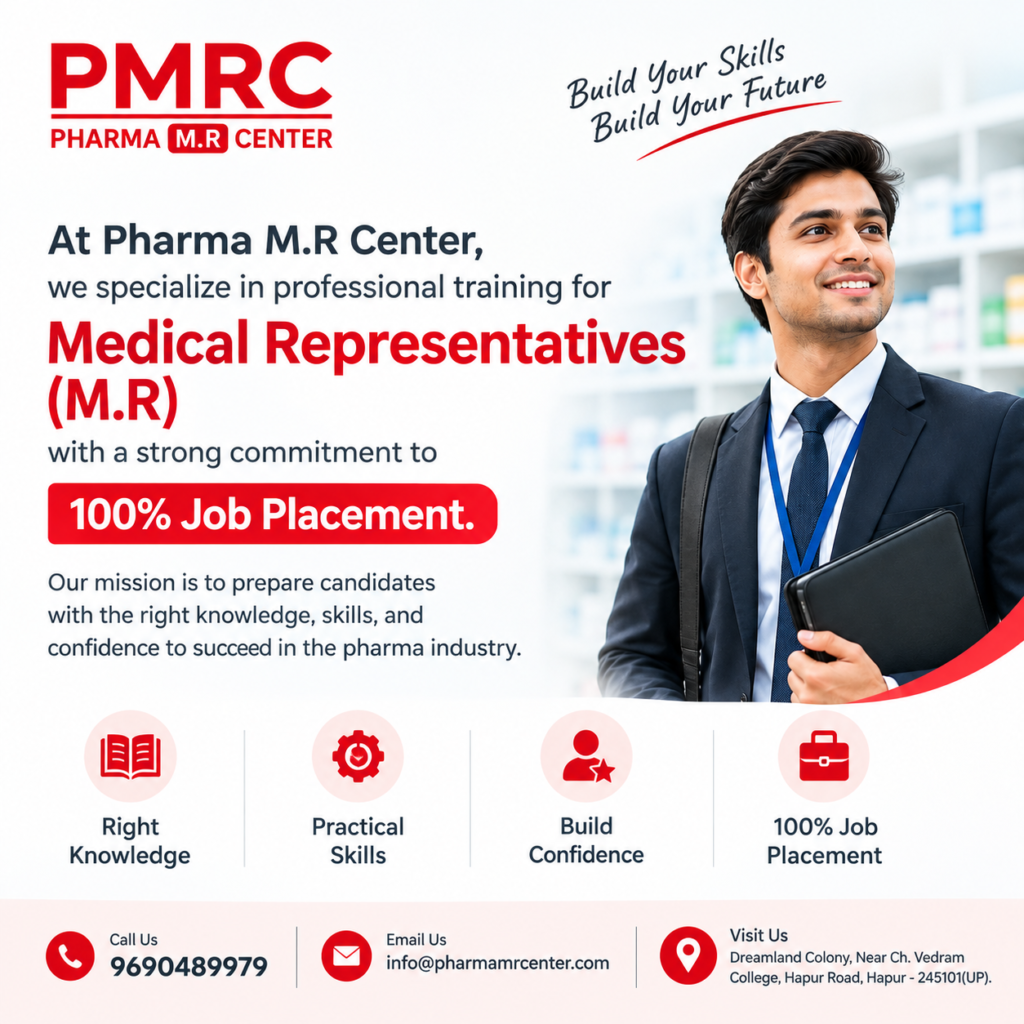
A practical medical representative training course can also help candidates prepare through product knowledge sessions, communication practice, mock interviews, and simulated field interactions. With proper preparation, even candidates without professional experience can approach an interview with greater confidence.
1. Tell Me About Yourself
This is one of the most common opening questions in a job interview. The interviewer wants a brief introduction that explains your educational background, interests, and suitability for the position.
How to answer:
Start with your qualification, mention any relevant training or academic experience, and explain why you are interested in pharmaceutical sales.
Sample answer:
“I have completed my graduation in [your subject], and I am interested in building my career in the pharmaceutical industry. I enjoy learning new things and communicating with people. I want to develop my product knowledge, professional communication, and fieldwork skills through a Medical Representative Job. As a fresher, I am ready to learn from experienced professionals and contribute to the company.”
Keep your answer natural. You do not need to memorise a long introduction.
2. Why Do You Want to Become a Medical Representative?
The interviewer wants to know whether you understand the role and have a genuine reason for applying.
Avoid saying that you want the job only because you need employment. Instead, explain what interests you about the work.
Sample answer:
“I am interested in pharmaceutical sales because it combines product knowledge, communication, and relationship management. I want to learn about pharmaceutical products and understand how representatives communicate approved information to healthcare professionals. I also believe this role can help me develop professionally.”
Your answer should reflect your actual interests and not simply repeat a prepared statement.
3. What Do You Know About a Medical Representative’s Responsibilities?
Before attending an interview, understand the basic duties associated with the position.
A medical representative may be responsible for:
- Visiting healthcare professionals.
- Sharing approved product information.
- Maintaining professional relationships.
- Planning daily field visits.
- Recording customer interactions.
- Following up on professional discussions.
- Preparing reports.
- Working towards assigned business objectives.
Sample answer:
“A medical representative communicates approved product information to healthcare professionals, manages an assigned territory, maintains professional relationships, and completes field reports. The role requires product knowledge, communication skills, planning, and ethical conduct.”
This question is an opportunity to show that you understand the job beyond its title.
4. Why Should We Hire You as a Fresher?
This question can make candidates nervous because they may feel that experienced applicants have an advantage.
Do not apologise for being a fresher. Focus on the strengths you can genuinely demonstrate.
Sample answer:
“Although I do not have professional experience yet, I am willing to learn and work consistently. I can communicate clearly, follow instructions, and accept feedback. I am prepared to study the company’s products and understand the responsibilities of the role. I would like to develop my skills and prove my ability through my work.”
If you have completed an internship, relevant project, or training programme, mention it briefly.
5. What Do You Know About Our Company?
Employers often ask this question to check whether you have researched the organisation.
Before the interview, review the company’s official website and learn about its background, product categories, business activities, and the position for which you are applying.
Sample answer:
“I have reviewed your company’s website and learned about its pharmaceutical business and product portfolio. I am interested in understanding your products in greater detail and learning how the sales team works. I would like to contribute while developing my knowledge of the industry.”
Make sure your answer reflects genuine research. Avoid mentioning products or company activities you have not verified.
6. What Is Pharmaceutical Product Knowledge?
A medical representative needs to understand the products they communicate about.
Depending on the position, this may include product composition, therapeutic category, approved indications, relevant dosage information, precautions, contraindications, and other information provided in approved materials.
Sample answer:
“Product knowledge means understanding a medicine’s approved information, including its composition, indications, precautions, and other relevant details. A representative should communicate this information accurately and use approved company resources when answering questions.”
Freshers are not expected to know every product before joining. However, they should demonstrate a willingness to learn scientific information carefully.
7. How Would You Approach a Busy Doctor?
Healthcare professionals often have limited time, so representatives need to communicate respectfully and efficiently.
Sample answer:
“I would follow the appropriate appointment or visiting procedure, introduce myself politely, and ask whether it is a suitable time for a brief discussion. I would keep the conversation concise and share relevant approved information. If the doctor is unavailable, I would respect their schedule and ask about an appropriate time to return.”
The interviewer is looking for professionalism, patience, and respect for the healthcare professional’s time.
8. How Would You Handle Rejection?
Rejection can be part of pharmaceutical sales. A healthcare professional may be unavailable, decline a meeting, or choose not to continue a discussion.
Sample answer:
“I would remain calm and professional. I would respect the person’s decision, avoid arguing, and try to understand whether there is an appropriate opportunity to follow up later. I would also review my approach and learn from the experience.”
Do not suggest that you would pressure someone into a meeting. Professional relationships should be built respectfully.
9. Are You Comfortable With Fieldwork and Travel?
A Medical Representative Job may involve regular travel within an assigned territory. Interviewers ask this question to understand whether you are prepared for the practical nature of the work.
Sample answer:
“Yes, I understand that this role may involve travelling within an assigned territory, meeting healthcare professionals, and managing daily schedules. I am prepared to understand the travel requirements and organise my work responsibly.”
Only give this answer if it reflects your actual circumstances. If you have limitations, discuss them honestly.
10. How Would You Manage Your Daily Schedule?
A representative may need to plan several visits, allow time for travel, record activities, and complete reports.
Sample answer:
“I would prepare a daily plan based on the assigned territory and scheduled visits. I would allow sufficient travel time, prioritise appointments, record interactions accurately, and complete the required reports. If unexpected changes occurred, I would adjust the schedule and communicate with my manager when necessary.”
This answer demonstrates organisation and practical thinking.
11. What Are Your Strengths and Weaknesses?
Choose strengths that are relevant to the job, such as communication, discipline, listening, organisation, or willingness to learn.
When discussing a weakness, identify a genuine area for improvement and explain what you are doing about it.
Sample answer:
“One of my strengths is that I am willing to learn and take feedback seriously. I also try to communicate clearly and complete tasks responsibly. One area I am working on is becoming more confident during formal presentations. I practise speaking and explaining information so that I can improve.”
Avoid claiming that you have no weaknesses or presenting an unrealistic list of strengths.
12. How Would You Respond to a Difficult Product Question?
A representative may receive a technical question that they cannot answer immediately.
The correct response is not to guess.
Sample answer:
“I would listen carefully and check whether the answer is available in the approved product information. If I could not verify it, I would explain that I need to confirm the details and follow up through the appropriate company resource. I would not provide unverified medical information.”
This demonstrates accuracy, honesty, and professional responsibility.
13. What Is the Difference Between Sales and Ethical Pharmaceutical Promotion?
Pharmaceutical sales involves commercial objectives, but communication about medicines must remain accurate and consistent with applicable requirements.
Sample answer:
“Ethical pharmaceutical promotion means communicating approved product information accurately without misleading statements or unsupported claims. A representative should respect healthcare professionals’ decisions, follow company policies, and avoid exaggerating a product’s benefits.”
This is an important topic for candidates entering the pharmaceutical industry.
14. What Are Your Salary Expectations?
Freshers may not know the salary range for an entry-level position.
Research similar vacancies and consider the role’s location, responsibilities, travel requirements, and benefits before answering.
Sample answer:
“As a fresher, my priority is to start my career in a suitable organisation and develop the skills required for the role. I am open to discussing compensation based on the responsibilities, company structure, and overall employment package.”
Before accepting an offer, clarify the fixed salary, incentives, travel allowance, reimbursement, working hours, and other relevant terms.
How a Medical Representative Training Course Can Help
A structured medical representative training course can help freshers practise the skills discussed during interviews rather than relying entirely on theoretical preparation.
Depending on the programme, useful training may include:
- Pharmaceutical terminology and product basics.
- Professional communication and presentation.
- Mock interviews and self-introductions.
- Simulated healthcare professional interactions.
- Territory planning and time management.
- Field reporting and documentation.
- Ethical pharmaceutical communication.
- Confidence-building exercises.
When selecting a course, review its curriculum, practical activities, trainer experience, and career support. Completing a course does not guarantee employment, but relevant learning and practice can help you prepare more effectively.
Interview Preparation Tips for Freshers
Before attending your interview, follow these practical steps:
Research the employer: Understand the company’s business and the responsibilities listed in the vacancy.
Revise your basics: Review relevant pharmaceutical terminology and product information.
Practise your introduction: Prepare a short answer about your education, interests, and career goals.
Use mock interviews: Practise answering questions aloud so that your responses sound natural.
Prepare examples: Think of situations from college projects, internships, or group activities that demonstrate teamwork, communication, or responsibility.
Dress professionally: Choose clean, appropriate clothing and arrive on time.
Ask relevant questions: Clarify the territory, training, travel requirements, salary structure, and performance expectations.
Most importantly, answer honestly. Interviewers understand that freshers have limited professional experience. They want to see whether you can learn, communicate, and approach responsibilities seriously.
Conclusion
Preparing for a Medical Representative Job interview involves understanding the role, learning pharmaceutical basics, practising communication, and developing realistic expectations about fieldwork. Common questions cover your introduction, career motivation, product knowledge, company awareness, strengths, rejection handling, and willingness to travel.
A practical medical representative training course can support this preparation through mock interviews, product presentations, communication exercises, and simulated field situations. However, candidates should continue learning independently and focus on applying what they practise.
You do not need to pretend to have experience you do not possess. Present your qualifications honestly, demonstrate a willingness to learn, and show that you understand the importance of accurate product information and professional conduct. With preparation and consistent practice, freshers can approach interviews more confidently and take a useful first step towards a career in pharmaceutical sales.