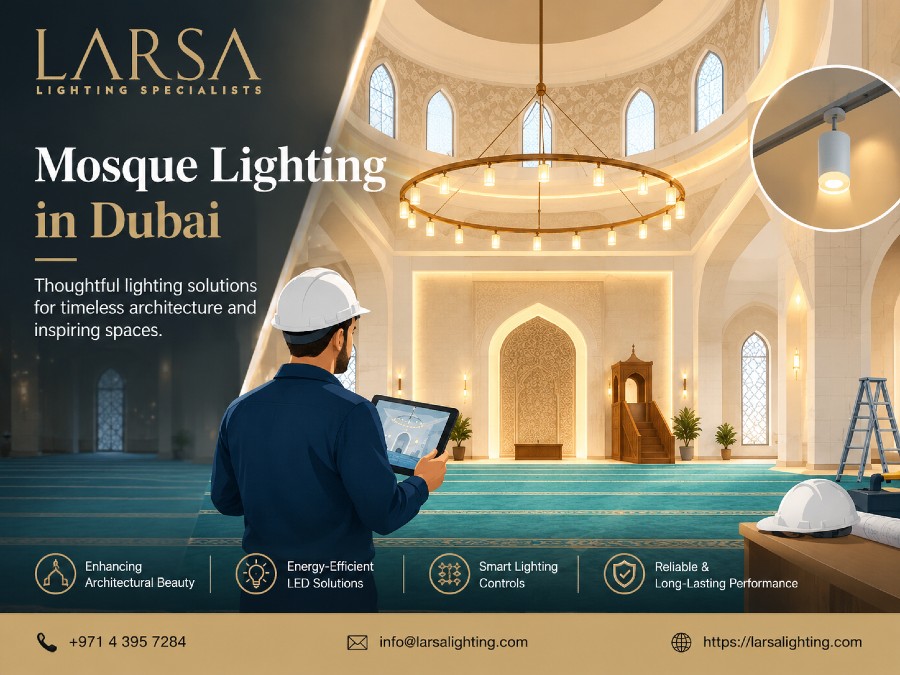
Mosques are more than places of worship; they are architectural spaces that reflect cultural heritage, craftsmanship, and spiritual values. From intricate arches and decorative domes to elegant calligraphy and peaceful prayer halls, every element contributes to their identity. Thoughtfully planned Mosque Lighting in Dubai helps highlight these features while creating a comfortable, welcoming, and peaceful environment for worshippers.
Lighting design for mosques requires a careful balance between aesthetics and functionality. The right approach enhances architectural details, supports reading and prayer, improves visibility, and reduces energy consumption. Whether designing a new mosque or renovating an existing building, a well-coordinated lighting scheme can preserve traditional character while meeting modern performance requirements.
Understanding the Role of Mosque Lighting
Lighting influences how people experience a mosque throughout the day. Natural daylight can create a sense of openness, while carefully positioned artificial lighting maintains visual comfort after sunset. Poorly planned illumination, however, may produce harsh glare, uneven brightness, and distracting shadows.
An effective lighting plan considers the mosque’s architectural style, ceiling height, prayer hall layout, wall finishes, and daily activities. It should provide sufficient illumination without making the space feel overly bright or visually busy. The objective is to create a calm atmosphere in which lighting supports worship rather than becoming the main focus.
Highlighting Architectural Features with Light
Dubai’s architectural landscape includes mosques that combine traditional Islamic design with contemporary materials and construction techniques. Lighting can reveal the beauty of these spaces without overwhelming their original character.
Illuminating Domes, Arches, and Columns
Domes, arches, and columns often define a mosque’s architectural identity. Soft indirect lighting can emphasize their shapes and create a gentle transition between illuminated and shaded surfaces. Concealed LED strips may be suitable for existing coves, while discreet directional fixtures can highlight selected architectural details.
The placement and intensity of light should be carefully controlled. Excessive brightness can flatten decorative surfaces, while uneven illumination may create distracting patches. A balanced approach preserves depth and allows architectural features to remain visually distinct.
Creating a Clear Focal Point Around the Mihrab
The mihrab, which indicates the direction of prayer, is an important visual element within the prayer hall. Subtle accent lighting can emphasize its geometry, materials, and decorative details.
Adjustable spotlights or concealed lighting can provide definition without producing glare for worshippers facing the qibla. Testing fixture positions from standing and seated viewpoints helps ensure that the focal area remains comfortable and appropriately illuminated.
Choosing the Right Lighting for Prayer Halls
Prayer halls need consistent illumination across prayer rows, entrances, and circulation areas. Relying entirely on a central chandelier or decorative pendant may leave the perimeter too dark and create uneven brightness across the floor.
A layered lighting approach offers greater control and flexibility.
- Ambient lighting: Recessed or low-profile LED downlights provide general illumination across the prayer hall.
- Accent lighting: Carefully aimed spotlights emphasize the mihrab, calligraphy, and selected architectural details.
- Indirect lighting: Concealed lighting softens ceiling transitions and adds depth to arches and other architectural features.
- Decorative lighting: Chandeliers and pendants contribute to the mosque’s visual identity while complementing the functional lighting system.
For many mosque interiors, a warm or warm-neutral colour temperature around 3000K can create a calm atmosphere. The final selection should depend on the finishes, daylight conditions, and desired appearance. Good colour rendering also helps materials, textiles, and decorative details appear natural.
Energy Efficiency Through Modern LED Technology
Energy efficiency is an important consideration for mosques that operate throughout the day and accommodate larger congregations during Friday prayers and special occasions. LED lighting can reduce electricity consumption compared with many older lighting technologies while offering a long service life.
When selecting LED products, decision-makers should consider more than wattage. Light output, distribution, glare control, colour consistency, driver quality, and maintenance access all affect long-term performance.
In mosques with high ceilings, replacing a failed lamp or fixture can require specialist access equipment. Reliable products and accessible maintenance arrangements can therefore reduce disruption and ongoing costs. Fixture selection should also account for local operating conditions, electrical protection, warranty support, and spare-part availability.
Smart Lighting Controls for Different Activities
Mosques serve different purposes throughout the day, from daily prayers and Quran recitation to community gatherings and cleaning. Lighting controls can help adapt illumination to these activities without compromising comfort.
Separate control zones for the main prayer hall, mihrab, decorative fixtures, entrances, and perimeter lighting allow staff to adjust individual layers as needed. Preset scenes can support different prayer times, daytime use, evening gatherings, and maintenance activities.
Daylight sensors and dimming systems can further reduce unnecessary energy use. However, transitions should be gradual to prevent distracting changes in brightness during prayer. Simple controls and clear operating instructions also help staff manage the system confidently.
Renovating Existing Mosques with Care
Mosque renovation projects often involve structural limitations, decorative ceilings, existing wiring, and restricted access to installation areas. Replacing every fixture may not be necessary. In some cases, upgrading the central chandelier while adding discreet ambient lighting can improve performance without changing the architectural identity.
Before installation, lighting positions should be coordinated with air-conditioning grilles, speakers, fire safety devices, ceiling patterns, and access panels. On-site testing is equally important to identify glare, uneven illumination, and unwanted light spill before the project is completed.
Planning Timeless Mosque Lighting in Dubai
Successful mosque lighting combines architectural sensitivity, visual comfort, operational flexibility, and energy efficiency. Every fixture should have a clear purpose, whether illuminating prayer rows, highlighting decorative details, or improving circulation.
For projects in Dubai, Larsa Lighting approaches lighting specification as a coordinated design and technical process, considering the character of the space alongside its practical requirements. Careful product selection, appropriate controls, and attention to installation details help create lighting systems that remain functional and visually harmonious over time.
Ultimately, timeless mosque lighting does not depend on the number of fixtures installed. It depends on how effectively light supports worship, reveals architectural beauty, and maintains a peaceful atmosphere. With thoughtful planning, Mosque Lighting in Dubai can preserve the dignity of traditional spaces while meeting the needs of contemporary religious architecture.