Pickleball has become one of the fastest-growing sports, and choosing the right equipment can make a noticeable difference in your playing experience. Among all the equipment you need, pickleball balls are especially important because their construction, hole pattern, hardness, bounce, and durability can influence how the game feels. Whether you are a beginner, recreational player, club member, or competitive athlete, understanding which ball suits your playing environment can help you enjoy more consistent rallies and better overall performance.
Understanding Pickleball Balls
Pickleball balls are lightweight, perforated plastic balls specifically designed for pickleball. Unlike tennis balls, they are hollow and contain multiple holes that control their movement through the air. The number, size, and arrangement of these holes influence flight characteristics, while the material affects hardness, bounce, durability, and overall feel. Although many pickleball balls may look similar, their performance can vary significantly depending on their design and intended playing environment.
Indoor vs. Outdoor Pickleball Balls
One of the most important decisions when buying pickleball balls is choosing between indoor and outdoor designs. Indoor balls are generally made for smooth gymnasium floors and similar surfaces. They commonly feature around 26 larger holes and a somewhat softer construction, which can provide a comfortable feel and predictable response during rallies. Outdoor balls are generally designed for harder surfaces such as concrete, asphalt, and outdoor sport courts. They commonly feature around 40 smaller holes and a harder construction that helps them withstand demanding playing conditions.
It is important to remember that indoor and outdoor does not simply mean whether the court has a roof. The court surface and playing conditions are often more important. For example, a hard court inside a facility may have characteristics similar to an outdoor court, while a smooth gymnasium floor is generally better suited to an indoor ball. Choosing a ball according to the actual playing surface can therefore produce a better experience.
Why Does the Number of Holes Matter?
The number and size of holes affect how a pickleball moves through the air. Outdoor balls commonly use more and smaller holes to help provide greater stability in windy conditions, while indoor balls often use fewer and larger holes. These aerodynamic differences can influence speed, flight stability, control, and how the ball responds to different shots. For most players, the simple rule is that a 26-hole design is commonly associated with indoor play, while a 40-hole design is commonly associated with outdoor play.
What Makes Quality Pickleball Balls?
A quality pickleball should offer consistent bounce, predictable flight, appropriate hardness, and good durability. Consistent bounce is important because players need to know how the ball will react after contacting the court. Predictable flight is equally valuable because wobbling or inconsistent movement can make accurate serves, returns, drives, dinks, and volleys more difficult. Durability is particularly important for outdoor players because hard court surfaces and repeated impacts can put considerable stress on the ball. Choosing a ball that matches your playing environment can help maintain reliable performance for longer.
How Weather Can Affect Outdoor Pickleball Balls
Weather conditions can have an impact on outdoor pickleball performance. Wind can change the direction and trajectory of a ball, while temperature can influence how certain plastic materials behave. Cold conditions may make some balls more vulnerable to cracking during powerful impacts, while hot weather can also affect their feel and performance. Players who regularly play outdoors should therefore consider keeping replacement balls available, especially when playing frequently or in changing weather conditions.
Tournament and Recreational Pickleball Balls
Recreational players generally have more flexibility when choosing pickleball balls. They can focus on factors such as durability, price, feel, bounce, and compatibility with their court. Competitive players may need to pay closer attention to tournament requirements and approved equipment. Tournament regulations can specify which balls are permitted, so players should always check the rules of their particular event before purchasing or using a ball for competition. Using a consistent ball during practice can also help competitive players develop more predictable timing and shot control.
When Should You Replace Pickleball Balls?
Even durable pickleball balls eventually need to be replaced. Players should check their balls regularly for visible cracks, deformation, damaged holes, inconsistent bounce, or unusual flight. A ball that begins wobbling in the air or feels noticeably different from a new ball may no longer provide reliable performance. Continuing to use a damaged ball can also make practice less productive because players may unknowingly change their technique to compensate for the ball’s irregular behavior.
Choosing Pickleball Balls for Beginners
Beginners should start by considering where they play most often. Players who primarily use smooth indoor gym floors should generally look for indoor pickleball balls, while those who play on outdoor concrete, asphalt, or similar hard courts should generally choose outdoor designs. Beginners should prioritize consistency and control instead of simply looking for the fastest or hardest ball. A predictable ball makes it easier to learn proper timing, develop reliable strokes, and understand how the ball responds to different shots.
Pickleball Balls for Frequent Players and Clubs
Players who participate in regular games, leagues, coaching sessions, or club events may benefit from purchasing multiple balls at a time. Having spare balls available prevents games from being interrupted when a ball becomes damaged or lost. Clubs, coaches, schools, and tournament organizers may also benefit from using the same type of ball across multiple sessions because consistent equipment can create a more predictable training environment. When comparing packages, consider the cost per ball as well as durability and performance rather than focusing only on the initial package price.
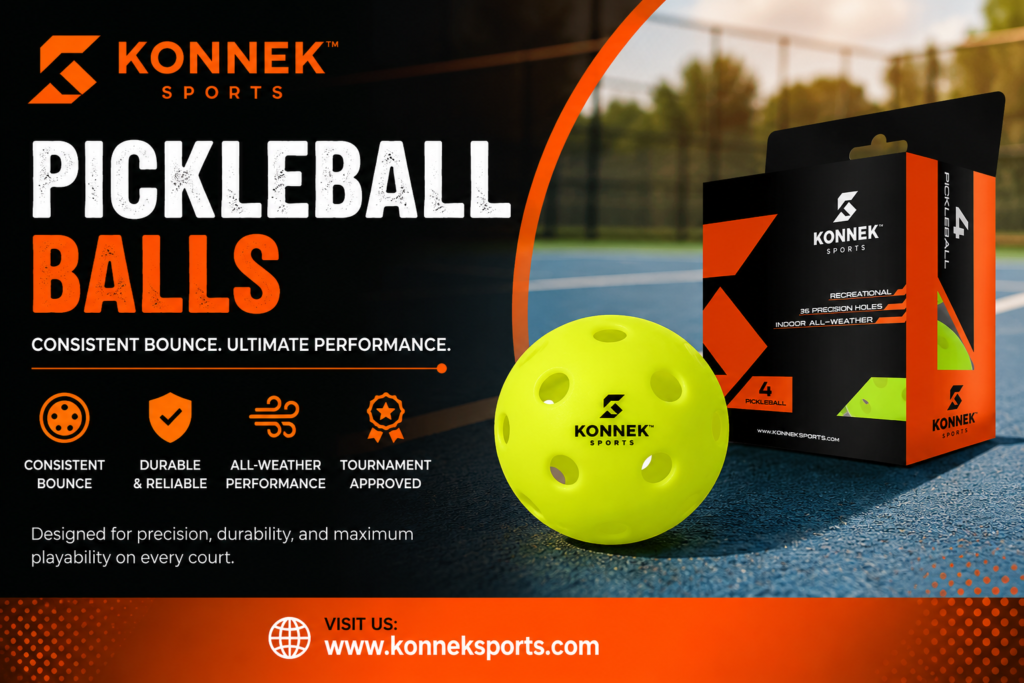
If you are looking for reliable equipment for your next practice session or competitive game, explore the selection of **pickleball balls **at Konnek Sports and choose an option that matches your playing environment and performance needs.
Frequently Asked Questions About Pickleball Balls
Are indoor and outdoor pickleball balls the same? Indoor and outdoor balls are designed differently to suit different surfaces and playing conditions. Indoor balls commonly have larger holes and a softer construction, while outdoor balls generally have smaller holes and a harder construction.
How many holes are on a pickleball? The most common designs include approximately 26 holes for indoor pickleball balls and 40 holes for outdoor pickleball balls, although different manufacturers may use different configurations.
Can outdoor pickleball balls be used indoors? They can be used indoors in some situations, but they may not provide the same playing characteristics as an indoor-specific ball. Choosing a ball designed for your court surface generally provides a more appropriate playing experience.
How long do pickleball balls last? There is no fixed lifespan because durability depends on construction, frequency of play, court surface, weather, temperature, and playing style. Replace a ball when it develops cracks, deformation, inconsistent bounce, or unusual flight.
What pickleball balls are suitable for tournaments? Tournament requirements vary, so competitive players should check the rules of their specific tournament and use a ball that meets the event’s equipment requirements.
Conclusion
Choosing the right pickleball balls is an important part of creating a consistent and enjoyable playing experience. Instead of selecting a ball based only on price or appearance, consider the court surface, indoor or outdoor conditions, hole design, hardness, durability, bounce consistency, and frequency of play. The right ball can provide more predictable performance and allow you to concentrate on improving your technique and enjoying the game. Whether you are practicing with friends, participating in league matches, playing at a local club, or preparing for competition, selecting pickleball balls that match your needs can make every session more rewarding. Konnek Sports provides pickleball equipment designed to support players looking for dependable options for practice, recreation, and competitive play.