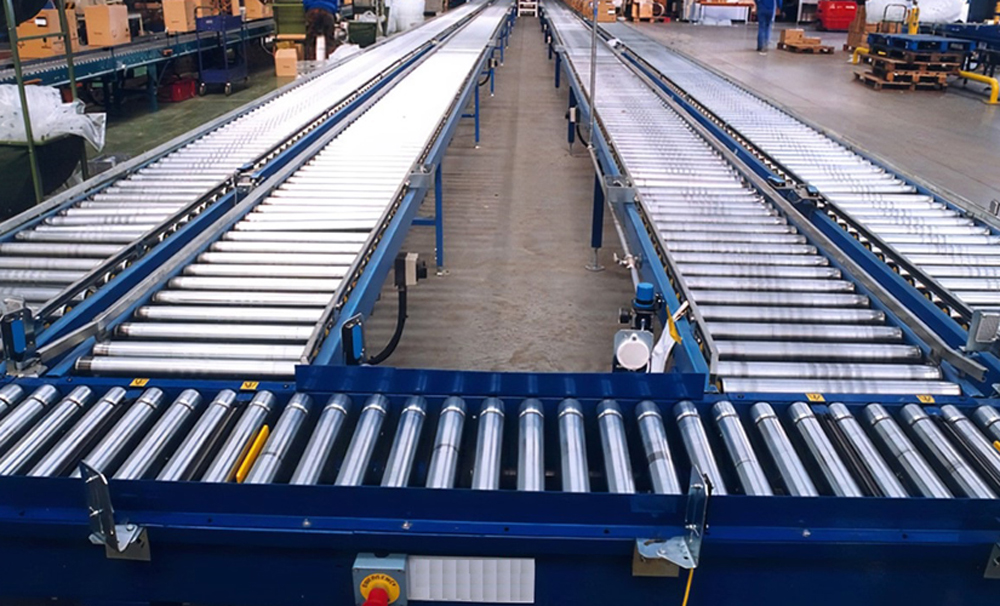
A powered roller conveyor is an advanced conveyor system designed to move products efficiently through manufacturing facilities, warehouses, distribution centers, and logistics operations. Unlike traditional gravity conveyors, a powered roller conveyor uses motor-driven rollers to transport materials automatically, ensuring smooth, consistent, and controlled movement. As industries continue to embrace automation, these conveyor systems have become an essential component of modern material handling operations.
Understanding a Powered Roller Conveyor
A powered roller conveyor consists of a series of rollers connected to a drive mechanism that powers their movement. The rollers rotate continuously or on demand, allowing products to travel from one point to another without manual effort. Depending on the application, the rollers may be driven by chains, belts, or individual motors.
This conveyor system is capable of handling a wide range of products, including cartons, pallets, containers, totes, and industrial components. The flexibility and efficiency of a powered roller conveyor make it suitable for both lightweight and heavy-duty applications.
Key Features of Powered Roller Conveyor
One of the primary features of a powered roller conveyor is its automated operation. Since the rollers are motorized, products move seamlessly through the system without requiring workers to push or carry materials.
Another significant feature is speed adjustment. Many systems allow operators to control conveyor speed, enabling efficient handling of different types of products. This flexibility helps maintain smooth workflow and prevents product congestion.
A powered roller conveyor can also be integrated with advanced automation technologies such as sensors, barcode scanners, sorting systems, and programmable controls. These features enhance operational accuracy and support intelligent material handling processes.
The conveyor is typically constructed from high-quality materials such as steel or stainless steel, ensuring strength, durability, and long service life even in demanding industrial environments.
Applications of Powered Roller Conveyor
The powered roller conveyor is widely used in numerous industries due to its versatility and reliability. In warehouses and logistics centers, it is used for sorting, packaging, and transporting goods quickly and efficiently.
Manufacturing facilities use a Powered Roller Conveyor to move raw materials, components, and finished products between different production stages. In the automotive sector, these conveyors help transport heavy parts and assemblies throughout the manufacturing process.
E-commerce companies rely heavily on powered roller conveyor systems to handle high volumes of packages and orders. Airports use similar conveyor technology for baggage transportation, while pharmaceutical and food industries utilize specially designed systems to meet hygiene and safety standards.
Benefits of Using Powered Roller Conveyor
One of the biggest advantages of a powered roller conveyor is increased productivity. Automated movement of goods reduces delays and allows operations to run more efficiently.
Another important benefit is reduced labor dependency. Employees spend less time moving materials manually and can focus on value-added tasks. This not only improves productivity but also reduces operational costs.
A powered roller conveyor also contributes to workplace safety. By minimizing manual lifting and carrying, the system reduces worker fatigue and lowers the risk of workplace injuries.
Additionally, the conveyor offers precise product control. Items can be accumulated, sorted, and directed to specific locations, improving accuracy and reducing product damage during transportation.
Maintenance and Longevity
To ensure optimal performance, a Powered Roller Conveyor requires regular maintenance. Routine inspections of motors, rollers, bearings, and drive components help identify wear and prevent unexpected breakdowns.
Cleaning the system and lubricating moving parts at recommended intervals further enhance efficiency and prolong equipment life. Proper maintenance ensures reliable operation and minimizes downtime.
Conclusion
A powered roller conveyor is a highly efficient and dependable material handling solution that supports automation and productivity across various industries. Its ability to transport products smoothly, safely, and accurately makes it a valuable asset in modern industrial environments. By implementing a Powered Roller Conveyor, businesses can streamline operations, improve workflow efficiency, reduce labor costs, and achieve long-term operational success.